Behind the Booth
Planning Safe Power and Cables for an Art Show Booth
Plan approved electrical use, load and cable routes before relying on lights or payment devices at a show.
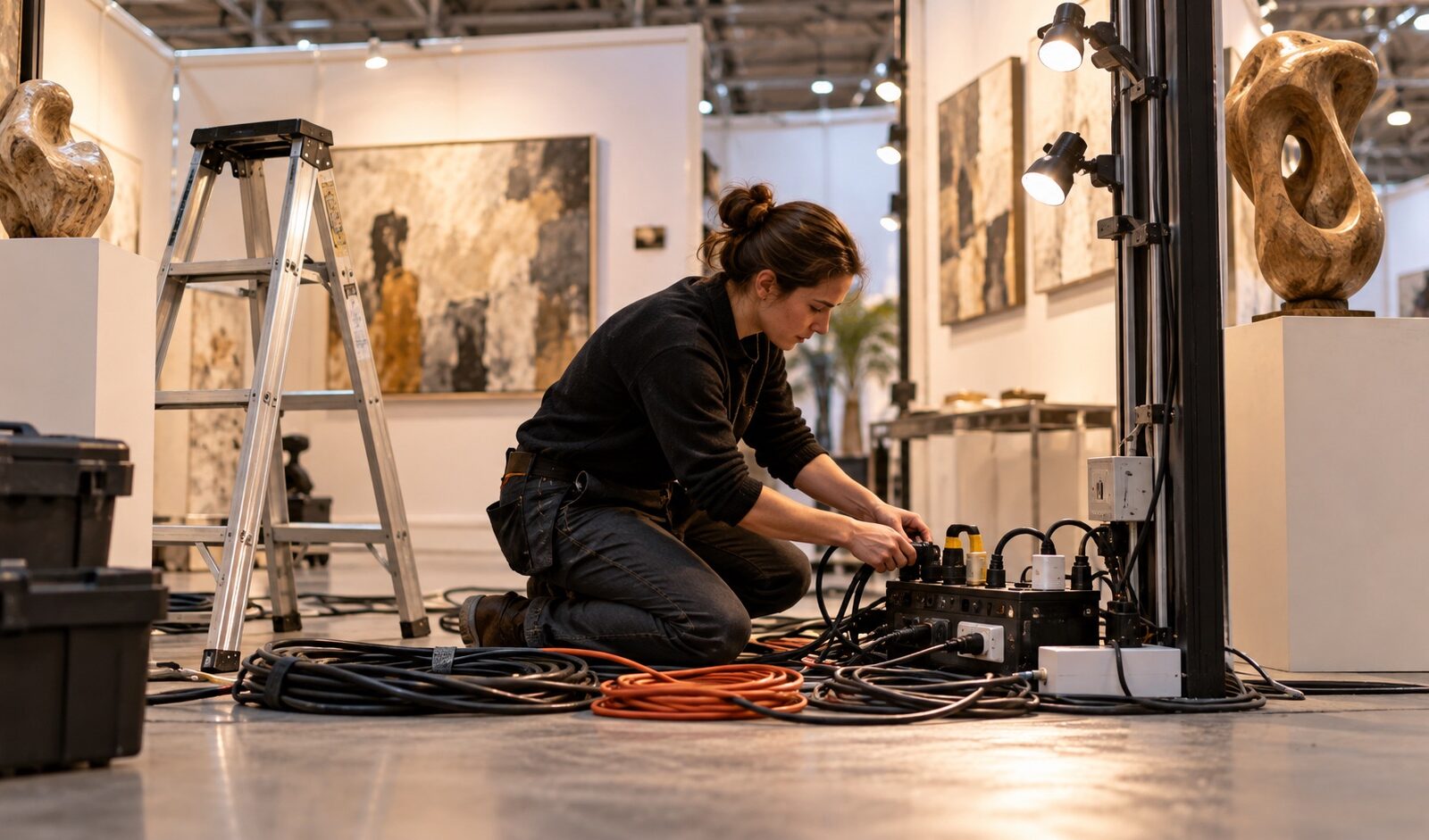
Electricity at an art show can make your work easier to see and your checkout smoother. It can also create trip hazards or overload a circuit if improvised at load-in. A good power plan begins with the organizer's rules and the actual devices you will use.
Confirm what the event provides
Ask whether electricity is included, what capacity is available and where the outlet will be relative to your booth. Indoor and outdoor events may have different rules for extension cords, cable covers and weather-rated equipment. Some prohibit bringing your own generator or require advance approval for lights and demonstrations. Keep the written guidance with your setup notes; verbal assumptions made months earlier can be forgotten.
List the load, not just the plugs
Write down each light, charger, fan, card terminal and other electrical item, including its rated power. Allow for devices that may run at the same time. If you are unsure whether the supply supports the total, ask a qualified electrician or the organizer's power provider rather than guessing. Battery-backed equipment can reduce dependence on an outlet, but it still needs charging and a plan for a long show day. Our booth lighting guide helps you decide which lights actually improve the display.
Route cables before hanging art
During a layout rehearsal, mark every outlet and cable path. Keep cords away from walking routes, doors, water and places where a panel could pinch them. Use approved covers where crossings are unavoidable. Do not bury a damaged cord under a rug or create a chain of overloaded power strips. Check the plan from a visitor's approach and from the position where you pack a sale.
Test the setup before doors open
Bring labeled cables and spares approved for the venue. Connect devices, turn on the full display and look for flicker, heat or a loose connection. Photograph the final route so a helper can restore it after a change. If power fails, know which equipment can continue and which sales steps must move to your backup process. The goal is a booth that remains safe and usable when the ideal setup is interrupted.