For Visitors
Questions to Ask About Artwork Materials Before You Buy
Ask artists material questions that connect the work's construction to display, care and your intended use.
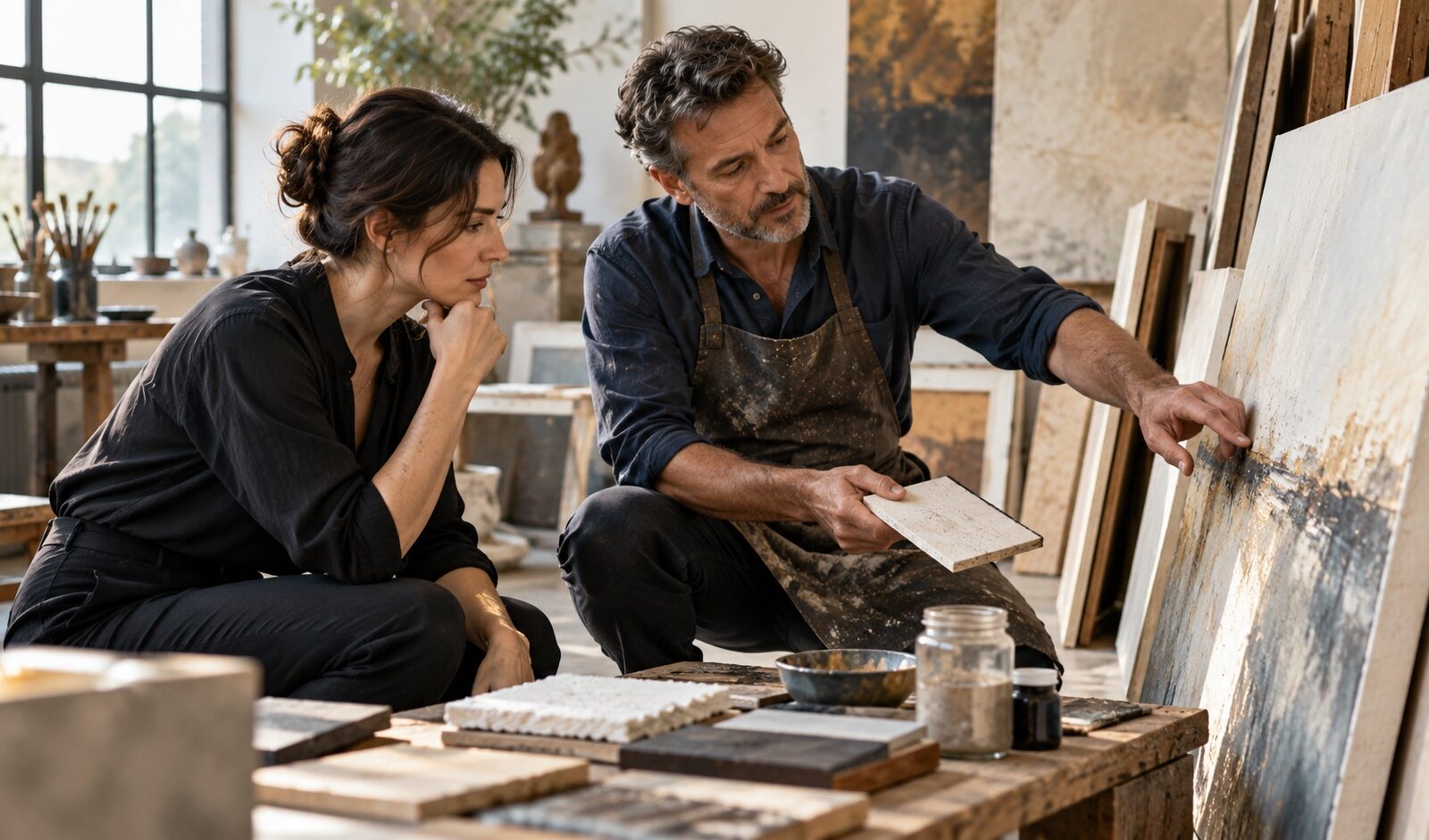
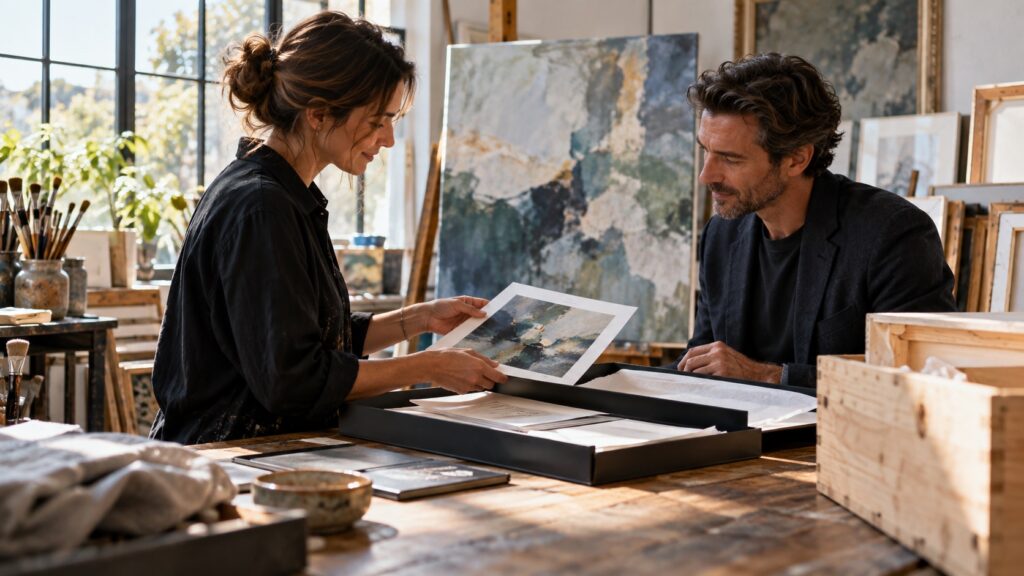
Materials shape how art feels, travels and ages. At a show, asking about them is an invitation to learn what the artist chose and why. You do not need a technical interrogation; a few questions tied to your intended use are more useful than a long list of terms.
Begin with what you can see
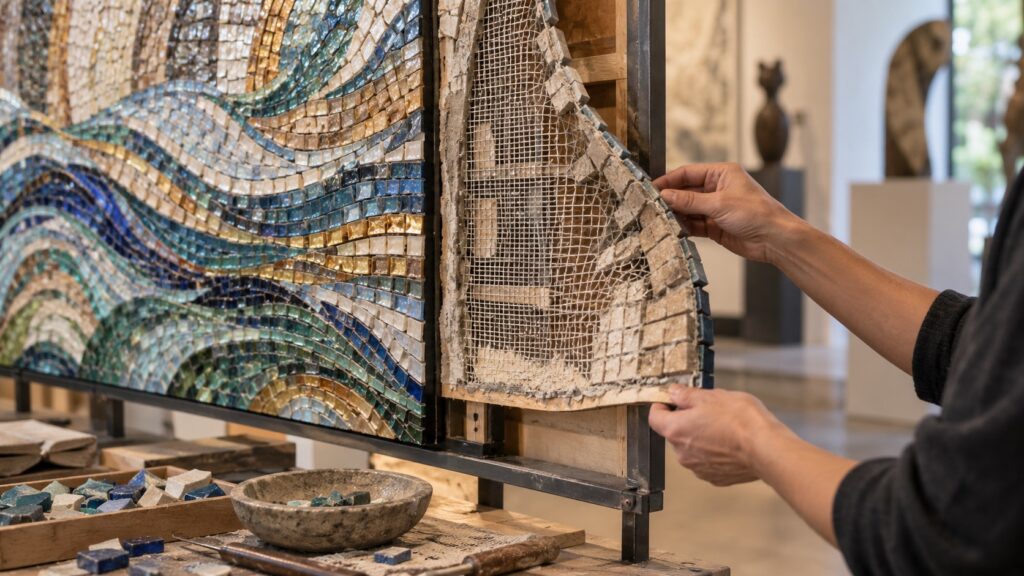
Ask “What materials am I looking at?” and let the artist describe the work in their own words. If a surface appears glossy, textured or layered, ask how that effect was made. For a sculpture, ask what supports the visible material. For a work on paper, ask about paper and any applied coatings. The answer may reveal that an object includes multiple materials with different care needs.
Connect the answer to placement
Tell the artist where you hope to display or use the piece: a sunny wall, a bathroom, an outdoor patio or a busy table. Ask whether that environment suits the materials. Direct light, moisture, heat and frequent handling can matter differently for paint, paper, fiber, wood or glass. Our textile-care guide gives one medium-specific example; no single rule covers every object.
Ask about changes over time
Some materials develop a patina, some need periodic maintenance and some should not be cleaned with ordinary household products. Ask what changes the artist expects, what would indicate damage and what care instructions they can provide. Avoid asking for a guarantee that no change will ever occur. A clear explanation of expected aging is more helpful than a vague claim that the work is “archival.”
Record the answer you will need later
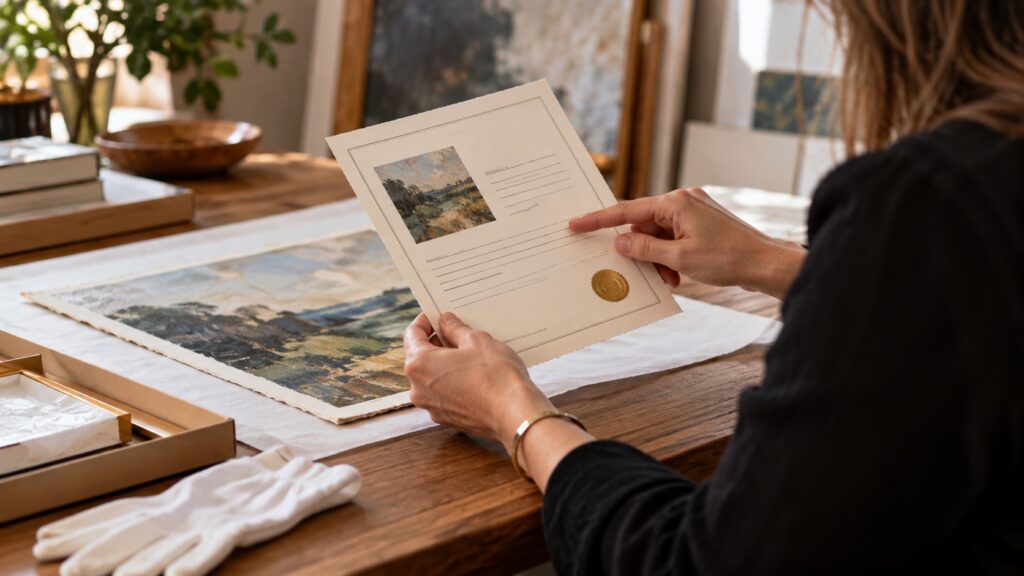
Keep a receipt or care card that names key materials and the maker. If the artist recommends a specific hanging method or cleaner, write it down while the discussion is fresh. Our first-original-artwork guide puts these questions in the wider purchase process. Knowing what an object is made of makes it easier to enjoy and care for it after the show, when the artist is no longer standing beside it.