Behind the Booth
How to Plan Tent Weights for an Outdoor Art Show
Read the show's anchoring rules and plan a tent-weight system that fits your canopy and site before load-in.
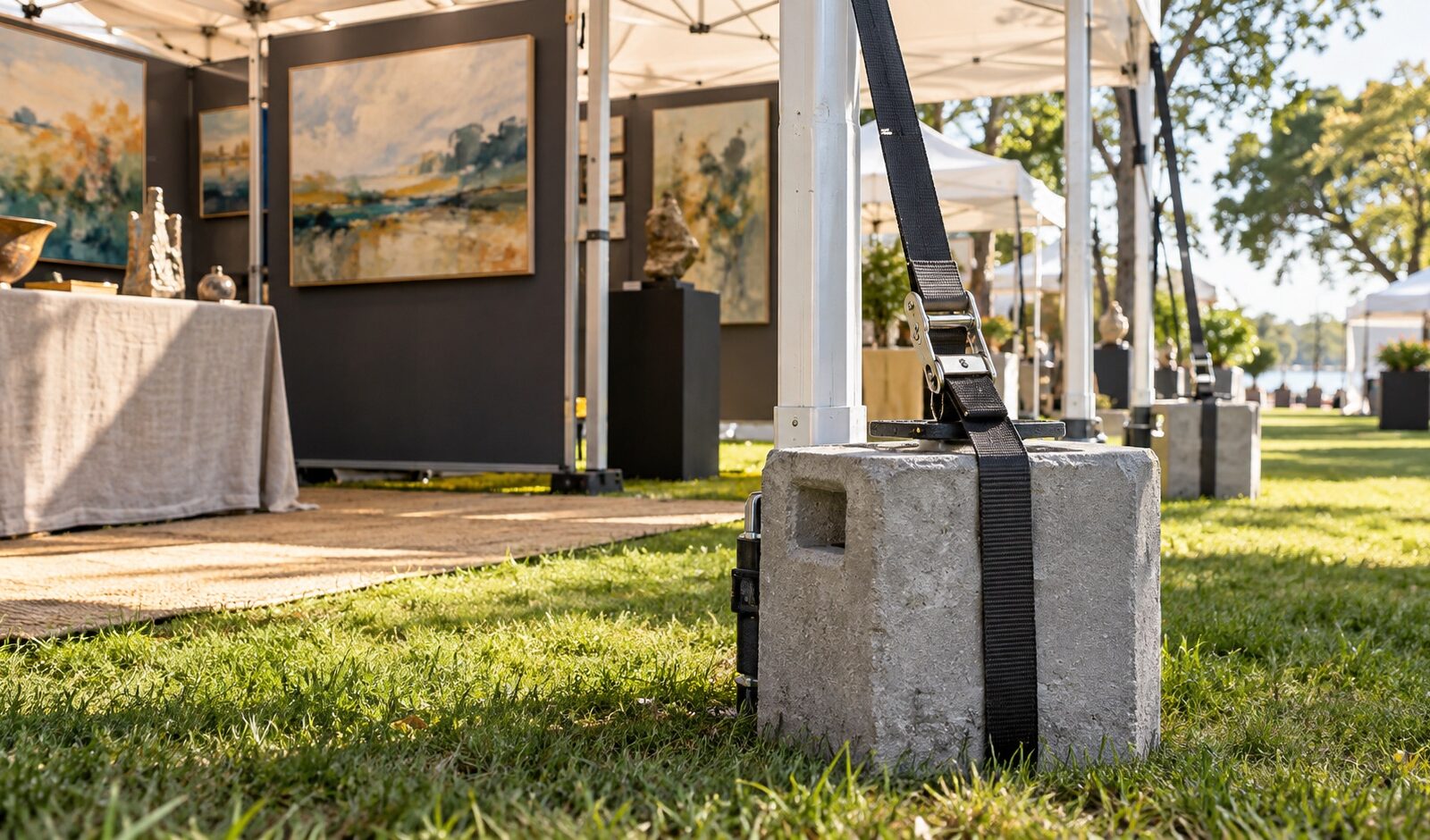
An outdoor canopy is a large surface for wind to push. A few objects set beside its legs are not necessarily an anchoring system. Your first source for weight requirements is the show organizer, followed by the canopy manufacturer's instructions and the actual conditions at the site.
Get the rule in writing
Ask for the minimum weight per leg, approved attachment method and any restrictions on stakes, water containers or exposed straps. The number may vary by tent size or location. A corner booth near an open street can feel different from a sheltered courtyard, but only the organizer can confirm the event rule. Put the requirement in your prospectus notes and check it again shortly before packing.
Connect weights to the frame correctly
Use containers or weights intended for the load, and attach them to the structural points specified for your tent. A weight that can slide away or a strap tied to a weak display bar may offer little protection. Keep the base low, stable and within your assigned footprint. Cover or mark components that visitors might trip over. If you are uncertain about the structure, contact the canopy maker or a qualified professional rather than relying on a rule of thumb from another booth.
Plan transport and setup order
Weights are heavy and awkward; include them in your vehicle plan and load-in sequence. Set the frame and anchors before hanging fragile artwork. Check every attachment after the tent is fully erected and again after a significant change in weather. Our outdoor packing checklist helps place anchoring within the rest of the gear.
Know when anchoring is no longer enough
No tent-weight plan makes an unsafe weather warning acceptable. Learn the event's wind and evacuation procedure and keep an exit route clear. In rising wind, follow organizer instructions and prioritize people over merchandise. The purpose of good anchoring is to reduce routine risk, not to justify staying under a canopy that should be taken down.