Behind the Booth
An Artist’s Severe-Weather Plan for Outdoor Shows
Decide in advance how you will protect people, artwork and equipment when weather changes during an outdoor show.
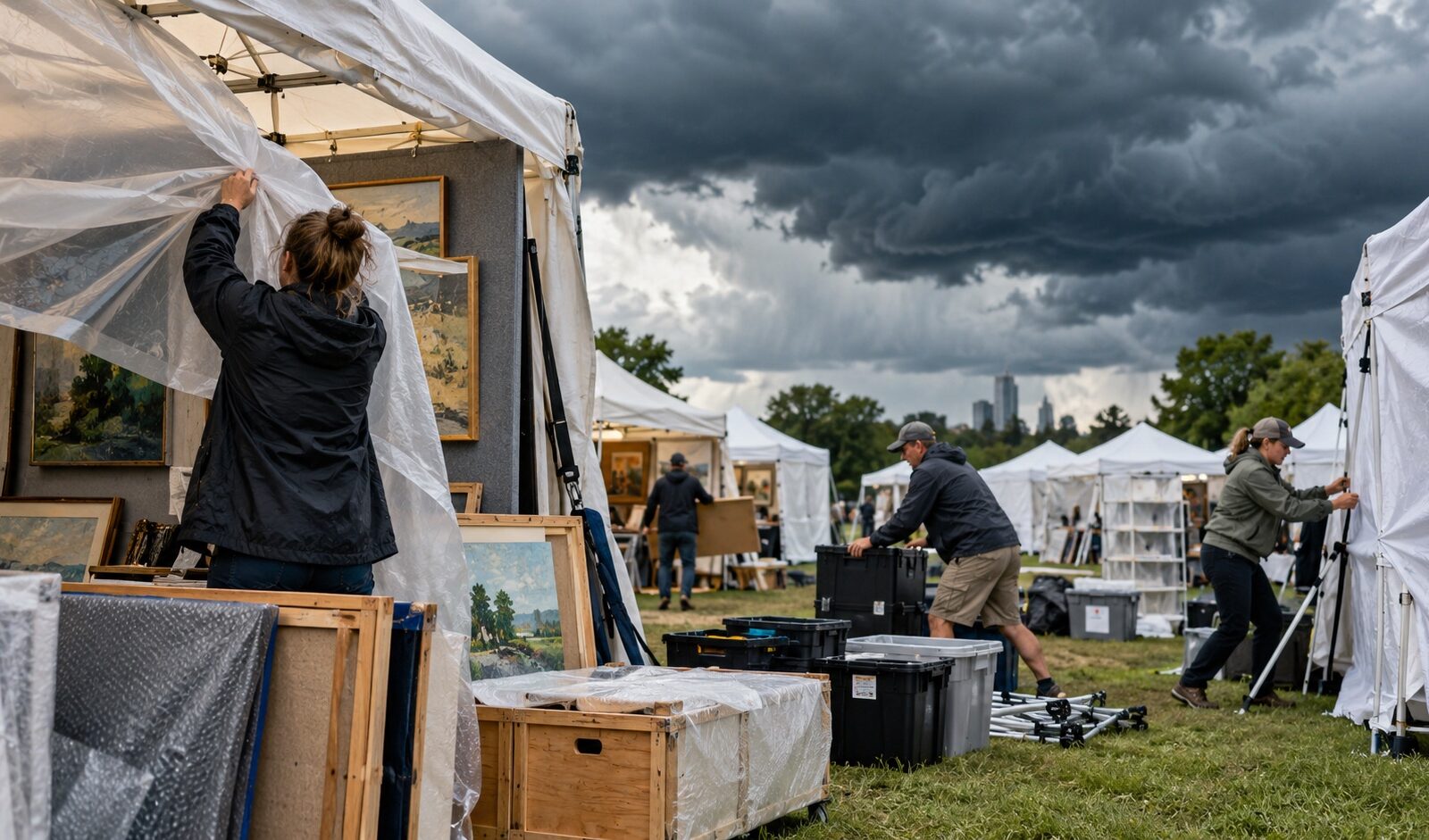
An outdoor art show can begin in pleasant weather and change quickly. The useful plan is written before load-in, when you can still find the organizer's instructions and assign clear roles. It should say when to stop selling, what to secure first and how to leave safely if the event directs you to do so.
Read the event's weather procedure
Find the organizer's communication channel, cancellation policy and instructions for wind, lightning or evacuation. Save the emergency contact number where you can reach it without searching email. Identify the nearest shelter and vehicle route. The show's procedure takes priority over your preference to keep selling. Ask who makes the decision to close and how exhibitors will be notified.
Set practical triggers
Before the weekend, decide what conditions require you to stop a demonstration, cover work or pack fragile pieces. Do not wait until one person is holding a canopy leg while another improvises. Check the forecast at a consistent interval and pay attention to conditions on site. Your tent-weight plan is necessary for routine anchoring, but it is not permission to stay open in unsafe conditions.
Assign jobs and pack for speed
If you have help, give each person a short role: communicate with the organizer, guide visitors clear, secure loose objects or move boxed work. Keep covers and containers accessible rather than buried in the vehicle. Know which pieces are most vulnerable to water, falling panels or sudden temperature changes. Practice the order once during setup so packing does not create a second hazard.
Put people first
Never ask a visitor or helper to hold an unstable structure while you save inventory. Follow organizer directions about shelter and vehicle movement. Once conditions pass, inspect tent connections, electrical gear and artwork before reopening. Document any damage for your records. A calm, rehearsed plan cannot control the weather, but it can reduce the number of decisions you must make under pressure.