Behind the Booth
Handling Cash Safely at a Busy Art Show Booth
Plan a cash float, accurate change, receipts and secure handoffs for a busy art show booth.
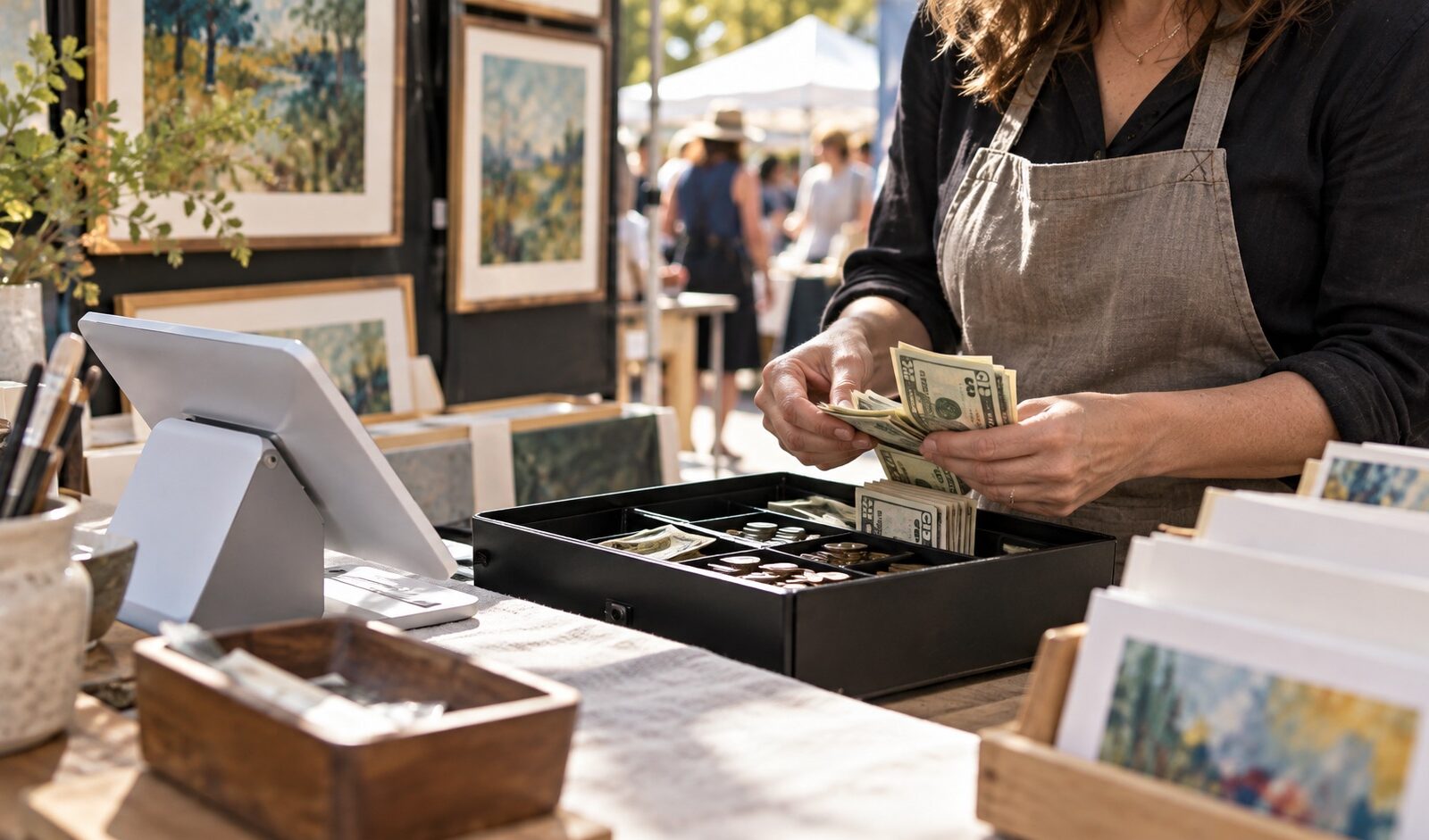
Cash can keep a sale moving when a reader fails, but it needs a process. A crowded booth is an easy place to lose track of change, receipts or which artwork has actually been paid for. Set up a routine before doors open so helpers can follow the same steps.
Start with a counted float
Choose a modest amount of change based on your price points and record the starting total. Store it in a secure location that is out of public view but convenient for the person taking payment. Do not mix personal cash with the float. If you remove bills during the day, record the amount and time so the end-of-day count still makes sense. Avoid displaying a large stack of cash while you make change.
Complete one sale at a time
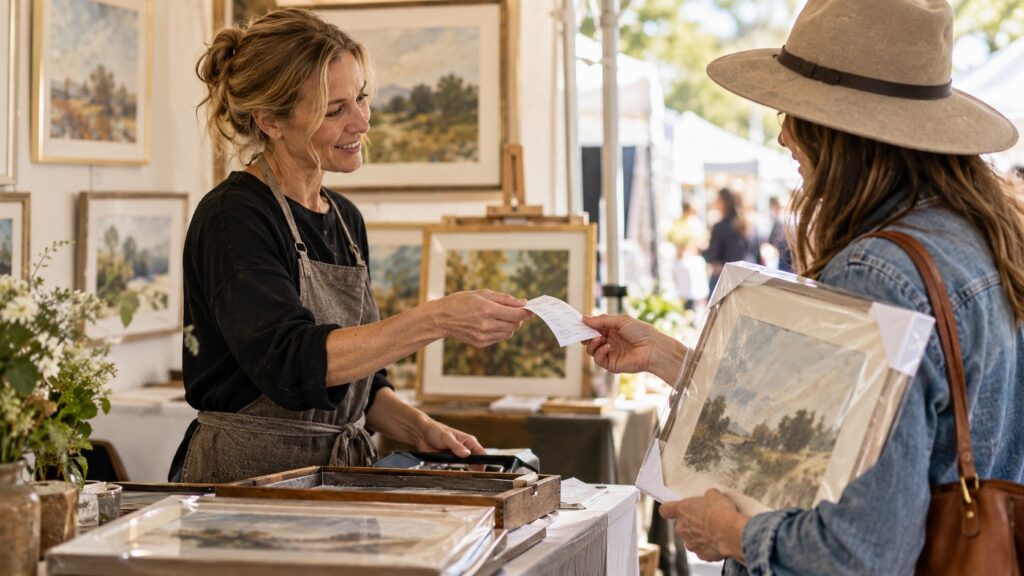
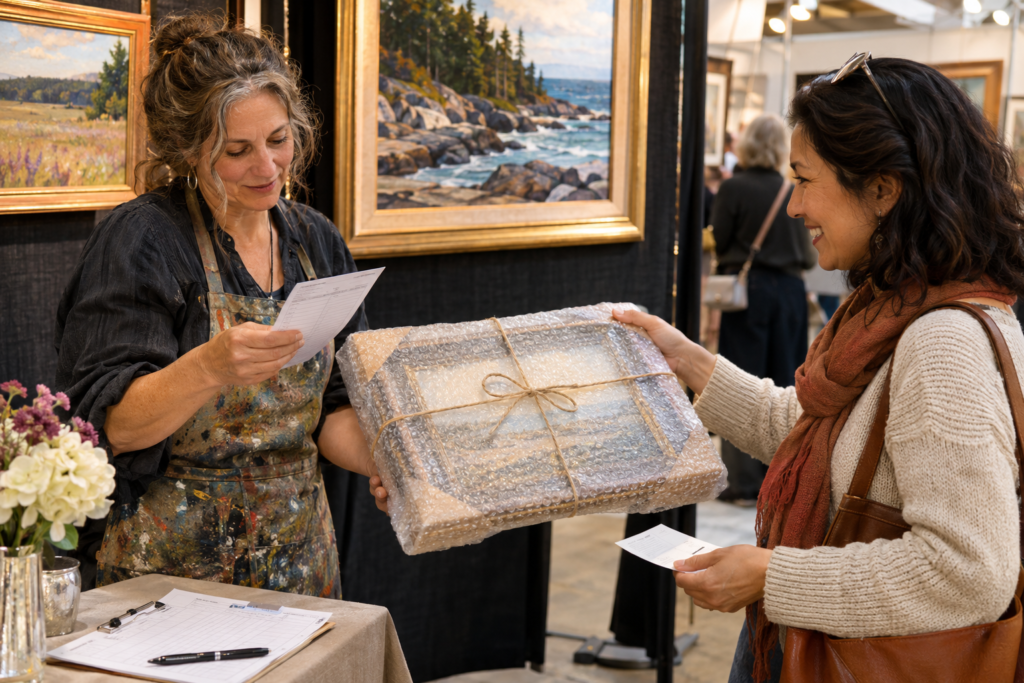
Say the price aloud, count the money you receive and place it where it remains visible until you have returned change. Then mark the artwork as sold in your inventory record and provide a receipt. If another visitor interrupts, finish or pause the current transaction explicitly. A rushed handoff is how an item can leave before its payment is recorded.
Give helpers a clear rule
Decide who may accept cash, who may issue a refund and where completed receipts go. If more than one person works the booth, use initials or a simple transaction number to make reconciliation possible. Do not leave a cash box unattended during a break. Our staffing guide helps assign coverage for busy periods.
Close the day with a count
Separate the float from sales cash and compare the result with your sales log. Investigate differences while the day is fresh, without assuming they were caused by one transaction. Move cash securely under the event's rules. The goal is not an elaborate accounting system at a small booth; it is a sequence that protects both the buyer and the artist from avoidable confusion.