For Visitors
Outdoor Art Placement: Sightlines, Scale, and Garden Views
Choose a place for outdoor art by testing everyday sightlines, scale, changing light, and seasonal planting before committing to a garden or patio view.
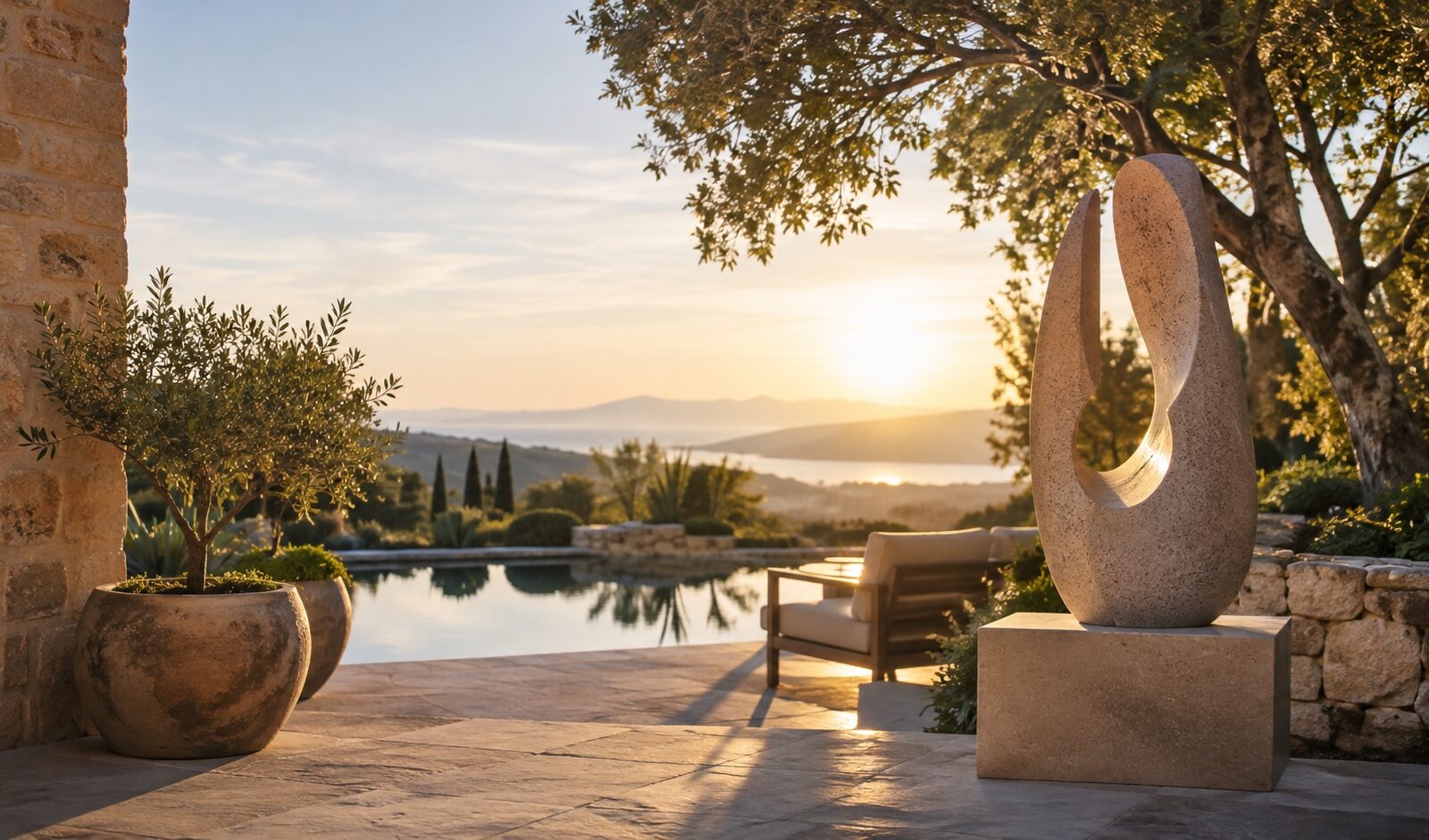
An artwork that draws you in at a show will meet a different backdrop at home. A patio, garden or courtyard gives it changing light, moving people and plants that may grow around it. Once the artist has confirmed the work is suitable for the site, think about where you want to experience it. The best spot may be the one you see every day, not the most obvious empty corner.
Start with the views you use
Walk the route from your door to the garden, then sit where you usually spend time. Look back through the windows you use most. Which view would let the artwork become part of an ordinary morning or evening? A piece placed at the far end of a path can draw someone forward; one beside a seating area can reward a closer look. Take photographs from two or three of these positions. They will tell you more than a single picture of the proposed spot.
Judge scale from a distance
A work that fills a booth may disappear against a long fence or a broad lawn. The opposite can happen in a narrow courtyard, where a large form leaves too little visual breathing room. Ask the artist for the work’s full dimensions, including any display base. Mark out its approximate height and width with a temporary cardboard outline or an object of similar size, then step back to your usual viewing points. Our space-measuring guide helps you record the dimensions; the outdoor test shows how those dimensions feel in context.
Notice what the light reveals
Look at the site in morning and late afternoon light. A textured surface may come alive when light crosses it from the side, while a reflective finish can compete with a bright window or pale wall. Shadows can become part of the composition, changing the work’s outline across a path or terrace. Photograph the same location at different times rather than assuming the light you see at noon tells the whole story. If a view is mostly from indoors, check for glare on the glass.
Leave space for the garden to change
Planting is a moving backdrop. Spring flowers, summer leaves and bare winter branches can each alter the color and shape around a work. Notice what will grow into the view and what might hide the piece from your favorite seat. A little open space can help the artwork read clearly without making the garden feel bare. Consider nearby paving, furniture and containers too: repeating every color or shape can make a piece vanish, while one quiet contrast can give it presence.
Compare two placements before deciding
Make a simple visual plan with photos of your top two locations and a rough outline of the work in each. Discuss those views with the artist if possible; they may have insight into how the piece is intended to be seen. Then live with the plan for a day or two. This is a decision about the experience of the artwork. For questions about weather suitability, anchoring or care, use our outdoor sculpture buying guide and the artist’s specifications before arranging installation.