For Visitors
How to Buy Mosaic Art at an Art Show
Ask a mosaic artist about the pieces, backing, grout, weight and intended display environment before buying.
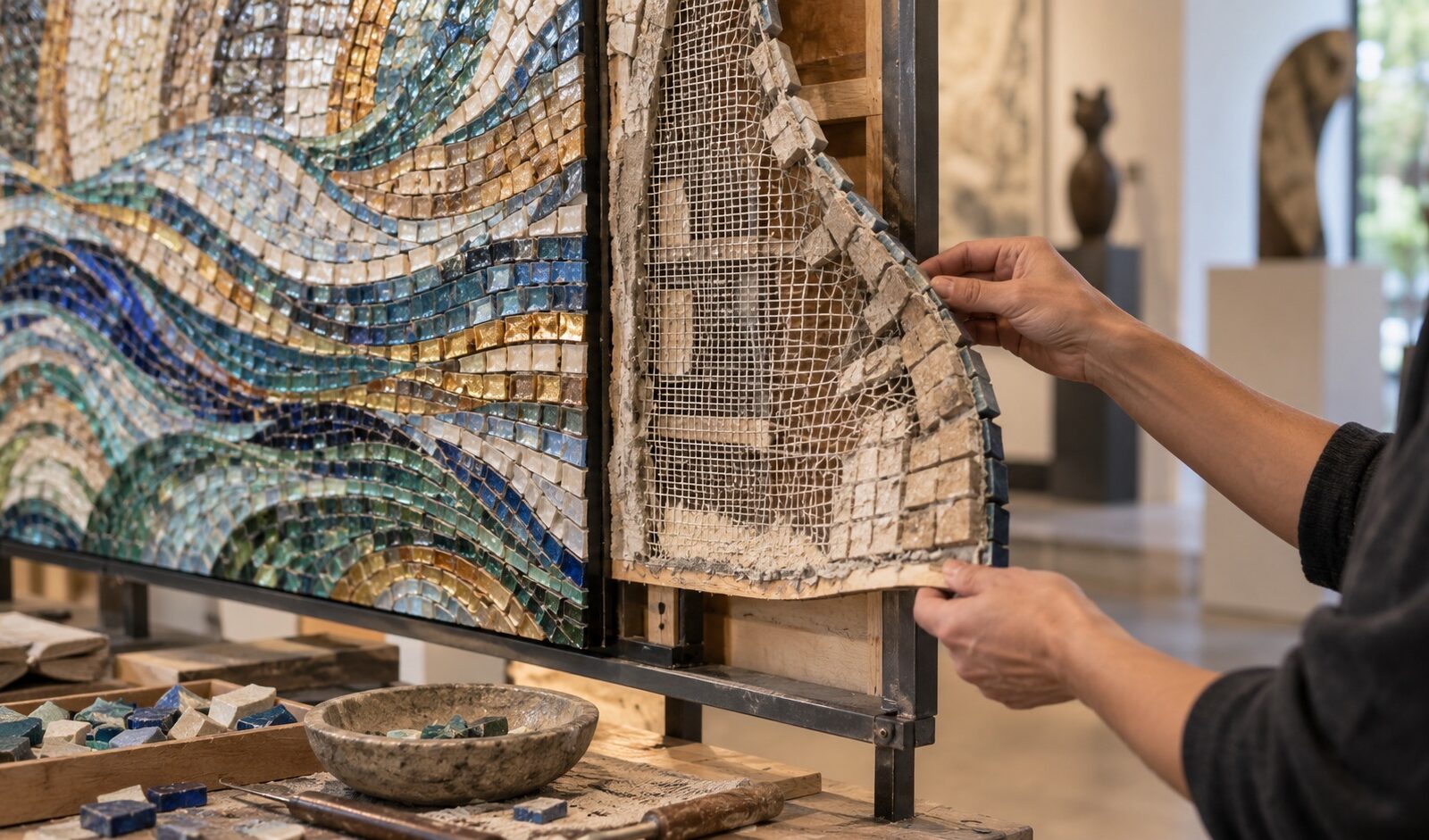
Mosaic art draws you in through small pieces that become a larger image or rhythm. Those pieces may be glass, ceramic, stone or mixed materials. The unseen backing and mounting method matter just as much as the surface when you plan to live with the work.
Look at the surface closely
With permission, inspect the edges and the spaces between pieces. Ask what the individual pieces are and whether their unevenness is intentional. Some works use a smooth, walkable surface; others are highly textured wall objects. Do not assume a tabletop or panel can tolerate heat, food or repeated wiping because the visible material appears durable. Ask the maker how they intend this exact piece to be used.
Ask about backing and weight
Find out what supports the mosaic and how much the complete object weighs. A dense surface on a heavy substrate may need more substantial hanging hardware than its dimensions suggest. Ask whether the work is ready to hang and which points can safely carry it. For freestanding work, ask about base stability. Our framing guide deals with different construction, but the same principle applies: inspect the physical object, not just the image.
Match care to the materials
Ask what grout, adhesive or finish the artist used and how to clean it without loosening or staining the surface. If the work might go outdoors, describe the site and ask whether all components—not only the tesserae—are suited to water, sun and temperature changes. Our outdoor-art guide can help frame those questions. Do not infer weather resistance from a single material in a mixed construction.
Plan transport and installation
Protect raised areas and corners, and ask the artist whether the mosaic should travel flat or upright. Measure the path into your home as well as the intended wall or table. Keep a receipt with the artist, title, medium, substrate and care instructions. A mosaic is a combination of many decisions; understanding its support and use lets the visible work shine safely.