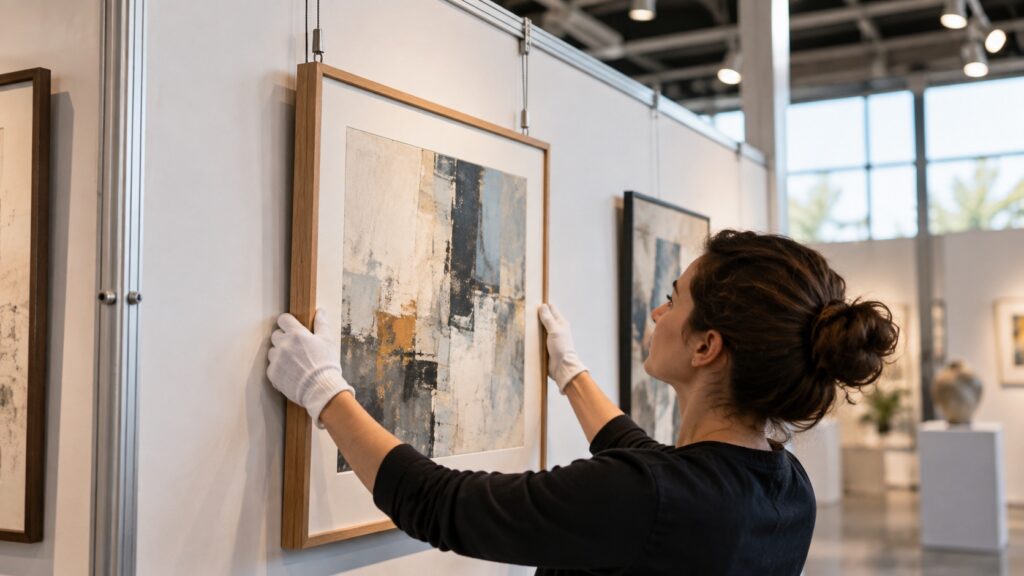
Behind the Booth
How to Display Small Works Without Creating Clutter
Group small artwork so visitors can browse it comfortably while keeping each piece visible and protected.
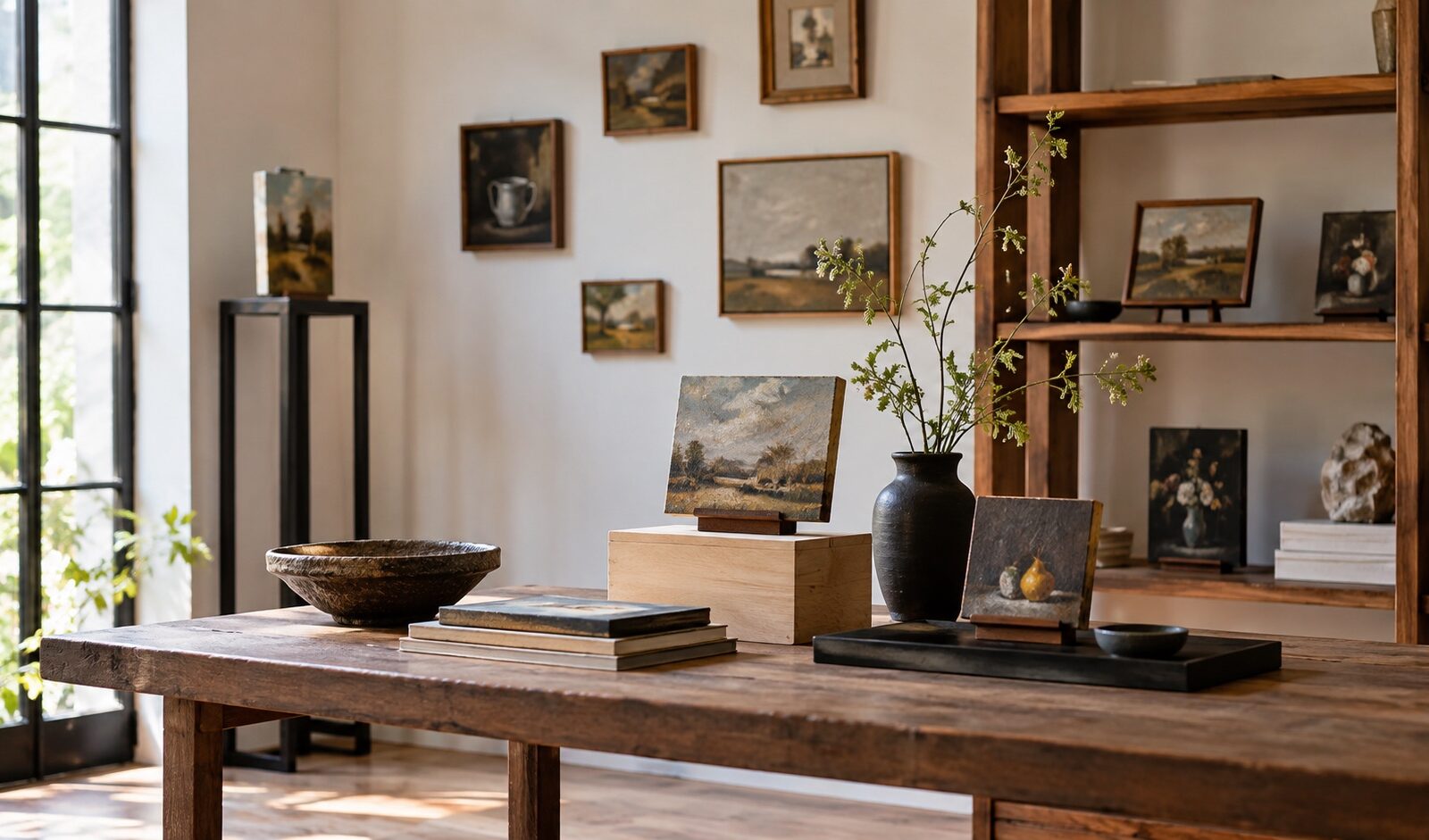
Small works can make a booth approachable, but a dense grid may cause visitors to skim past everything. Give them a way to understand the collection: by series, subject, medium or price range. Then leave enough space for a person to look at one piece without disturbing several others.
Choose a grouping rule
Sort the work before packing and ask which arrangement helps a visitor compare related pieces. A coherent series on one wall can feel intentional; a mix of unrelated pieces in every corner asks the reader to do the organizing. Use labels or dividers sparingly and make the rule visible. Our booth signage guide helps keep information clear without crowding it.
Build a browsing rhythm
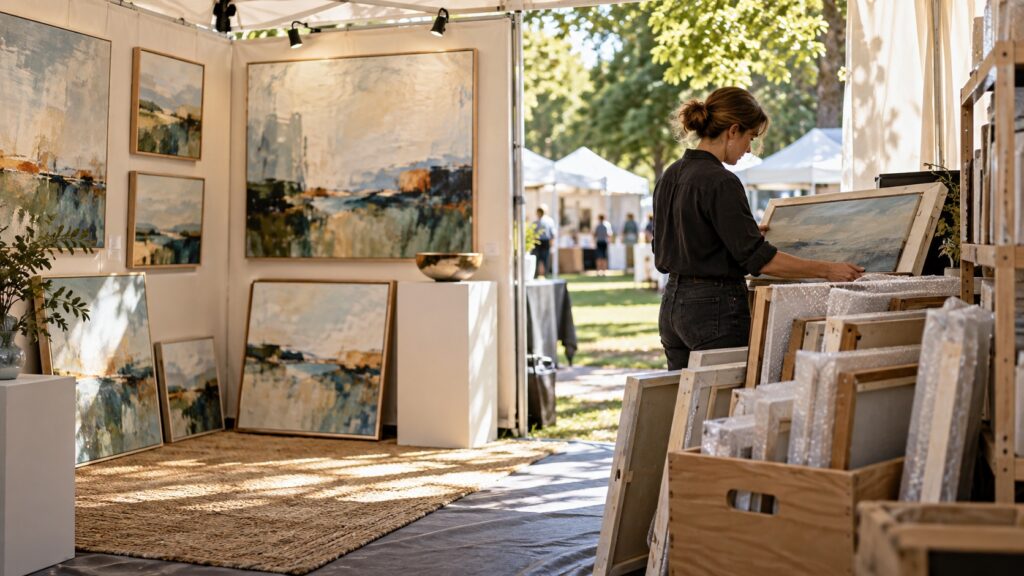
Place a few anchor pieces where they can be seen from the aisle, then provide a comfortable closer-view area. If prints are in a bin, leave enough clearance to flip through them without bending a corner. If small ceramics or jewelry sit on a table, make sure hands have space to lift one item safely. Test the setup with another person; their natural reach can reveal a tight spot.
Control the stock behind the display
Do not treat every spare as something that must be visible. Keep duplicates and alternate colors in labeled, protected storage. Replace sold work deliberately, preserving the grouping rather than filling any empty space. The inventory guide can help you track what is on the table and what remains packed.
Watch how people respond
If visitors repeatedly ask whether there are more pieces in one series, make that stock easier to show. If they lift several objects just to see a hidden one, create more room. A clear display does not reduce choice; it makes choices easier to notice. Give each small work a moment of attention rather than making it compete with its neighbors.