For Visitors
Displaying Sculpture Safely at Home
Give a purchased sculpture a stable base, clear path and suitable light in its new home.
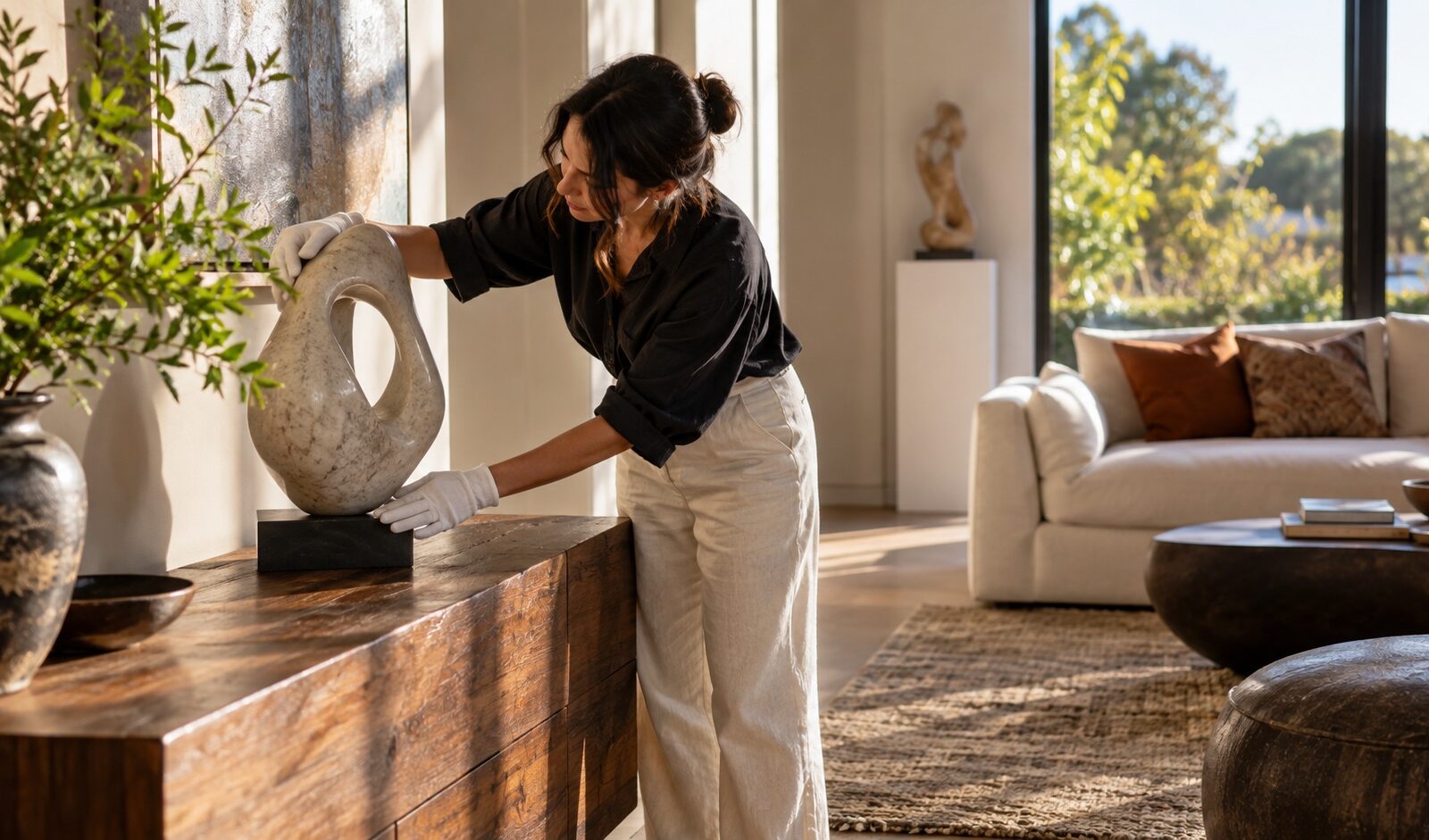
A sculpture can change a room as you move around it. That also means its position affects traffic, furniture and the safety of the work. Before you set it on the first available shelf, check how the artist intended it to stand and what the space asks of it.
Examine the base and weight
Ask the artist whether the displayed base is part of the work and whether anything must be secured. Know the total weight and the footprint that contacts the surface. A narrow pedestal can be elegant but unstable in a busy hallway. Test the furniture or floor for level support. If a piece needs anchoring, use the artist's specifications and a qualified installer when the load warrants it.
Walk the route around it
Put a paper outline or empty pedestal in the proposed spot and live with it briefly. Can someone pass carrying groceries? Can a child or pet reach a projecting element? Does a door swing toward it? A placement that looks good from one chair may be vulnerable from the side. Our sculpture-buying guide covers what to assess before purchase; this is the at-home test.
Consider light and environment
Light can reveal form, but direct sun or a hot fixture may affect some materials or finishes. Ask the artist about the work's composition and care. Keep delicate pieces away from humidity and accidental splashes. Try the placement at different times of day and check for glare as well as direct light.
Make handling intentional
If you must move the sculpture, learn where to lift it and whether parts detach. Keep the artist's care instructions and a photograph of its original condition. Dust gently only as directed. Recheck the base after moving furniture or changing the display. A stable placement lets you enjoy the work from several angles without needing to worry about every person who walks by.