Behind the Booth
Art Show Booth Lighting: Help Visitors See the Work Clearly
Plan art show booth lighting that shows color and detail clearly, avoids glare, and works within the event’s power and safety rules.
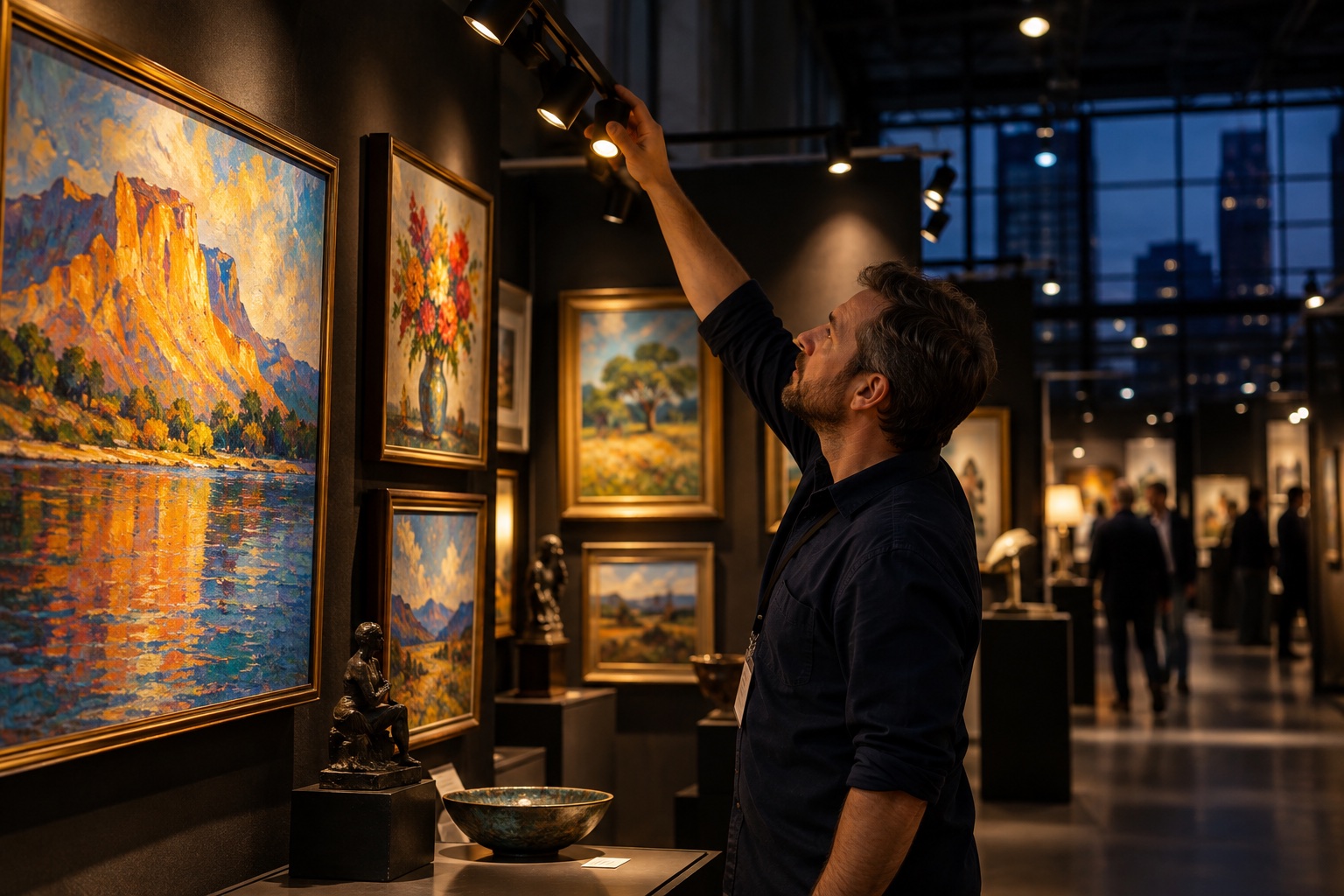
Lighting changes how a visitor sees your work. A painting that looks balanced in the studio can feel dim under a canopy or washed out beneath a hall’s overhead lamps. Treat lighting as a viewing tool: it should help people notice color, surface, and detail without turning the booth into a spotlight display.
Check the light you will actually have
Ask the organizer about power access, permitted fixtures, extension-cord rules, and any limits on cords across walkways. Then consider the venue: an indoor hall may have uneven overhead light, while a tent changes throughout the day. If power is unavailable, plan around daylight and portable fixtures that are allowed by the event. Do not assume your usual studio setup will fit the booth.
Light the artwork, not the visitor
Aim fixtures at the work from an angle that reduces reflections on glass or glossy surfaces. Stand where a visitor will stand and look for glare, harsh shadows, and hot spots. Move the light or the work before adding more brightness. Three-dimensional pieces need enough light to show form and texture, but strong light from one side can hide part of a sculpture.
Color matters too. Mixing very warm and very cool lamps can make a series look inconsistent. Test the actual fixtures with your work before the show. For pieces with sensitive materials, ask a qualified specialist about appropriate light exposure and avoid direct heat from fixtures.
Make the setup safe and adaptable
Keep cords secured and out of visitor paths, follow the venue’s electrical instructions, and use fixtures that remain stable when the booth gets busy. Bring a small backup light only if the show allows it. During setup, check the display from the aisle, near the entrance, and from inside the booth; a change that helps one piece can create glare on another.
Lighting works best when it supports the full display. Our booth setup guide covers the larger layout, and the pre-opening checklist helps you make a final walk-through.
Quick lighting test
- Can visitors read labels and see details without squinting?
- Do framed pieces reflect lamps or bright openings?
- Are cords and fixtures secure under the event’s rules?
- Does the work still look good from the aisle after the light changes?