Behind the Booth
How to Plan a Live Art Demonstration at Your Booth
A live art demonstration can invite visitors into your process. Plan a short, safe demo that fits your booth, keeps the work visible, and supports conversation.
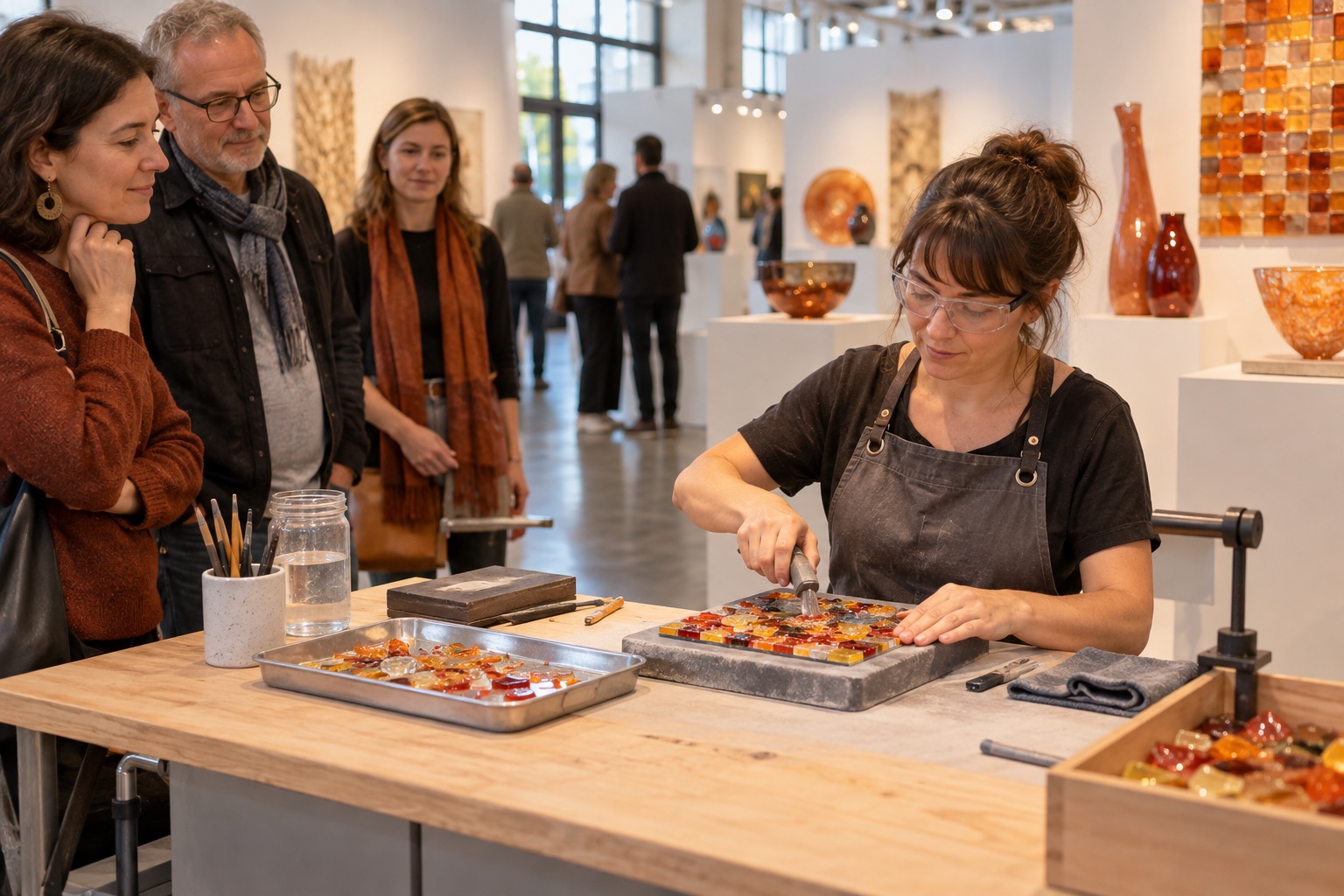
A brief demonstration can give visitors a reason to pause and a better sense of how your work is made. It should fit the space and the event, rather than compete with the finished pieces you are there to show.
Choose one visible step
Pick a process that makes sense from a few feet away and can be paused safely. A brushstroke, a carving pass, or the assembly of a small mosaic can reveal more than a long explanation. Show a finished example beside the in-progress piece so visitors can connect the step to the result. Avoid a demonstration that needs constant attention if you are staffing the booth alone.
Confirm what the organizer allows
Check rules for tools, electricity, sound, fumes, liquids, fire, and public demonstrations before planning the setup. Keep tools and materials within your space and protect finished work from dust or splashes. If the process cannot be shown safely in a busy booth, bring process photos or a short silent video instead.
Make room for watching and browsing
Set the work surface so a few people can watch without blocking the aisle or the booth entrance. Keep labels and artwork accessible to visitors who are not watching. A small sign can tell people what stage they are seeing, but you can also explain it in one sentence when someone stops.
Invite questions without giving a lecture. Describe a choice you are making, then let visitors ask what interests them. Our visitor conversation guide shows the kinds of questions people may bring. If another artist helps staff your booth, agree on who demonstrates, who handles sales, and when to switch.
Reset between demonstrations
Allow time to tidy the table and check that tools remain secure. Repeat a short segment rather than trying to finish an entire artwork under show conditions. Keep a record of which questions come up; those can improve future demos and the information on your labels.
For the broader event preparation, use the exhibitor checklist. A demo is strongest when the booth is already easy to enter, see, and navigate.
- Pick a short process step with a visible result.
- Confirm event rules before bringing tools.
- Keep the aisle and finished art clear.
- Plan how to pause and reset safely.