
For Visitors
How to Care for Textile Art Bought at an Art Show
Protect woven, embroidered, and other fiber art with artist-specific advice about handling, hanging, light, dust, and storage.
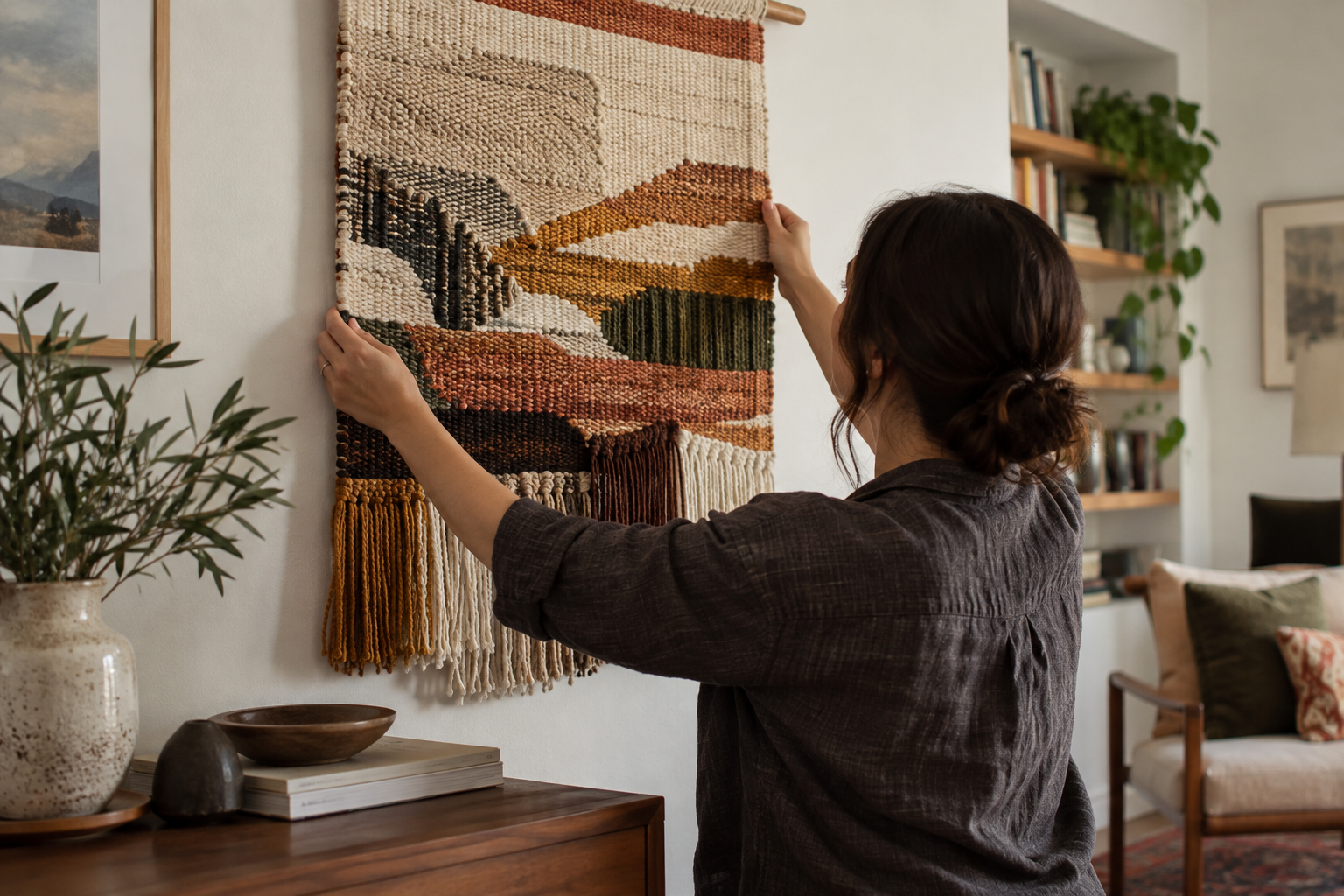
Textile art can be woven, stitched, felted, quilted, or made from several fibers at once. That variety is why the artist’s own care instructions should travel home with the work. At the booth, ask how the piece should be hung, cleaned, and stored before you leave.
Handle and hang it with support
Use clean, dry hands and support the whole piece rather than pulling on a corner or fringe. Ask whether a sleeve, rod, frame, or other mount was designed for it. The correct support depends on its weight and construction. If the work is heavy or unusually fragile, ask the artist or a qualified conservator about the mounting method before improvising.
Choose the location carefully
Bright light can fade dyes, and changing moisture conditions can affect fibers. Avoid a wall that receives strong direct sun, and think twice about hanging delicate textiles near a steamy bathroom, a fireplace, or a heating vent. The Canadian Conservation Institute’s textile care guidance explains why light, humidity, and handling matter.
Our guide to measuring your space before buying art can help you plan the display without crowding the work.
Keep the care routine gentle
Ask whether the piece can be dusted and how. Do not assume it can be washed or vacuumed like a household fabric; embellishments, dyes, and attachments may respond differently. If it needs treatment for a stain or damage, contact the artist first and consider a textile conservator for valuable or delicate work.
Store the instructions with the artist’s details
Keep the receipt, material description, and any notes on mounting or cleaning. Photograph the work when it arrives home so you have a record of its condition. If you rotate it off display, ask the maker whether to store it flat or rolled; avoid tight folds and unprotected damp spaces. A little planning lets the texture and color remain the focus for years to come.