Behind the Booth
Before the Booth Opens: A Practical Exhibitor Checklist
A practical art-show preparation checklist covering organizer instructions, booth layout, labels, packaging, visitor conversations and a useful post-show review.
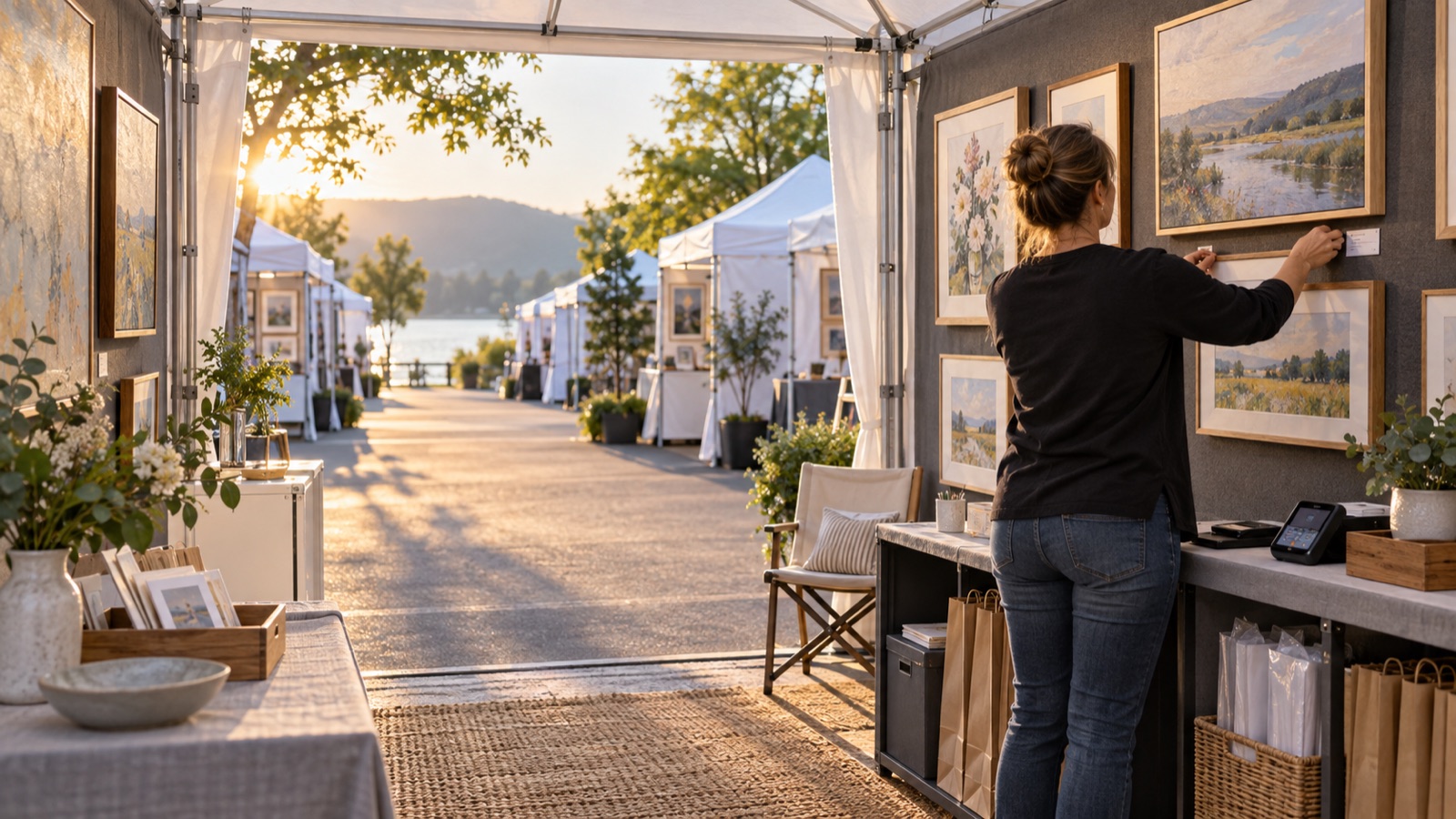
A booth is a temporary place of business and a place where strangers encounter your work for the first time. The hour before an art show opens is easier when the important decisions were made earlier. This exhibitor checklist focuses on the final preparation that turns a finished setup into a welcoming, workable space. Adapt it to your medium and to the current organizer’s requirements.
Confirm the day’s instructions
Keep the show packet close. Check your arrival window, booth assignment, unloading route, parking location and opening time. Save the organizer’s contact details where you can reach them without searching an email thread. Requirements for tent weights, sidewalls, signs, electricity and breakdown vary by event; follow the current packet even if a similar show had different rules.
If you have not selected your next event yet, start with the magazine’s Upcoming Shows directory, then confirm final exhibitor details with the organizer.
Walk the booth like a visitor
Once the structure and artwork are in place, step into the aisle. Can someone tell where to enter? Is there space to pause without blocking another visitor? Can small works be seen without bending over or reaching across a table? Move one or two pieces if the display feels crowded; the last hour is usually too late to redesign everything.
Look for practical hazards at the same time. Keep boxes, bags and cords out of the path. Check that panels and display pieces are stable and that all canopy weights remain secure. Adjust for glare on framed or glossy work and make sure an important piece is not hidden by a sidewall or support pole.
For a fuller look at the physical work behind the finished display, read What Really Goes Into Setting Up an Art Show Booth.
Make prices and information easy to find
Labels should be consistent and readable from a comfortable distance. Depending on the work, include the title, medium, dimensions and price. Check that the labels match the correct pieces and that sold or reserved work is marked clearly. A short process note can help a visitor begin a conversation, but it should not compete with the artwork.
Place your name and contact information where people can find them without interrupting you. Keep extra labels, a marker and a few display fasteners nearby for quick corrections.
Test the sale before the first customer
Charge your phone and payment reader, then run through the steps for a sale: price, receipt, packaging and handoff. Confirm the connection and power arrangement you expect to use. If you accept cash, prepare change and a secure place for it. Keep protective sleeves, boxes or bags close enough that a buyer does not wait while you search the vehicle.
For a broader packing list covering weather gear and backup supplies, use What Artists Should Bring to an Outdoor Art Show: The Booth Survival Checklist.
Prepare to talk, then leave space to listen
Have a short explanation of your process in ordinary language. One concrete choice is often enough: why you used a material, what changed while making the work, or what first drew you to a subject. Ask what catches the visitor’s eye and allow silence for looking. Not every conversation needs to end in a sale to teach you how the work is being seen.
Make one final ten-minute pass
- Confirm the entrance, aisle and neighboring spaces are clear.
- Check labels, prices, signs and the stability of the display.
- Put packing bins out of sight but keep sale supplies reachable.
- Check water, a personal break plan and weather conditions.
- Keep your phone, payment equipment and organizer contact at hand.
Take a quick photo of the finished booth. After closing, compare what worked with what you expected and carry the useful observations into a short post-show review. Artists with a lesson worth sharing can also send a story to the magazine.