Behind the Booth
What Artists Should Bring to an Outdoor Art Show: The Booth Survival Checklist
A practical outdoor art show packing checklist for artists: booth gear, canopy weights, weather supplies, payment tools, packaging and an easy setup plan.
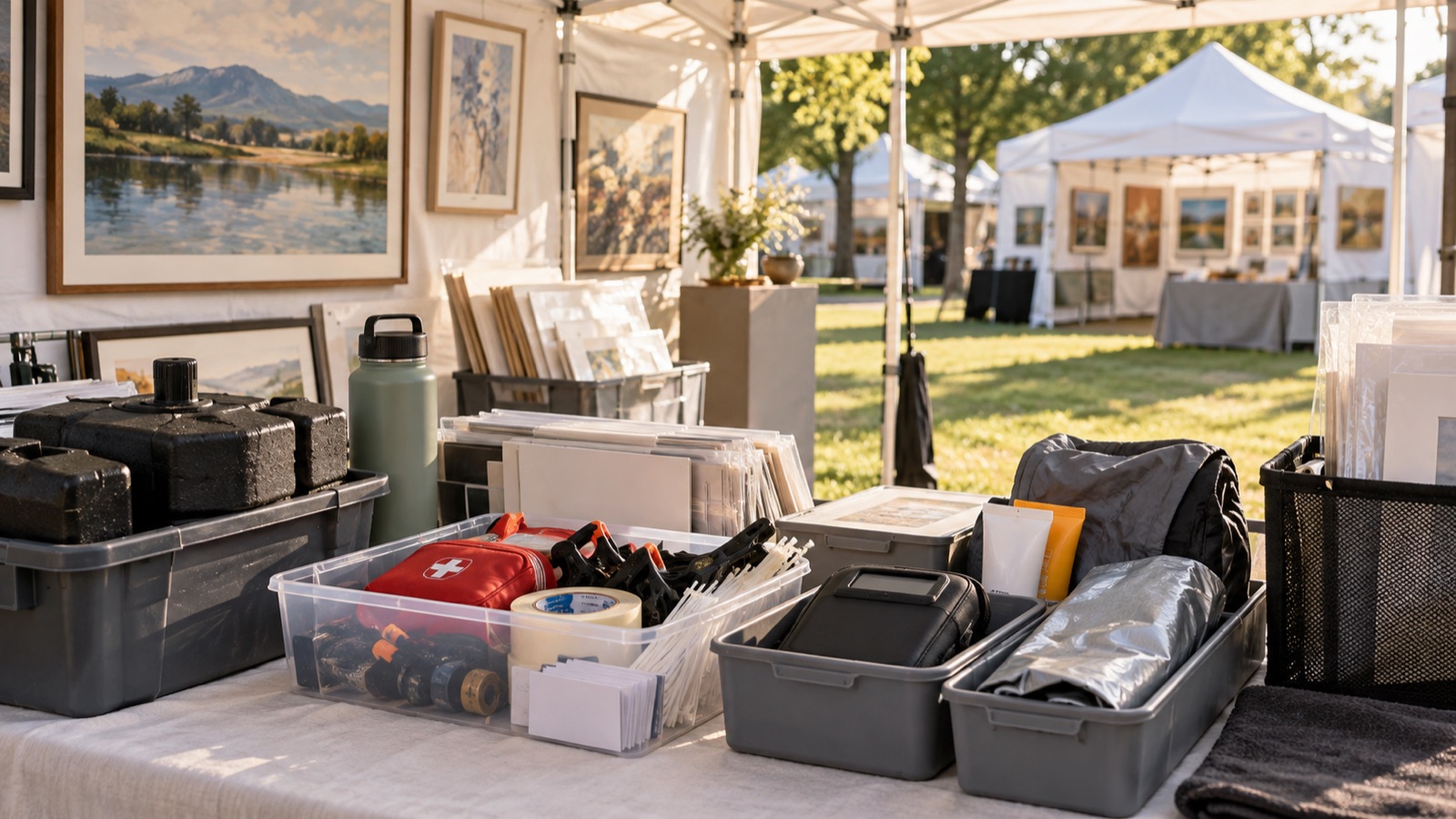
An outdoor art show asks an artist to run a small gallery in changing conditions. The artwork is the reason to be there, but a missing clamp, dead payment reader or unexpected rain can take attention away from visitors. Use this outdoor art show packing checklist as a starting point, then adjust it to your medium, vehicle, booth design and the organizer’s current rules.
Start with the requirements, not the supply bin
Before adding anything to a packing list, reread the show’s exhibitor packet. Confirm booth dimensions, arrival and load-in times, vehicle access, parking, electrical service, tent specifications, weight requirements and the rules for signs or sidewalls. Keep the organizer’s contact information, booth assignment and any required documents available offline. A setup that was accepted at one event may not meet another event’s rules.
If you are still choosing an event, browse the magazine’s Upcoming Shows directory and check the organizer’s own website for final exhibitor details.
The booth and display essentials
- Canopy, sidewalls and the parts needed to assemble them, if the show does not supply a tent.
- Approved canopy weights or anchors, plus the straps and hardware required by the organizer. Never assume stakes are permitted.
- Display panels, tables, coverings, easels, shelves or pedestals suited to the work.
- Clamps, zip ties, tape, hooks, leveling tools and a compact repair kit.
- Price labels, artist information, business cards and a legible way to identify each work.
- Protective sleeves, boxes, bags or other packaging for sold pieces.
Test the full display at home when possible. Count the tent connectors, check that every panel fits in the vehicle and photograph the finished layout. Keep the most important assembly pieces together in a clearly marked bin rather than spreading them across several boxes.
Weather, safety and personal comfort
Bring a plan for sun, wind and rain that follows the show’s safety instructions. Useful items may include permitted sidewalls, waterproof covers for work and packing bins, towels, sunscreen, a hat, water and layers for a cool morning or a hot afternoon. Keep electrical cords and power devices protected in the manner required by the venue and equipment manufacturer. If conditions become unsafe, follow the organizer’s instructions rather than trying to save a display single-handedly.
A small first-aid kit, hand sanitizer, tissues and a phone charger can make a long day easier. Pack food or identify realistic meal options, especially if you cannot leave the booth unattended. Plan for restroom breaks and, if needed, arrange a trusted person who can watch the space briefly.
Payments and customer handoff
Charge and test your payment reader, phone and backup battery before leaving. Confirm your sales tax and receipt process for the place where you are exhibiting. Bring a small amount of change if you accept cash, and decide where cash and devices will stay during setup, sales and breakdown.
Think through the moment after a purchase: how will a buyer carry a framed piece, a ceramic object or a print safely? Keep packaging within reach, along with care information and your contact details. For work that cannot leave immediately, write down the agreed pickup or delivery terms clearly for both parties.
A compact emergency kit
The best backup kit solves problems you have actually encountered without filling the vehicle with duplicates. Many exhibitors find room for spare fasteners, extra labels, a marker, scissors, a multitool, cleaning cloths, a flashlight and a few replacement batteries. Add medium-specific supplies: a jeweler may need display clips; a photographer may need clean print sleeves; a ceramic artist may need extra cushioning.
Pack in the order you will set up
Put the canopy and weights where you can unload them first, followed by walls or tables, artwork and then small merchandising supplies. Keep a separate “open first” bag with the show paperwork, tools, water and charged payment equipment. Before departure, check the load against a written inventory; at breakdown, use the same list in reverse so a small but essential item is not left behind.
For a closer look at the work behind that process, read What Really Goes Into Setting Up an Art Show Booth. Explore the magazine’s show guides for event context, or share a lesson from your own booth with our editors.