Behind the Booth
What Really Goes Into Setting Up an Art Show Booth
Go behind the booth to see how artists plan, unload, secure, arrange and check an outdoor art show display before visitors arrive.
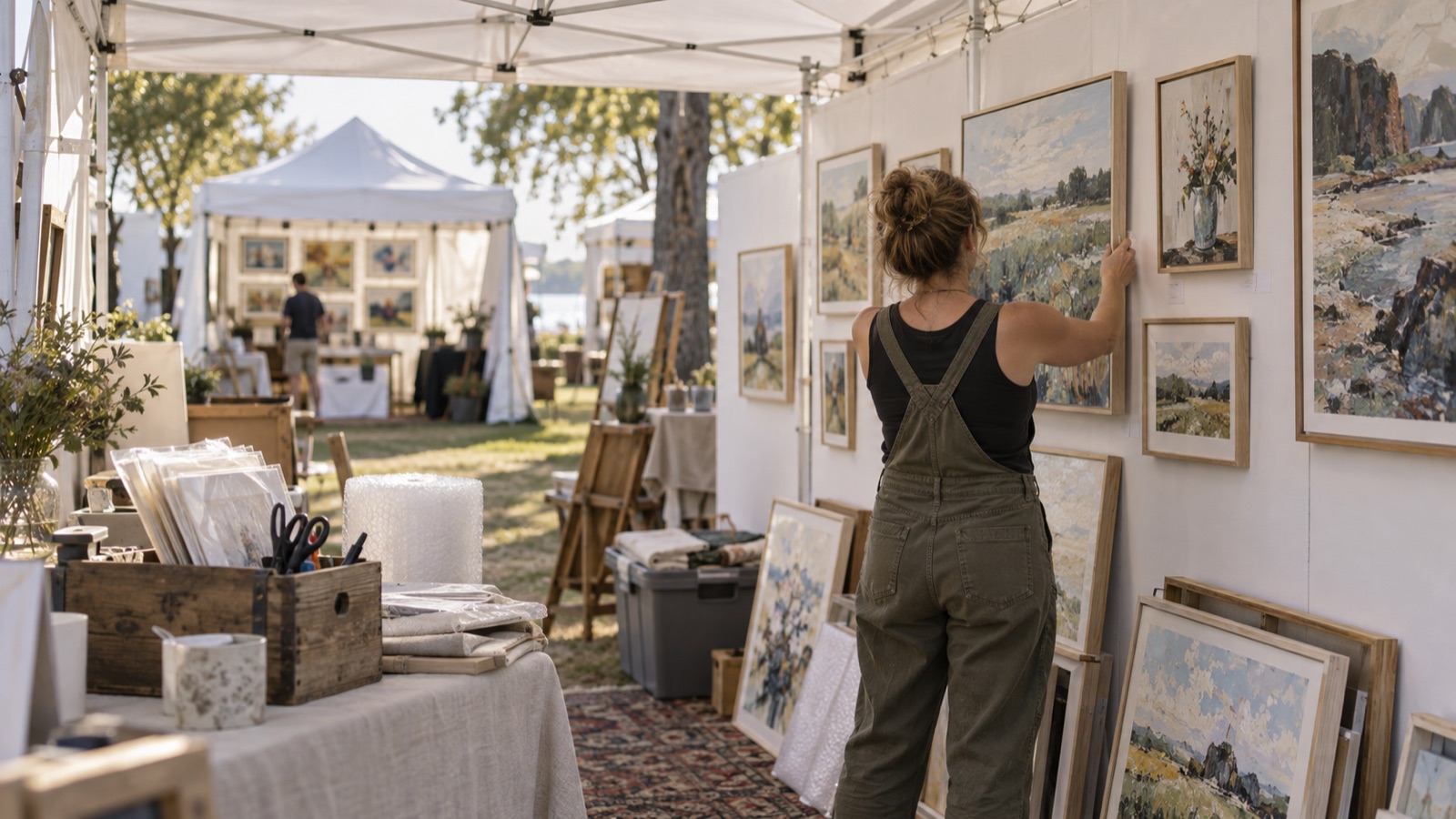
Visitors see a finished display: artwork on the walls, prices in place and an artist ready to talk. What they rarely see is the sequence of choices that made the booth possible. Setting up an art show booth means balancing the organizer’s rules, a limited load-in window, the physical safety of the display and the way people will encounter the work. Here is what that work actually involves.
The setup begins before the show
Artists first decide what work to bring and how each piece will be shown. The selection has to fit a measured footprint, survive the trip and make sense together at a glance. Framed art needs secure hanging hardware; ceramics need stable surfaces; small objects need displays that let visitors look closely without crowding an aisle. Price labels, packaging and a payment process are part of the plan, too.
The organizer’s exhibitor packet sets the boundaries. Load-in times, canopy rules, required weights, approved signs, electricity and parking can differ from show to show. Artists often sketch a booth layout at home, test the larger parts and make a packing order. That preparation saves time when a vehicle must be unloaded in a busy lane.
Load-in is a timed logistics job
On show morning, the first challenge is getting people, artwork and equipment from the vehicle to the assigned space without blocking neighbors or public routes. Carts can help, but artists still need a plan for fragile pieces, heavy panels and multiple trips. A clearly marked “open first” kit should contain the tools and documents needed before the art comes out.
The canopy or structure usually goes up before the display. Weights and anchors must match the organizer’s requirements and be secured as instructed; a tent can become dangerous in wind if those details are treated as an afterthought. Sidewalls, tables and panels follow. At every stage, the artist checks stability and keeps walkways clear.
Displaying art is a design decision
Once the structure is sound, the work can be placed. A strong piece may draw attention from the aisle, but a booth also needs a natural path inward. Artists consider the height of framed works, the distance between objects and whether a visitor can see the whole display without feeling pressed. Outdoor light changes through the day, and glare may move across glass or glossy surfaces.
Labels should be readable and consistent. Depending on the work, visitors may need the title, medium, size, price and a short explanation of a technique. Too much copy can be as unhelpful as too little. The artist’s job is to give someone a way into the work while leaving room for conversation.
The practical systems stay mostly invisible
Behind the display sit the supplies that keep a booth operating: extra fasteners, safe packaging, water, a charged payment device, receipts, contact information and a plan for sudden weather. They should be reachable without turning the visible booth into a storage area. The artist also needs to know where sold work will wait, how buyers will carry it and how to close the booth briefly if a break is necessary.
For an item-by-item packing list, see our companion guide, What Artists Should Bring to an Outdoor Art Show: The Booth Survival Checklist.
The final check happens from the aisle
Before opening, an artist can step outside the booth and look as a visitor would. Is the entrance obvious? Are prices and signs legible? Are cords, bags or boxes creating trip hazards? Is there a clear place to stand and talk? A quick photo helps reveal clutter that was hard to notice during setup.
Then the artist is ready for the public, but the work does not stop. A good booth is maintained throughout the day as pieces sell, light shifts and weather changes. At closing, breakdown reverses the process: protect the art, account for the small parts, leave the space as required and note what should change next time.
If you are looking for an event to visit or exhibit at, explore our Upcoming Shows directory and art show guides. To see one way exhibiting artists connect finished work with visitors, read our profile of Neal Nachman and Liz Stokes. Artists with a useful setup lesson can send it to the magazine.