Behind the Booth
How to Adjust Your Art Show Booth During the Event
Use visitor movement, questions and sightlines to make small, safe booth adjustments without disrupting the artwork or the show.
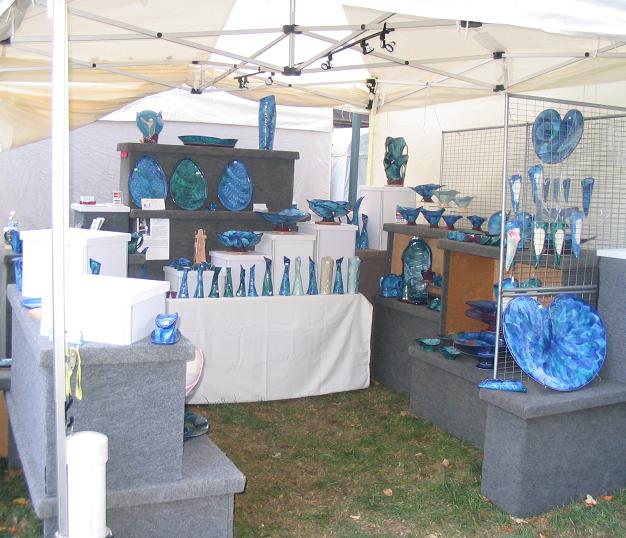
A booth plan is a starting point, not a promise that every element must remain untouched all weekend. Once visitors begin moving through the aisle, small problems become visible: an entry feels narrow, a label disappears in glare, a central piece blocks a sightline or packaging drifts into view. The useful response is a measured adjustment, not a complete redesign during open hours.
Observe before moving anything
Watch from inside the booth and, when staffing allows, from across the aisle. Notice where visitors pause, turn away or enter. Separate a true pattern from one crowded moment. Weather, entertainment, food lines and neighboring activity can change traffic for an hour without proving that the layout failed.
Listen to repeated questions. If several people cannot find prices, understand a series or locate the artist’s information, the problem may be communication rather than placement.
Diagnose one source of friction
Name the problem in a sentence: “The front pedestal hides the smaller work from the left approach” is more actionable than “Traffic is bad.” Check whether the issue comes from sightline, access, lighting, sign placement, staff position or the amount of work on display.
Make the smallest safe change
Move one stable object, remove one visual distraction or raise one essential sign. Keep aisles, neighboring spaces and required exits clear. Do not shift tent legs, weights, electrical cables or heavy work while visitors are present unless event staff directs a safe procedure.
For outdoor sculpture or large framed work, use the planned lifting method and another person when needed. Never leave a piece temporarily balanced. If the event rules prohibit layout changes, wait and document the idea for the next show.
Protect the artist’s point of view
A busy aisle does not require replacing thoughtful work with whatever attracts the quickest glance. The display should still represent the practice accurately. Use adjustments to help people see and enter, not to chase every passing reaction.
Give the change time
After a move, observe through another comparable traffic period. Note whether entry, questions or dwell time changed. Avoid a chain of rapid adjustments that makes cause and effect impossible to understand and keeps the booth in continual disorder.
Coordinate with staff and neighbors
Tell helpers what changed so prices, sales records and packing locations remain accurate. Keep displays within the assigned footprint and avoid redirecting traffic into another booth. For role clarity during busy periods, review Staffing an Art Show Booth.
Record the lesson after closing
Photograph the revised layout after visitors leave, then note what prompted the move and what happened next. Compare it with the setup plan in What Really Goes Into Setting Up an Art Show Booth. The broader post-show review can help decide whether the adjustment belongs in the next standard layout.
A disciplined mid-show adjustment
- Starts with an observed pattern
- Targets one clear problem
- Keeps art, visitors and neighbors safe
- Changes as little as necessary
- Is given time before evaluation
- Is recorded for the next event
The aim is not a constantly changing booth. It is a display attentive enough to respond when real visitor behavior reveals something the floor plan could not.