Artist Business
After the Art Show: Build a Customer Follow-Up System You Can Maintain
Turn art-show inquiries into an organized follow-up routine, with clear promises, useful records, and a separate choice for joining your mailing list.
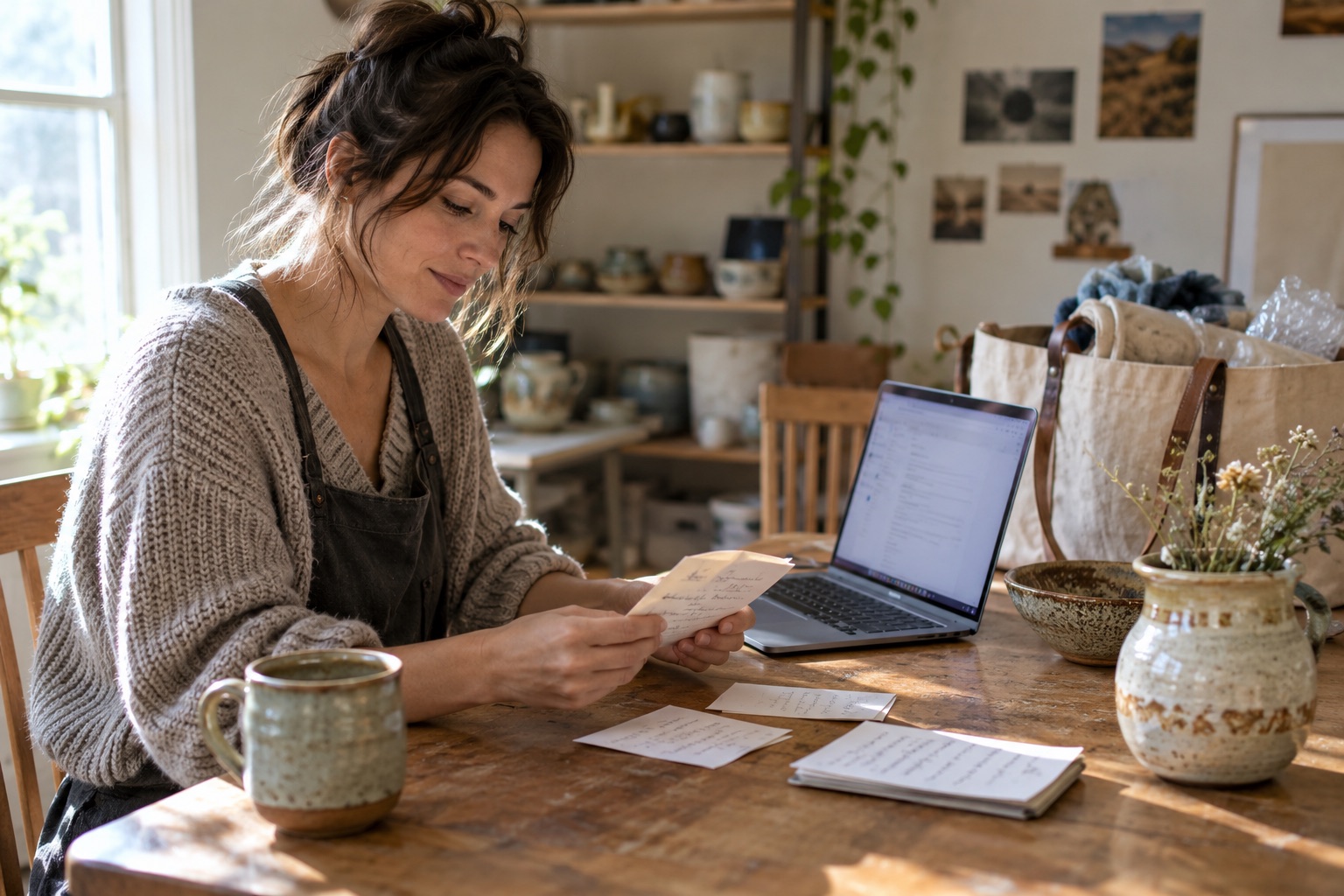
The conversation was promising: a visitor wanted another size, a pair of pieces, or a photograph to discuss at home. Then the show ended, the booth went back into the van, and the details became harder to remember. A useful follow-up system preserves the next step while keeping the work manageable.
Record the promise, not a biography
Use a small inquiry form or a consistent note format. Record the piece or item identifier, what the visitor requested, the contact method they provided, and the action you agreed to take. Ask them to confirm the address before they leave. Avoid collecting personal details that do not help you fulfill the request.
Keep purchase and order records in the appropriate business system. Do not store payment-card details in an inquiry notebook. For an artwork identifier that matches your checkout records, see our inventory guide.
Separate three different conversations
A current customer waiting for delivery information, a visitor asking for a specific photograph, and a person joining a newsletter are asking for different things. Give each a clear route. Do not turn a receipt address into an automatic mailing-list subscription or treat a casual compliment as a request for repeated messages.
At the booth, use plain language for newsletter signups: explain what you send and how often, and provide a separate affirmative choice. Keep a record of that choice in the system you use. This makes the relationship easier to understand even when the sales day is busy.
Write the next action before packing
For each open inquiry, assign a specific action and a realistic due date: send two available sizes, confirm a shipping quote, or prepare a commission estimate. If you cannot promise a date at the show, tell the visitor when you will confirm one. A vague reminder to follow up is easy to postpone.
Before leaving, put inquiry records in one protected place and note any urgent promises. When you return to the studio, sort them into ready to answer, needs information, and completed. A small spreadsheet or your existing customer tool may be enough; choose the simplest system you will actually check.
Make the message useful
Refer to the work the visitor asked about and provide the agreed information. Include a clear image or direct product link where appropriate, the relevant dimensions, current availability, and the next step. Verify price and delivery details before sending. Avoid a long generic sales pitch that obscures the answer.
For commercial email in the United States, the FTC’s CAN-SPAM guide explains requirements including accurate sender information and subject lines, a valid postal address, advertising identification where required, and a clear way to stop marketing messages. Honor opt-out requests within the required time. Other jurisdictions can impose additional rules; use guidance relevant to your recipients and email program.
Close the loop
Mark the request answered and record any agreed next step. If someone declines or asks you to stop, reflect that choice in the relevant system. Review outstanding requests at a regular time rather than relying on a growing pile of cards.
At your post-show review, count fulfilled inquiries separately from immediate booth sales. Notice which questions recur and improve your signs, website, or stock information before the next event. Good follow-up begins with a promise you can keep and ends with the visitor receiving the information they actually wanted.