
Behind the Booth
How to Write an Artist Statement for a Juried Art Show
Write a juried-show artist statement that explains your process and choices clearly without relying on vague claims.
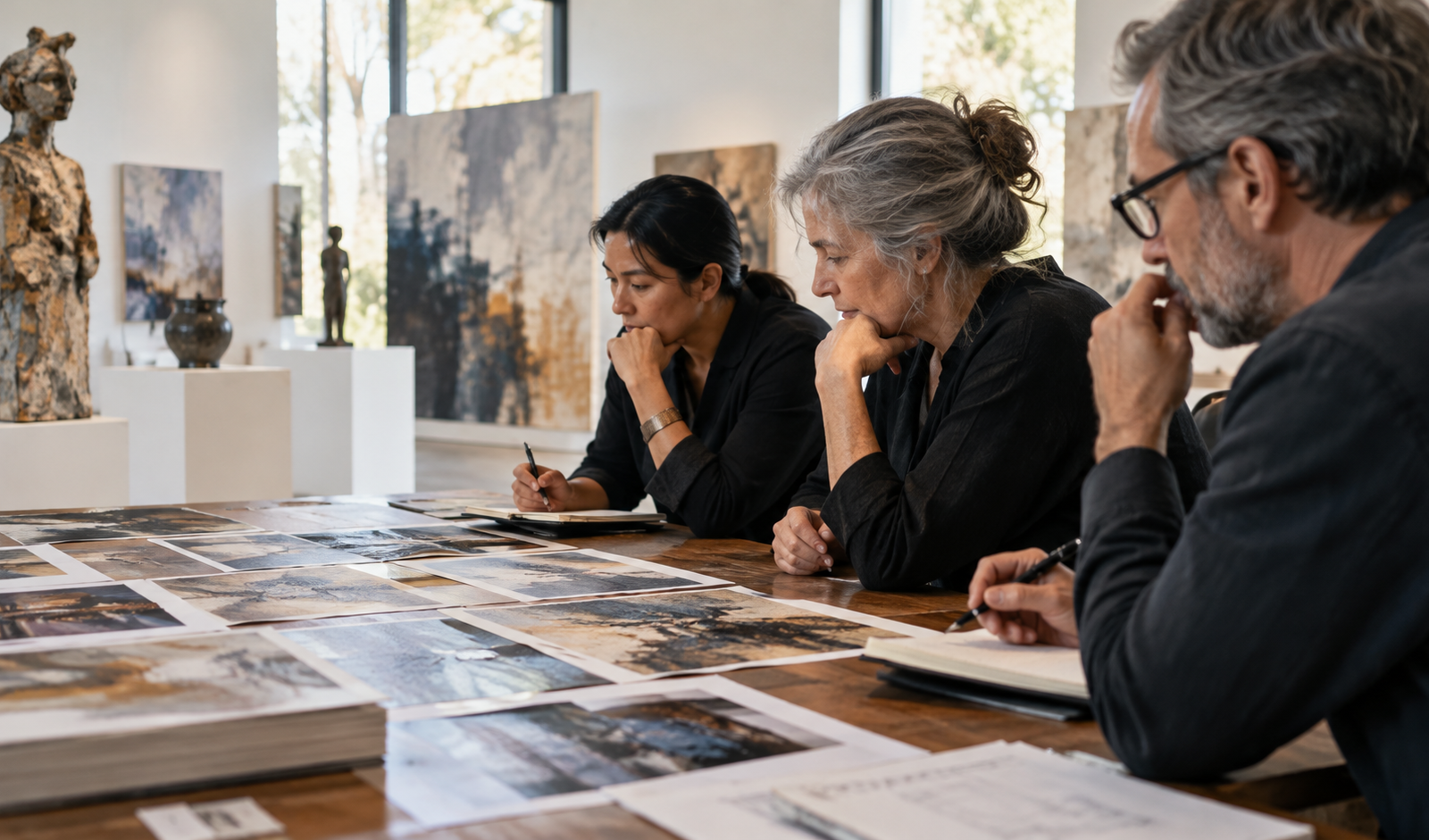
A juried-show statement should help a reviewer understand the work in front of them. It is not a biography, a sales pitch or a substitute for strong images. In a few precise sentences, explain what you make, how you make it and what choices give the work its character.
Begin with the work a juror will actually see
Lay out the images you plan to submit and write down what they share: a material, recurring form, technique or question. A statement about a lifelong love of creativity tells the jury little about these particular pieces. A statement that names hand-carved wood, layered pigments or a repeated landscape motif gives the reader a useful way into the images. If the submitted work spans several styles, decide whether the selection itself needs tightening before trying to explain it away.
Describe process without turning it into a manual
One or two concrete making decisions are usually enough. Explain why you combine a particular material with a technique, or how a choice changes the finished surface. Avoid a list of tools that does not help a viewer see the result. Likewise, avoid claims that every piece is “unique” or “inspired by nature” unless you can show what that means in this body of work. Read the statement aloud; if another artist could use every sentence without changing a word, add a detail only you can provide.
Match the show’s prompt and length
Copy the application question into your working document and answer that question. A prompt about artistic process calls for a different emphasis than a prompt about the work's connection to a community or theme. Check the word limit before drafting. Use plain language and define a specialist term if the jury may include people outside your medium. Ask someone unfamiliar with the work what they understand after reading; confusion is a useful editing signal.
Edit for accuracy and reuse carefully
Compare every claim with your current portfolio. Remove references to techniques or series that are no longer represented. Save a core statement, then keep a dated version for each application so you know what was submitted. Your application calendar should reserve time for this review. The statement and individual artwork images should tell a consistent story, but neither needs to repeat the other word for word.