Behind the Booth
Choosing the Right Booth Size for an Art Show
Compare booth footprints against your work, visitor movement, equipment and total event cost before paying for space.
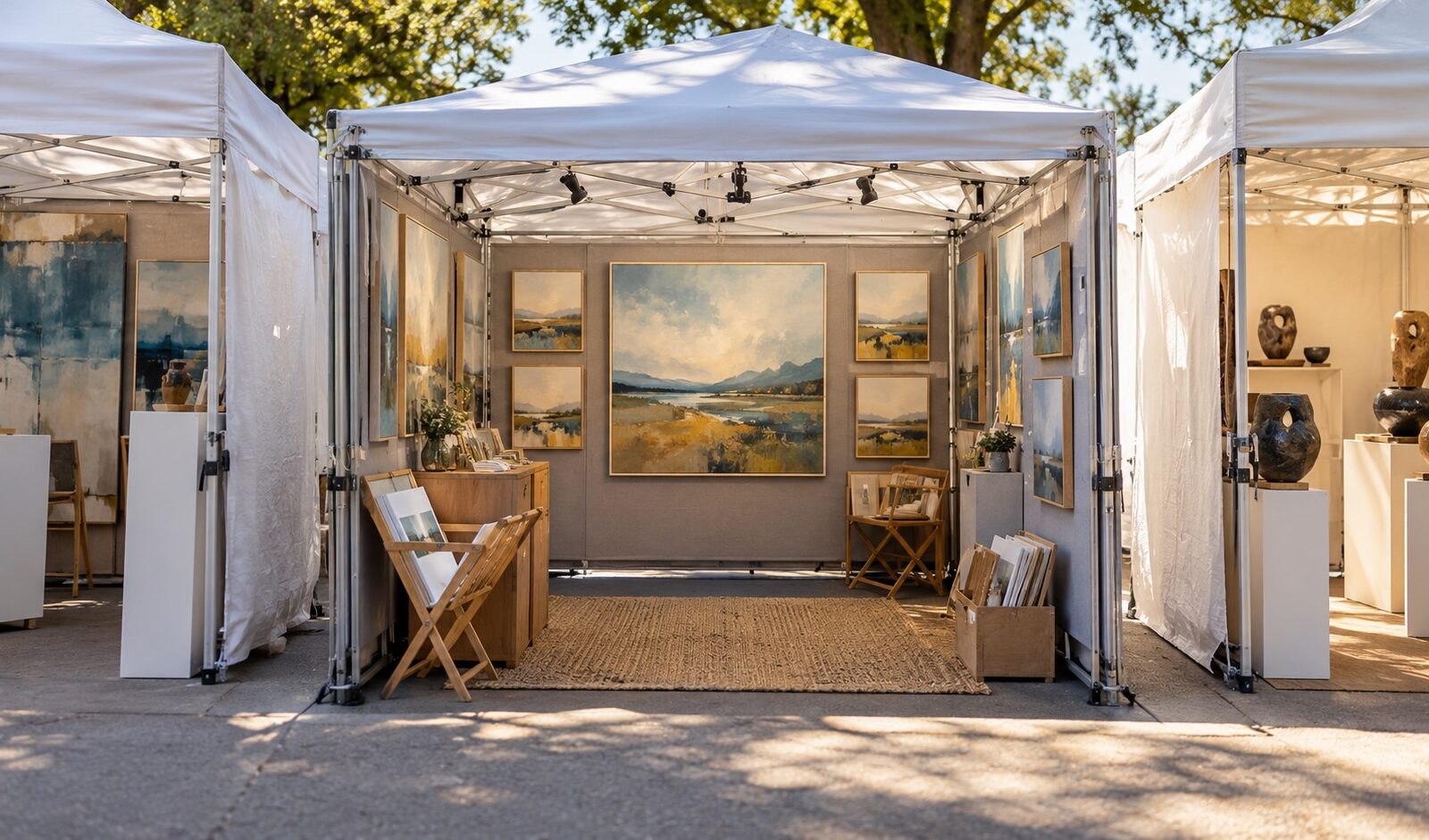
The cheapest booth is not always the best fit, and extra square footage does not automatically create a better display. Before selecting a space, translate the organizer's dimensions into the arrangement your work needs. The right size leaves room for the artwork, safe movement and a workable sales area.
Measure the usable footprint
Ask whether the listed size includes tent legs, shared walls, an aisle setback or a required clearance. Draw the space to scale and add every table, panel, case and display rack you intend to use. Include the depth of open doors or drawers. A ten-foot square can feel much smaller once visitors and packaging supplies are inside it. Tape the footprint on a floor before load-in so you can rehearse the plan.
Match the booth to the work
Large two-dimensional pieces need viewing distance and safe hanging area. Ceramics need stable surfaces and room for visitors to turn without brushing a shelf. Small works may benefit from fewer, clearer groupings rather than a bigger footprint filled with more stock. Count not just how many pieces fit, but how many can be seen without competing for attention. If an expanded booth requires a second staff member to watch it, include that cost.
Price the whole change
Compare booth fees, corner premiums, tent rental, flooring, lights and transport for each option. A larger space may also require more panels or a different vehicle. Estimate the sales needed to justify that extra commitment using the break-even worksheet. If the event offers a corner or double booth, ask which sides are open and how the neighboring traffic flows before treating it as a straightforward upgrade.
Choose for this show
The same artist may need different footprints at an indoor market and an outdoor fine-art festival. Keep a dated floor plan for each application and note what actually worked afterward. When you select the size, confirm it in the acceptance paperwork. The decision should support the way people encounter your work, not simply maximize the area on the site map.