
For Visitors
How to Choose Handmade Jewelry at an Art Show
Look beyond the sparkle: ask about materials, fit, care and repairs when buying handmade jewelry directly from an artist.
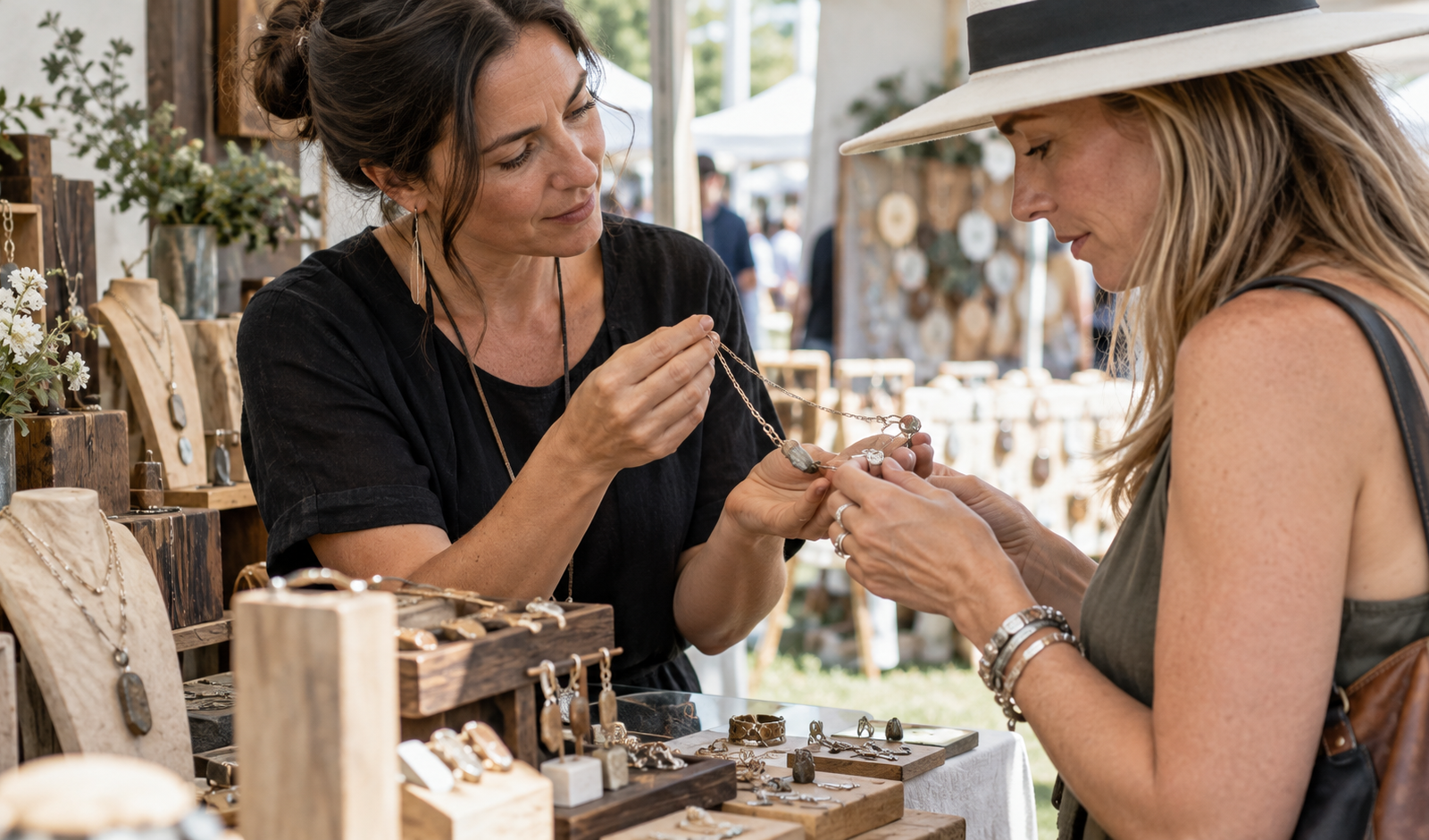
Handmade jewelry is unusually personal art: you will move in it, touch it and perhaps wear it every week. At a show, you can ask the maker about a piece while seeing how it behaves on your body. A good purchase balances the initial attraction with fit, construction and a realistic plan for care.
Start with how you will wear it
Tell the artist whether the piece is for everyday use, occasional wear or a gift. Weight, length and movement matter as much as color. A large earring can look striking on a display card yet feel tiring after a few minutes. A necklace may sit differently over the clothing you usually wear. If the booth permits trying on work, ask first, then check the clasp, balance and whether the piece catches on fabric or hair.
For a ring, confirm sizing in the width and shape you are buying. A wide band often feels different from a narrow one in the same nominal size. If the fit is imperfect, ask whether the artist can resize that specific design, what it would cost and how long it would take. Some settings and materials cannot be adjusted safely after fabrication.
Ask for material names, not just a finish description
“Gold color” and “gold” describe very different things. Ask what the structural metal is, whether any finish is plated, and which parts touch the skin. If you have a known sensitivity, say so; the maker can tell you what they know about posts, wires or chains, but cannot promise a reaction-free result for every person. For stones or beads, ask what the artist can identify confidently and whether any have been dyed, treated or assembled from composite material.
Materials affect care. Some metals darken naturally and can be polished; a plated surface needs gentler handling because aggressive cleaning may remove the finish. Fragile stones may not belong in a piece you plan to wear while gardening or exercising. Ask for care advice specific to the piece rather than applying a general jewelry tip.
Look at the parts that do the work
Turn the piece over, with permission. Check that earring backs fit, jump rings close cleanly, clasps engage, and sharp ends do not catch. The point is not to demand machine-perfect sameness from handmade work. It is to distinguish intentional variation from a connection likely to fail. If a fastening feels unfamiliar, ask the artist to demonstrate it before you leave.
Discuss repair or replacement options while you are face to face. Can the artist replace a lost earring, shorten a chain or repair a clasp? Keep the artist's card and your receipt, including the material description. If the purchase is a gift, our guide to buying art as a gift can help you handle the recipient's taste without guessing too much.
Make the final choice at your own pace
Step away if you need to compare pieces or think about cost. If you return, ask whether the exact item you tried is still available, especially when each piece differs. A useful question is simple: “Will I enjoy wearing this in the places I actually go?” If the answer is yes and the construction and care make sense to you, the purchase is more likely to become part of your life instead of staying in its box.