Behind the Booth
How to Display Art Prices Clearly Without Losing the Conversation
Create clear, consistent art-show pricing that answers the first question, supports conversation and makes checkout easier.
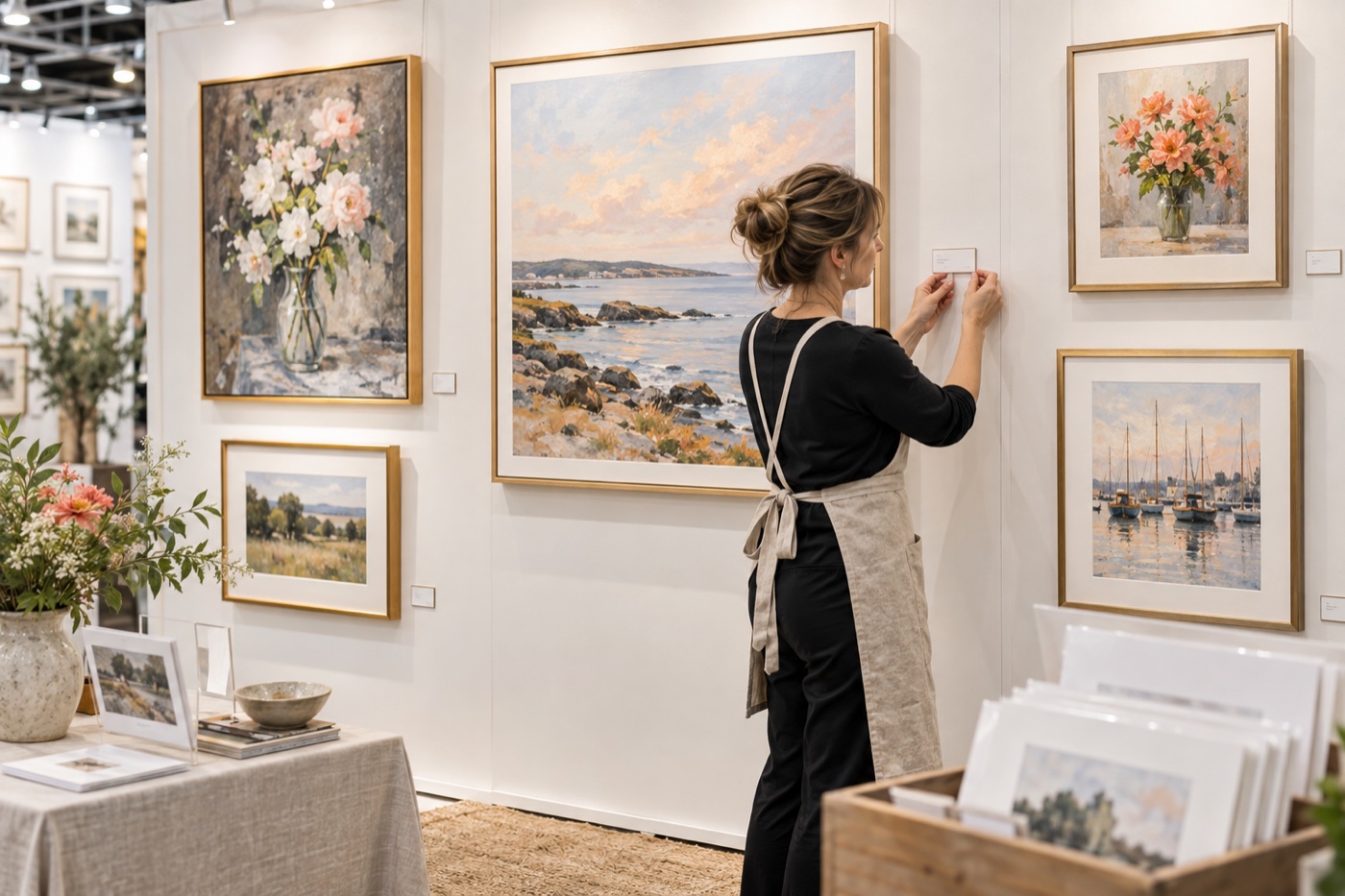
A visitor should not have to prove serious interest before learning what a work costs. Clear pricing reduces hesitation, protects the artist from repeating the same information all day and makes the booth more welcoming. It does not eliminate conversation; it lets the conversation begin somewhere more interesting than “How much is this?”
Choose a pricing system visitors can understand quickly
Use one consistent method across the booth. Individual labels work well when pieces vary widely. A clearly organized price list can suit groups of small work, but it must identify each piece without requiring visitors to solve a code. If color dots, shelf labels or size categories are used, explain them in one obvious place.
The displayed price should match the amount entered at checkout. Decide in advance whether tax is included or added, and apply the policy consistently. If frames, stands or hardware are optional, make that distinction visible before a sale begins.
Place prices where people naturally look
A label should be close enough to connect with the work without competing with it. Keep type large enough to read at a comfortable distance and maintain adequate contrast. Avoid tiny handwritten tags on the floor, labels hidden behind objects or information placed where a visitor must lean over fragile work.
Test visibility under the actual booth lighting. Glare can make a clear acrylic holder unreadable, and a shadow can erase light pencil. The article Art Show Booth Lighting offers a broader way to check how visitors see the display.
Give each label a limited job
The price, title, medium and size may be enough beside the work. Longer process notes can appear in a separate card, portfolio or conversation. Too much small text creates visual noise and can make the essential information harder to find.
Plan for variations without improvising
Decide how to mark sold work, reserved work, sets, quantity discounts and shipping charges. If an item is not for sale, say so clearly rather than leaving the visitor to ask. Keep a current master list behind the booth so staff can answer consistently and correct a missing label quickly.
Connect pricing to inventory before the show. A simple item identifier can link the display label, sales record and receipt. See A Simple Art Show Inventory System for Artists for a practical structure.
Use conversation to add value, not conceal price
After a visitor can see the price, the artist can talk about materials, decisions, care and meaning without the exchange feeling like a test. Avoid apologizing for the price or launching into a defense before anyone asks. A calm, direct answer communicates that the price was considered rather than invented in the moment.
Audit the system during the event
- Can the price be read without touching the display?
- Does every item or category have a clear amount?
- Do labels match checkout and inventory records?
- Are sold, reserved and not-for-sale pieces distinct?
- Can another staff member explain the system correctly?
After the show, note which questions kept returning. The review process in After the Art Show can turn those repeated questions into a more useful label or price list next time.