For Visitors
How to Look at Abstract Art at a Show
Not sure how to approach abstract art? Try simple ways to notice color, shape, texture, scale, and your own response at an art show.
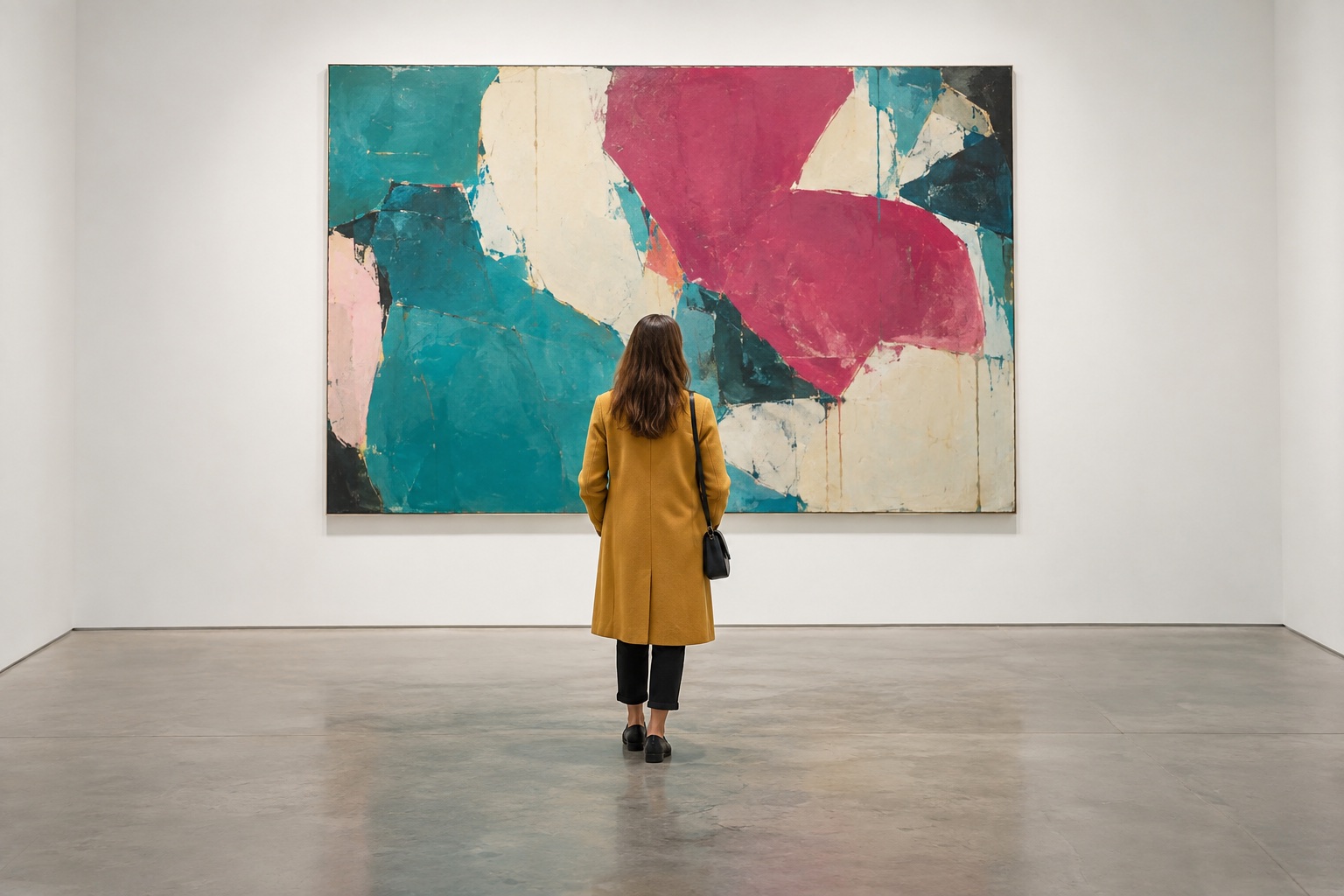
Abstract art does not require a secret answer. At a show, you can use the same curiosity you would bring to a landscape or portrait, then pay attention to different clues: color, shape, movement, texture, and the way your eye travels.
Give the work more than one glance
Start far enough back to see the whole composition. Notice where your eye goes first and what leads it around the piece. Then step closer, if the booth allows, to see brushwork, edges, layers, or marks. A large painting can feel calm from across the aisle and energetic up close. Neither reaction is wrong.
Name what you can actually see
Try simple observations: a dark shape balances a bright one; repeated lines create rhythm; a rough surface interrupts a smooth field. Ask yourself how the colors change your mood or whether the work feels still, tense, playful, or open. These words are starting points, not grades. You do not need to assign a story to every shape.
Let the title and artist add context
Read the title after your first look. It may suggest a place, memory, or process, but it need not explain every choice. If the artist is available, ask what they were exploring rather than demanding what the work “means.” Our conversation guide offers easy questions that leave room for the artist’s answer.
Materials can be part of the experience. A collage, woven work, or layered painting may reveal decisions that a screen image hides. Ask about process if a texture or edge interests you, and follow the booth’s rules before getting close to delicate work.
Return to the piece that stays with you
Look at several works, then revisit the one you remember most clearly. Did your impression change? Sometimes an abstract piece becomes more interesting after seeing the artist’s other work. You can enjoy that discovery without buying it. For a low-pressure day of looking, see our guide to enjoying an art show on a budget.
- Look from far away and then from a respectful closer distance.
- Notice color, shape, texture, and movement.
- Read the title after your first impression.
- Ask the artist about process if you are curious.