
For Visitors
How to Tell an Original Print from a Reproduction at an Art Show
Understand what artists mean by original print and reproduction so you can buy the version you intend.
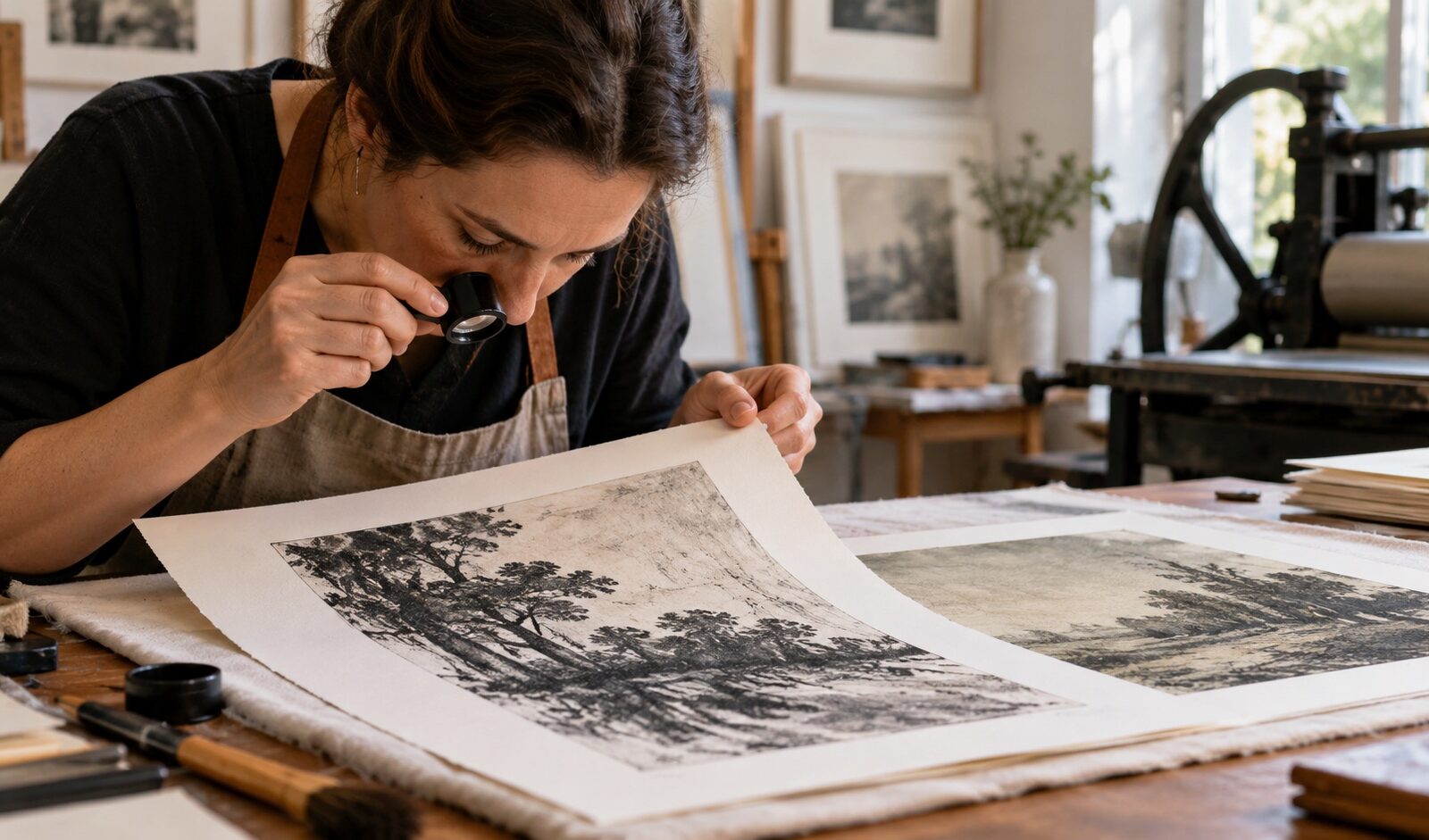
At an art show, “print” can describe several kinds of work. A hand-pulled etching is an original artwork made through a printmaking process. A high-quality reproduction records an artwork made in another medium, such as a painting. Both may be worth owning. The useful question is what process produced the object you are buying and how it is represented by the artist.
Ask about the making process
An original print usually begins with a plate, block, screen or other matrix made for printing. The artist may ink and pull impressions by hand or work closely with a printer. A reproduction begins with an existing artwork or digital image and is printed to make copies of it. Ask the artist to describe the source artwork and production method in ordinary terms. Ask to see a close detail of the print surface; different original processes leave different marks.
Read labels with care
Words such as “giclée,” “archival” and “limited edition” describe aspects of materials or distribution, not necessarily whether a print is an original printmaking work. An edition number tells you how many are in a defined group, but you still need to know what the group includes: size, paper, colorway or format. Ask whether other editions of the image exist. Our limited-editions guide explains what to record when an edition matters to you.
Compare the object you can take home
Look at paper, surface, color and margins, not only the image. Is the print signed, numbered or accompanied by a description of the process? Is it loose, matted or framed? Confirm the exact dimensions of the piece being sold. A well-made reproduction may let you live with an image at a price and size that suits you; an original print offers a direct encounter with a printmaking process. Those are different reasons to buy, not a simple quality ranking.
Keep an accurate record
Request a receipt that names the artist, title, size, medium and edition information if applicable. If a booth label is ambiguous, ask for wording you understand before paying. The best outcome is not choosing the more impressive-sounding label; it is knowing what you are bringing home and liking the physical work in front of you.