
For Visitors
What to Ask Before Buying Handblown Glass at an Art Show
Learn what to ask a glass artist about use, stability, cleaning and transport before bringing a handblown piece home.
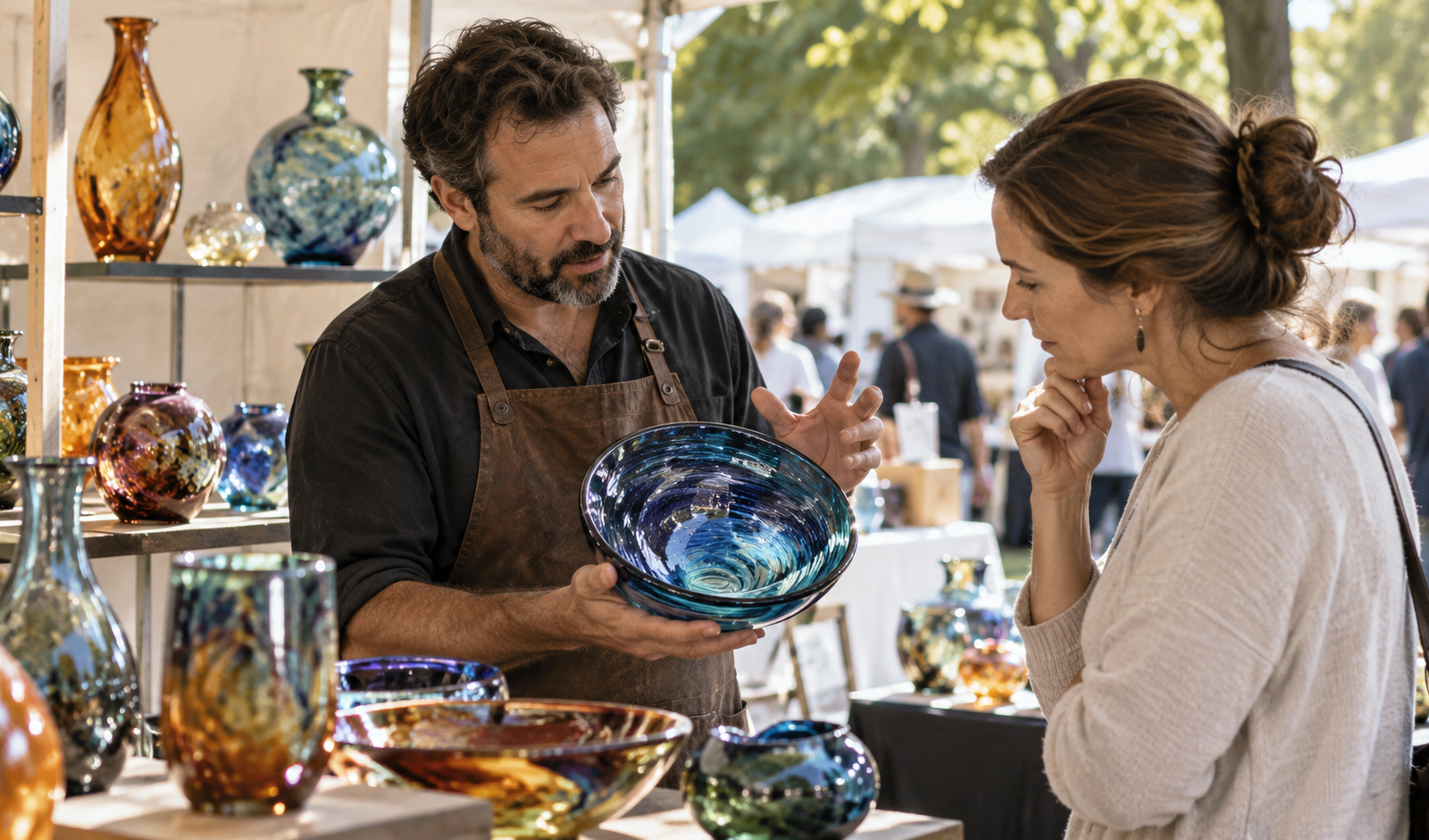
Handblown glass invites a close look: color can live inside a thick wall, and a small change in shape can alter how a piece catches light. Before you buy, ask how the artist intends the object to be used. A sculptural vessel, a drinking glass and a lamp component may have very different care needs even when they share a booth.
Look for balance and a stable base
Ask permission to handle the piece. Set it on a level surface and notice whether it stands securely or rocks. For a vase, consider the weight and whether a typical arrangement would make it top-heavy. Look along the rim and foot for the finish the artist intended. Small bubbles and variations can be part of handmade glass; the important question is whether a mark is intentional and whether it affects use. Ask the maker about anything you cannot distinguish confidently.
Clarify the intended use
Do not assume a beautiful bowl is food safe, heat safe or suitable for a dishwasher. Ask specifically about food contact, hot liquids, candles or water, depending on your plan. The artist knows the process and can explain the intended limits of the piece. If the answer is decorative use only, respect that boundary. A functional object should be chosen for the job it will actually perform, not the job its shape suggests from a distance.
Ask how to clean and display it
Glass can show fingerprints, dust and hard-water spots. Find out what cleaner or cloth the artist recommends, and whether a surface treatment, applied color or attached material changes that advice. Consider light: a window may make the work glow, but a precarious sill or a place where a door can strike it is a poor display choice. For taller work, ask whether it needs a stand or other support. Our sculpture assessment guide offers a broader way to think about three-dimensional placement.
Plan the trip home before paying
Ask how the artist will wrap the piece and whether a fitted box is available. Carry it upright when instructed, keep it away from heavy objects in the car, and avoid leaving it where temperatures change sharply. Our art transport guide covers the journey for several media. Keep the artist's care instructions and receipt with the work so you can ask a useful question later if needed.