For Visitors
Understanding Printmaking Techniques When Buying Art
Learn the questions that reveal how an etching, relief print or screen print was made and what you are buying.
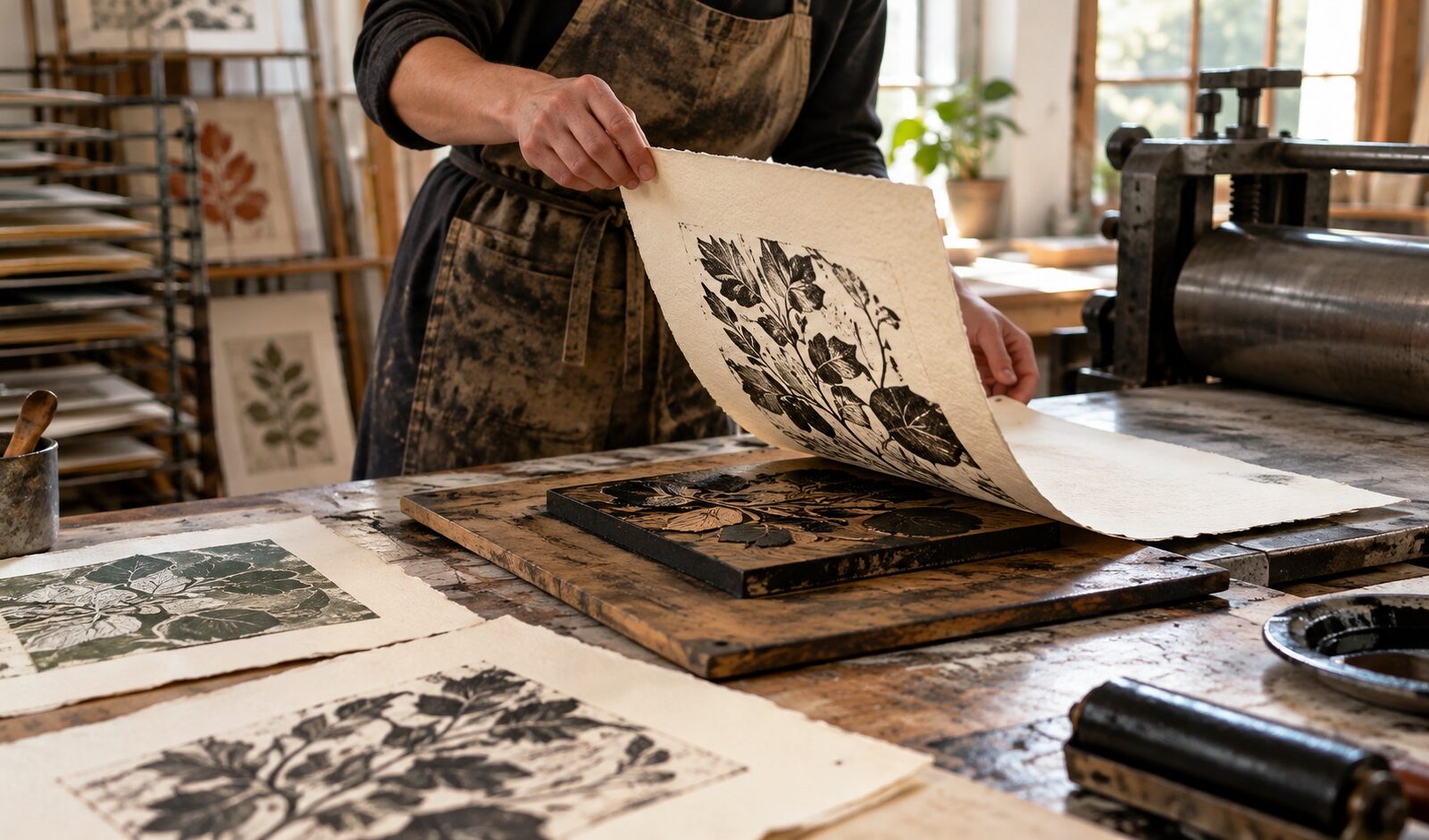
An original print is an artwork made through a printing process, often in more than one impression. The process matters because it shapes line, color and texture. You do not need to identify every technique on sight; asking the artist how the image moved from matrix to paper is often the most rewarding part of the conversation.
Relief printing: what was left standing
In a woodcut or linocut, the artist removes areas that will not print and inks the remaining raised surface. Look for bold shapes, carved marks or overlapping color layers. Ask whether each color used a separate block and whether impressions were pulled by hand or with a press. Variations in inking may be intentional. The material of the block does not, by itself, tell you the value of the finished print.
Intaglio: lines that hold ink
Etching and engraving are examples of intaglio, where ink sits in incised lines or textures and transfers under pressure. A plate mark may be visible around the image, though not every print is trimmed or presented the same way. Ask whether the artist worked directly on the plate, used acid for the lines, or added tone with aquatint. The answer helps you see which marks came from the process rather than from a digital effect.
Screen printing and layered color
Screen printing pushes ink through selected areas of a mesh. It can produce crisp, flat color and complex overlays. Ask how many passes or screens the image required and whether colors were mixed or registered by the artist. Misregistration may be a deliberate visual feature or part of a hand-pulled edition. Look at the actual sheet you would buy rather than assuming every impression appears identical.
Edition and care questions still matter
Ask about paper, dimensions, edition size and whether the print is signed. Our original-print-versus-reproduction guide explains that separate distinction, while the limited-editions guide covers numbering. Keep the artist's description on your receipt. You are choosing a physical work with its own surface and process, not only an image you could view on a screen.