
Artist Profiles
Paige Whitcomb: Creating Contemporary Fine Art Through Historic Tintype Photography
Meet Paige Whitcomb, the Springfield, Missouri, artist making singular fine-art photographs with historic wet-collodion tintype techniques.
Artist at a glance
The artist
- Medium
- Wet-collodion tintype / fine-art photography
- Based in
- Springfield, Missouri
An image of a figure among old objects can look as though it has survived a century. In Paige Whitcomb’s hands, that uncertainty is deliberate: the Springfield, Missouri, artist uses a nineteenth-century photographic method to stage scenes about memory and the passage of time. The finished image is a physical plate made through light and chemistry, not a digital photograph dressed in an antique filter.
An art historian behind the camera
Whitcomb earned a BA in art history, with a minor in Critical Methodologies to Literature, from Missouri State University. Her published account connects her interest in tintypes to the moment photography changed how artists could represent the world. Rather than use an old technique simply to imitate an old photograph, she builds fictional scenes that invite viewers to ask when and why an image might have been made.
She works in the Ozarks of southwest Missouri and travels with a mobile darkroom. That mobility lets her make images in places she describes as steeped in memory, while using genuine antiques and historically influenced settings as parts of the composition. Her staged work draws on history without claiming to document a nineteenth-century event.
The plate is part of the work
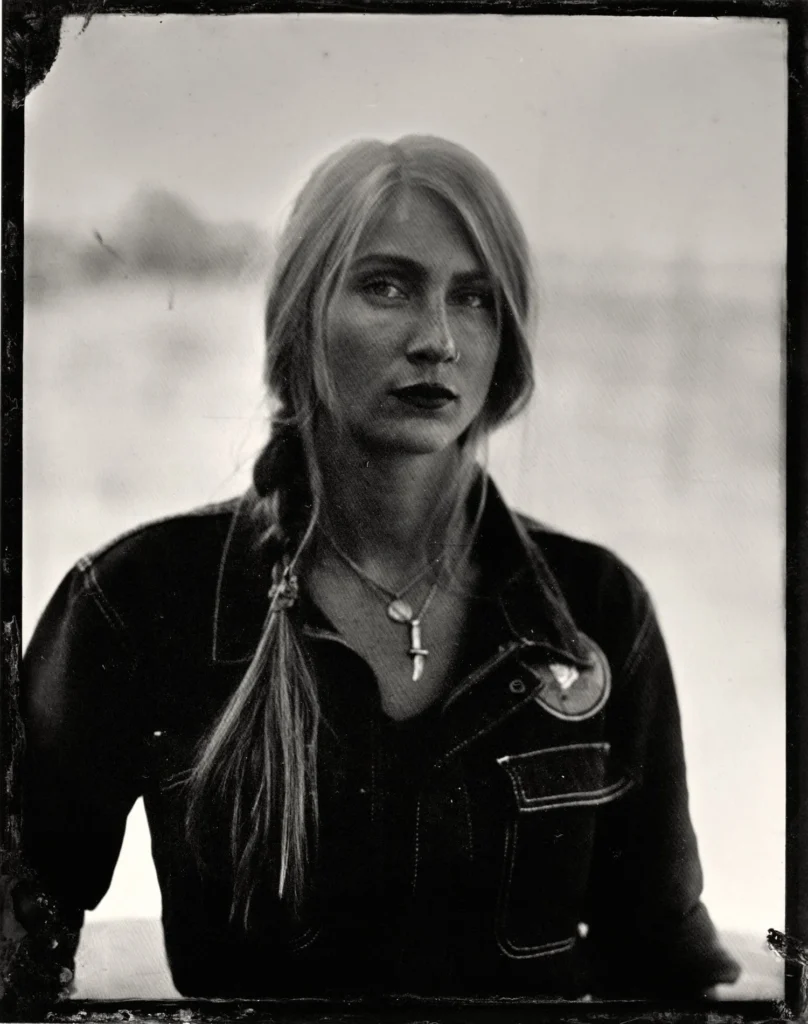
Whitcomb uses a large-format studio camera from the 1800s and the wet-collodion process. She prepares a metal plate to react to light, exposes it while it is wet, then develops, washes, dries and varnishes it. There is no conventional negative from which to produce a run of identical prints: the plate holds a direct positive image. Variations in exposure, movement and chemical reaction are recorded in that single object.
Natural light imposes another constraint. Whitcomb says her exposures can range from about a second in strong outdoor light to several minutes indoors or in shade. A sitter or prop must remain within that span of time; even a slight shift can become visible. She can make an archival scan and, in some cases, an enlargement, but her site says each enlargement is paired with its source tintype and that her images are issued as singular editions. The distinction matters when comparing a plate with an ordinary digital print.
Memory staged in plain sight
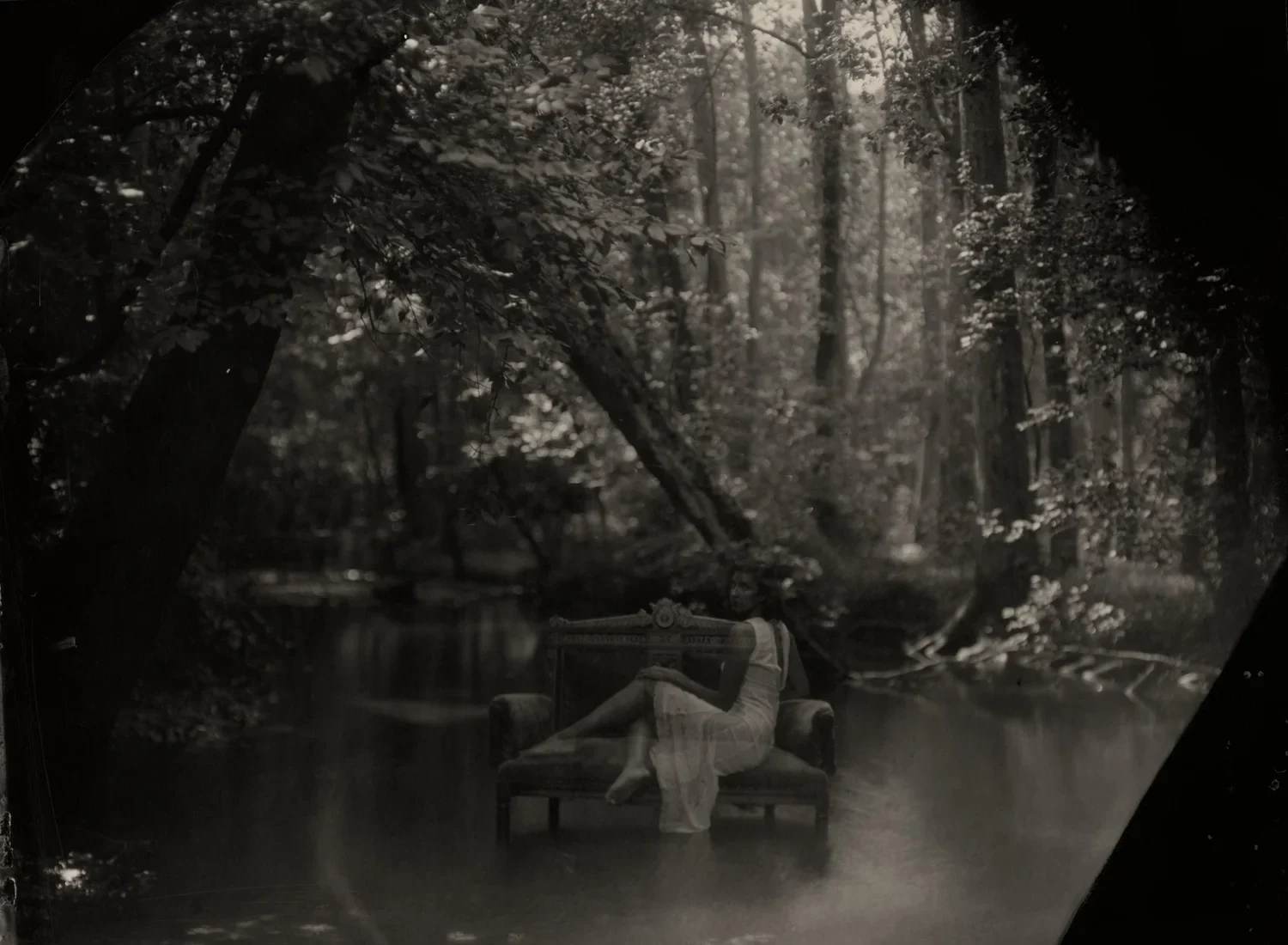
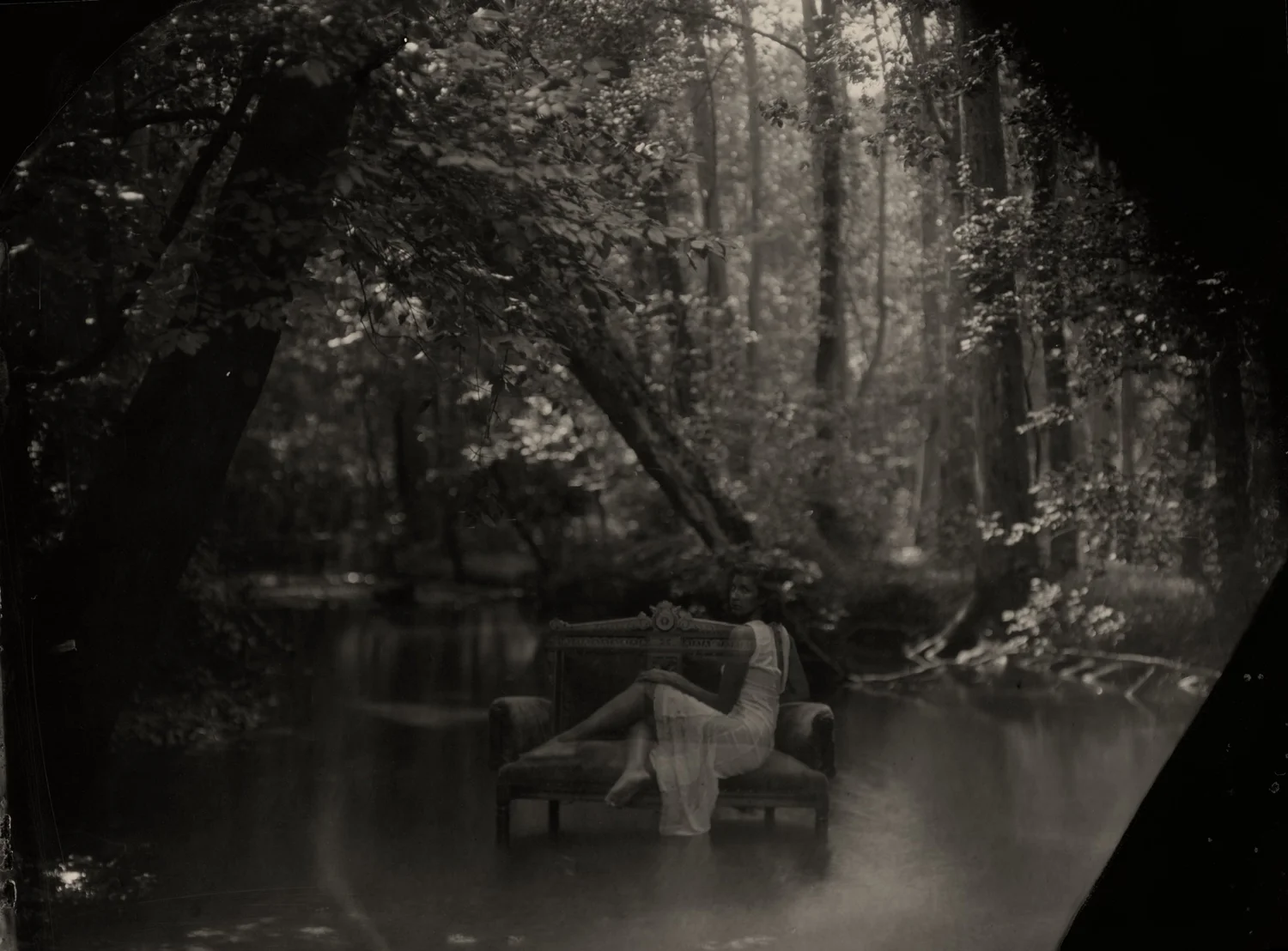
The Memories series uses double exposure to make figures appear translucent beside objects and places that outlast them. Whitcomb describes the effect as a way to evoke dreams and recollection, leaving room for viewers to bring their own histories to the scene. In Vanitas, she turns toward the still-life tradition associated with life’s brevity and the pull of pleasure and possessions. Her Vignettes use artifacts to suggest people and daily lives from another generation. These are distinct bodies of work, yet each treats the photograph as a constructed encounter with time.
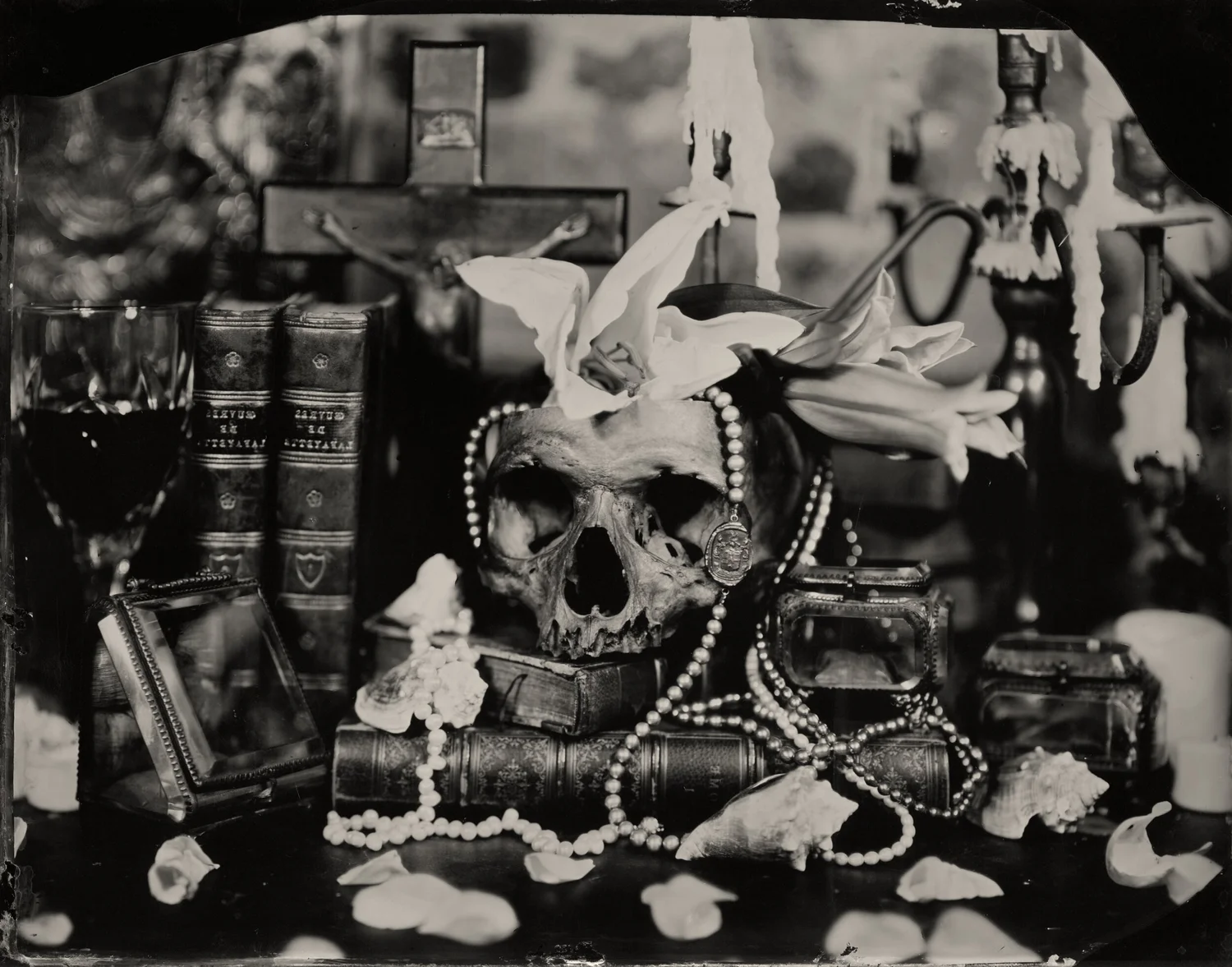
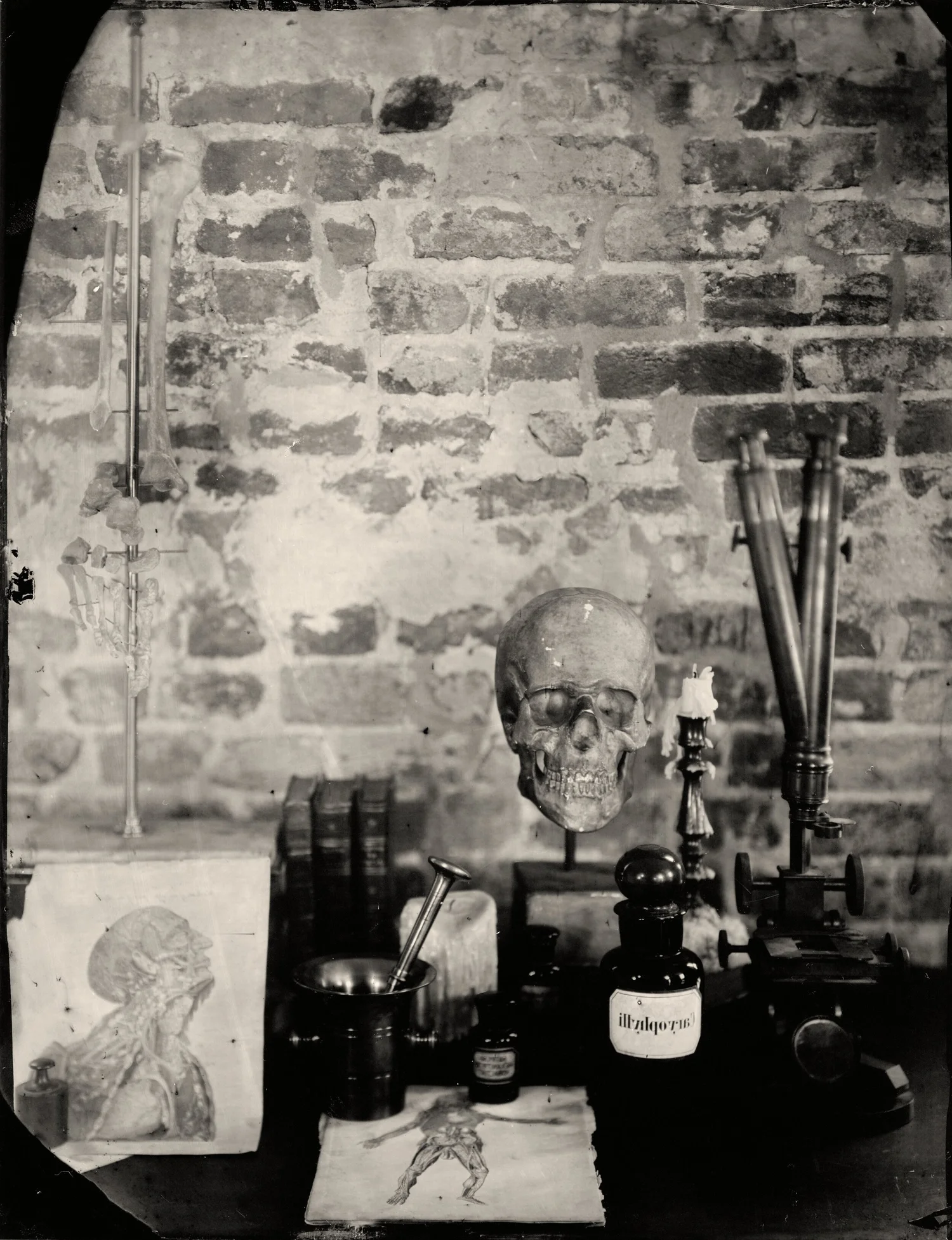
That approach also makes the material process expressive. A digital file can be revised and reproduced endlessly; a tintype records the conditions of one exposure on a specific plate. The viewer can read the scene and the traces of its making together.
Recognition on the juried-show circuit
Whitcomb’s work has received significant recognition at competitive festivals. She was named Best Overall Artist at the 2023 Park City Kimball Arts Festival. CherryArts lists her as the third-place winner in 2023 and a Merit Award recipient in 2024 at the Cherry Creek Arts Festival. Those are specific festival honors, not a general claim that every work or appearance won an award.
At a juried art show, the difference becomes unusually clear in person. A visitor can examine the surface and scale of a tintype, then ask how the plate was exposed and finished. That conversation is especially useful when deciding whether a photographic work is an original object, an enlargement or an edition. For future opportunities to see working artists face to face, browse Upcoming Shows; Artist Profiles offers more stories behind the work.
Explore Whitcomb’s current work and process at her official website.
Reporting note: This profile is based on Whitcomb’s published artist statement, artwork and process pages, plus festival award records. No interview was conducted for this article.
Are you an artist who participates in juried art shows? Submit yourself for consideration for an Art Show Magazine Artist Profile.
Follow this artist
Receive an email when the profile is linked to a newly confirmed show.