Artist Gear & Supplies
Color Rendering and Light Placement: Help Buyers See Your Artwork Clearly
Compare color rendering, color temperature, glare, and light placement before buying booth lighting, then test the setup on your own artwork.
Practical Guide · Product information checked October 30, 2026 · Researched from published sources.
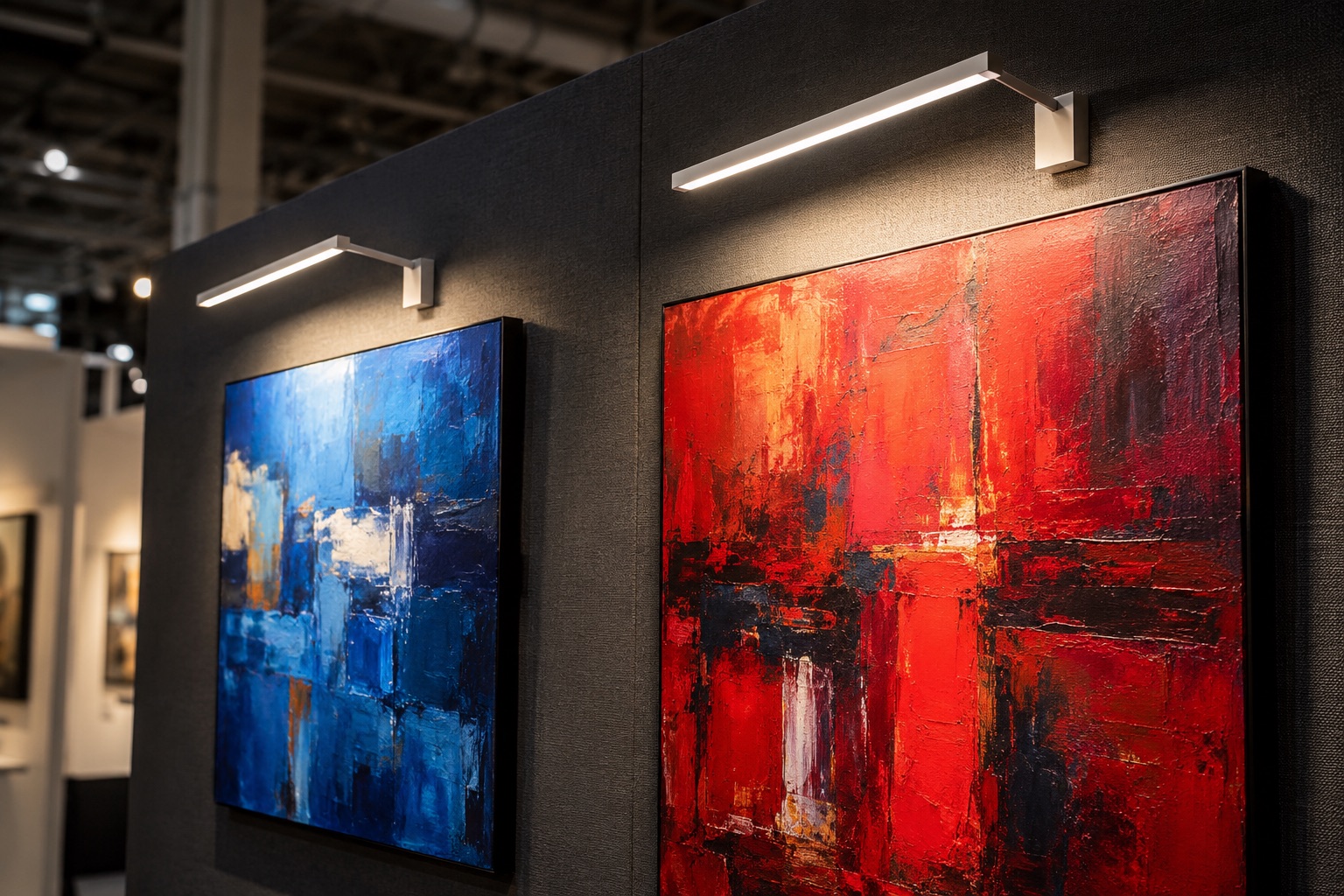
More light does not always make artwork easier to see. A bright fixture can put a reflection across a photograph or leave a ceramic form flat and lifeless. Choose booth lighting by looking at the work under it, then checking how the fixture fits your mounting and power plan.
Separate color temperature from color rendering
Color temperature describes whether white light appears warmer or cooler. Color rendering concerns how objects’ colors appear under that light. A daylight-colored lamp is not automatically accurate, and two lamps with similar color temperatures may show your work differently. The Department of Energy’s LED overview explains the distinction.
Use the manufacturer’s color-quality information to narrow your choices, then compare actual samples. The Canadian Conservation Institute’s guide to LEDs discusses why evaluating color quality requires more than a single specification. For an art booth, the practical question is whether your particular pigments, papers, and finishes look convincing under the proposed light.
Bring a difficult sample
Choose work containing the colors and surfaces that challenge your display: a deep red, a subtle gray, a dark photograph behind glazing, or a glossy vessel. Compare the same sample under each light at a similar viewing distance. Let your eyes adjust rather than switching your attention between fixtures every second.
A phone photograph can help document placement, but the screen and camera processing can change color. Make the final judgment by looking at the artwork itself. If buying remotely, check the return terms before ordering enough fixtures for the entire booth.
Look for glare from the visitor’s position
Set a fixture at its intended height and stand in front of the work. Then move to each side and vary your viewing height. A reflection that you miss while standing beside the panel may cover the main subject when a visitor looks straight on.
Change the position and angle gradually. Check that the adjustment remains secure and that the mounting hardware is approved for the display system. Do not hang a fixture from a canopy component simply because a clamp happens to fit. Our LED and battery-light buying guide covers mounting and power considerations.
Plan for the room or tent
Mixed lighting can complicate a carefully chosen setup. At an indoor venue, ask about overhead lighting. Outside, observe how the canopy fabric and changing daylight affect the work. Use supplementary lights to solve a specific problem rather than trying to overpower every other source.
For sensitive original materials, consider exposure as well as visibility. Avoid leaving work under unnecessarily intense light throughout a long show. Consult material-specific conservation guidance when preservation is a concern.
Run a complete rehearsal
- Display representative artwork with the actual glazing and frames.
- Check color, reflections, shadows, and visible hotspots from several positions.
- Secure the approved mounts and keep cables out of browsing routes.
- Run the lights long enough to observe heat and battery use.
- Record fixture position and settings so the arrangement is repeatable.
If portable power is part of the plan, estimate the entire day’s demand with our power-station guide. Buy the lighting arrangement that helps visitors see the artwork clearly and that you can set up consistently.