Artist Gear & Supplies
Protecting Framed Art in Transit: Corners, Padding, and Dividers
Plan protection for framed artwork by assessing the piece, fitting corner protection and dividers, and testing the complete load before an art-show trip.
Practical Guide · Product information checked October 30, 2026 · Researched from published sources.
A padded bag can prevent scuffs, but it cannot solve every transport problem. A projecting frame corner, loose hardware, or an unsupported glazed surface may need a different approach. Build the packing plan around the artwork’s weak points and the way the package will be handled.
Inspect before wrapping
Look for a loose frame, unstable surface, damaged glazing, and hardware that might catch another package. Record existing condition with photographs before a trip. If the work is fragile, unusually heavy, or already damaged, arrange advice and handling appropriate to that piece rather than applying a routine booth-packing method.
The Canadian Conservation Institute’s handling guidance emphasizes planning the route, preparing a safe place to set work down, and using enough help. Make those decisions before lifting a wrapped piece whose condition you can no longer see.
Protect the frame without pressing on the art
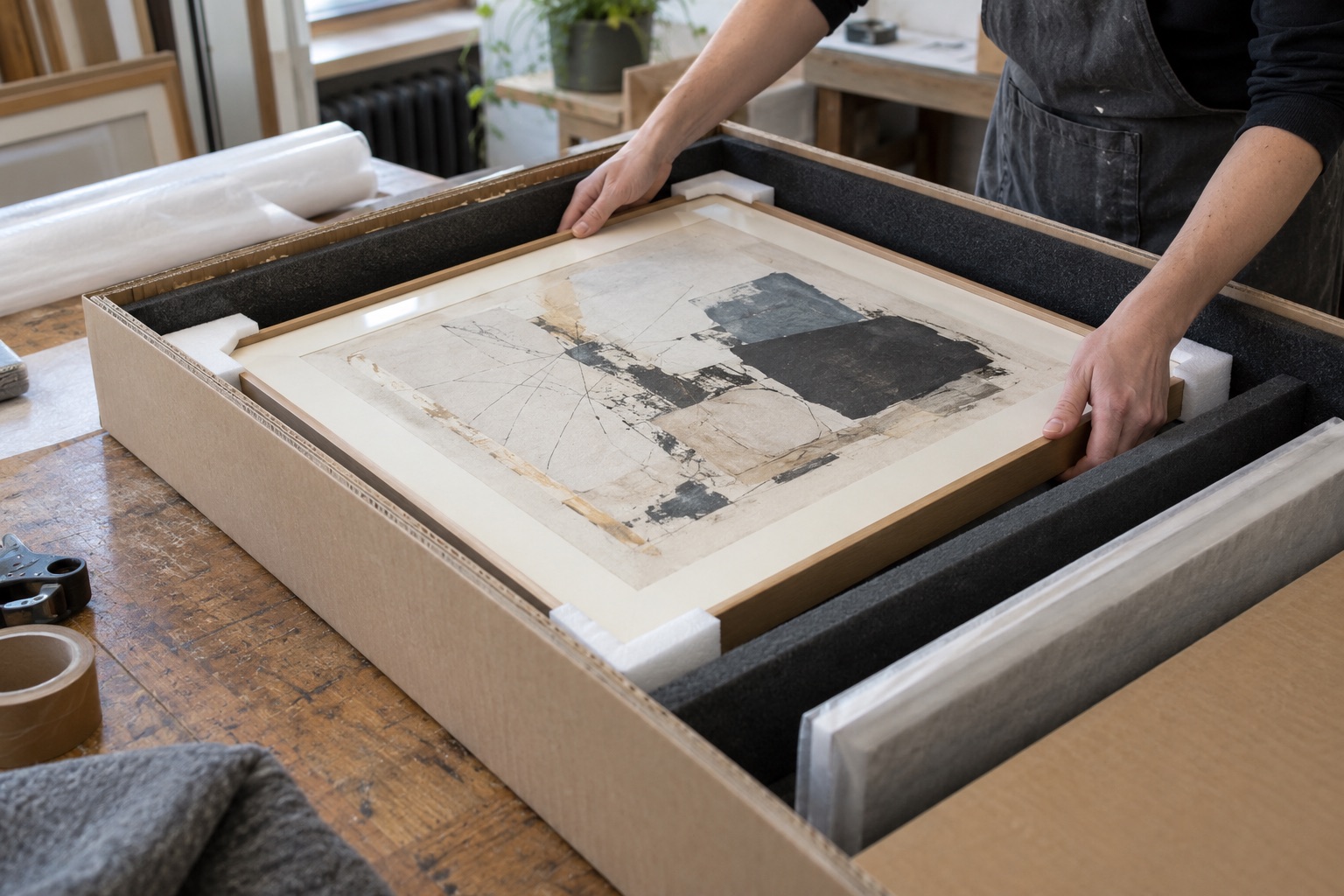
Choose corner protection that fits the frame rather than merely covering its appearance. Check for compression against decorative surfaces and for movement when the package is carried. Padding should address the particular frame and load, not depend on one universal material or thickness.
Keep wrapping materials away from vulnerable painted surfaces. Some artworks need a handling or travel frame that provides clearance. The Institute’s painting-care guidance explains why the support, surface, and condition affect the packing method. Ordinary bubble wrap is not a universal direct-contact material for artwork.
Use dividers for separation
When transporting multiple works in a container, consider how they could touch if the load shifts. A rigid divider can separate packages, but its edges and faces also need to be compatible with the work and packaging. Check that hanging hardware cannot puncture the adjacent package.
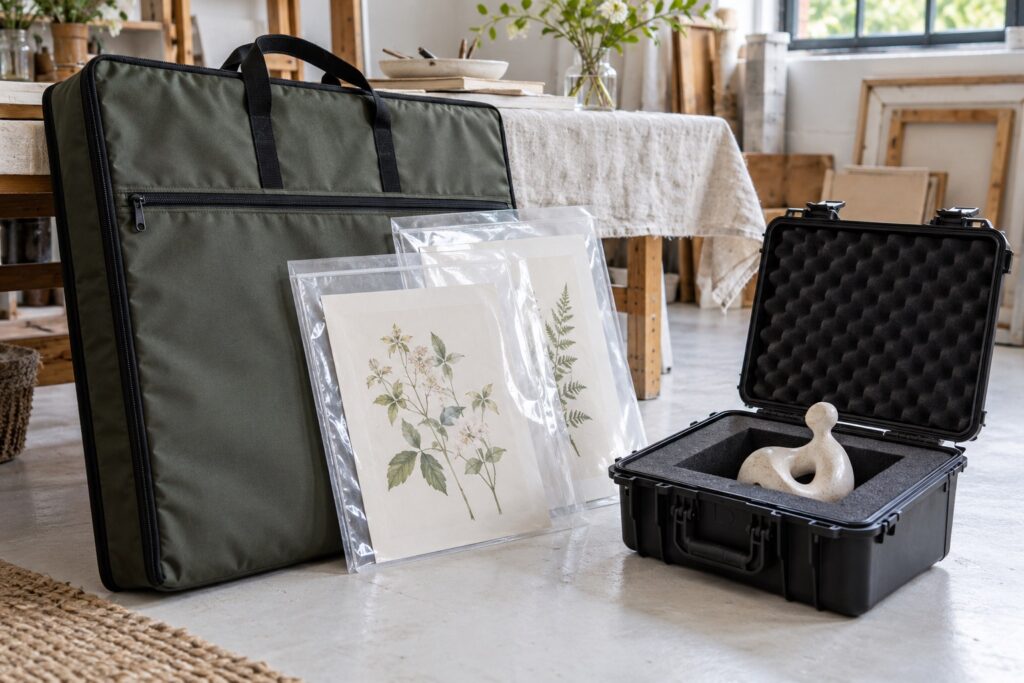
Do not assume a soft bag prevents flexing or crushing. Our art-bag and case comparison can help you distinguish surface protection from a more rigid transport system.
Fit the outer container
A package should not move freely inside its container, yet forcing it into an undersized space can create damaging pressure. Evaluate the entire arrangement: artwork, clearance, cushioning, dividers, closure, and handholds. The Institute’s technical bulletin on artwork transport describes the broader relationship between packaging and transit hazards.
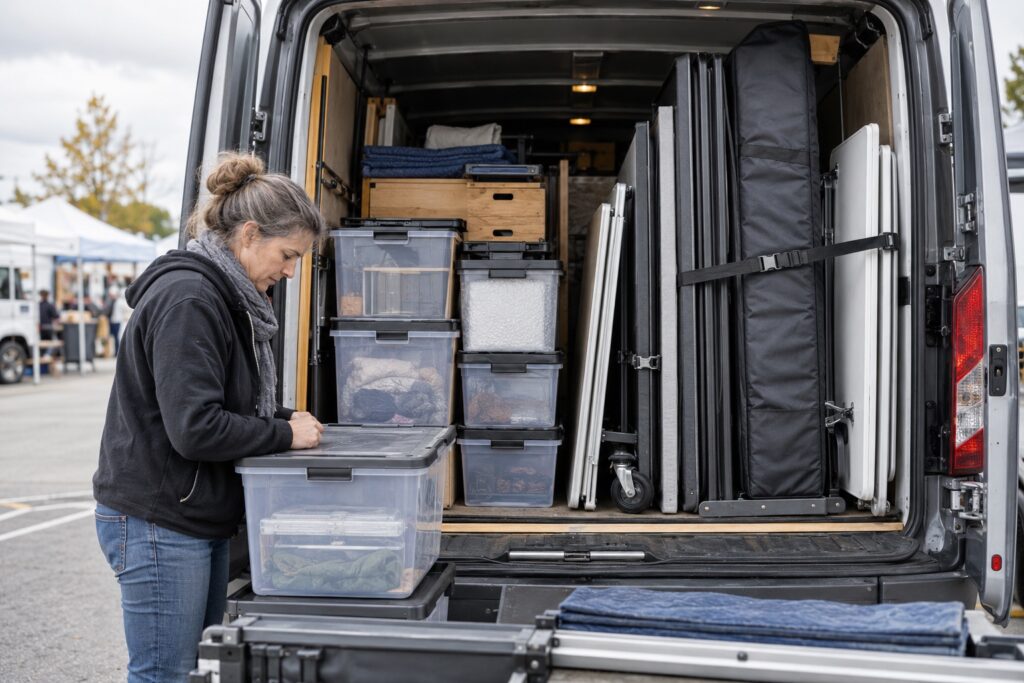
For a local art-show trip, rehearse the real loading sequence. Identify which packages must come out first and where you can safely place them. Keep heavy booth equipment from bearing on artwork containers and secure the vehicle load appropriately.
Make a repeatable packing record
- Photograph the correctly fitted package before closing it.
- Identify the artwork and container without exposing a customer’s private information.
- Note which padding and dividers belong to that package.
- Inspect reusable protection for wear before each trip.
- Keep unpacking and repacking instructions with unusually shaped work.
Integrate these packages into your complete booth loading plan. Consistent packing reduces improvisation at the end of a long day, when both the artwork and the person carrying it need a clear, manageable routine.