Artist Gear & Supplies
Choosing Storage Shelves for Finished Artwork and Booth Equipment
Compare storage shelves by artwork dimensions, access, load ratings, and installation needs, then separate finished work from heavy booth equipment.

Practical Guide · Product information checked October 30, 2026 · Researched from published sources.
Storage shelves should make the next piece easier to retrieve without putting the others at risk. Counting shelf levels is only the beginning. Compare the work’s dimensions, the weight of the load, the room’s conditions, and the route you use to take everything out.
Separate artwork from equipment
Canopy weights, metal hardware, and folding fixtures need a different storage plan from finished prints or framed paintings. Give each group a defined area. Avoid placing heavy booth supplies where retrieving them means reaching over artwork or moving a stack of saleable pieces.
List the largest and heaviest items before choosing a system. Record packed dimensions for equipment and the protected dimensions of artwork, including bags or containers. Measure access with doors and drawers open. A shelf that fits a box tightly may still be awkward if there is no room to grip it.
Read the load information carefully
Check whether a stated capacity applies to one shelf, an evenly distributed load, or the complete unit. Follow the manufacturer’s assembly, bracing, and anchoring instructions. Do not assume a new shelf has the same rating as a similar-looking system you already own.
Consider the floor and wall where the unit will stand. Keep heavy equipment at a manageable lifting height and make sure the installed system is suitable for the room. If you cannot confirm the structural or installation requirements, get appropriate help before loading it.
Choose support for the medium
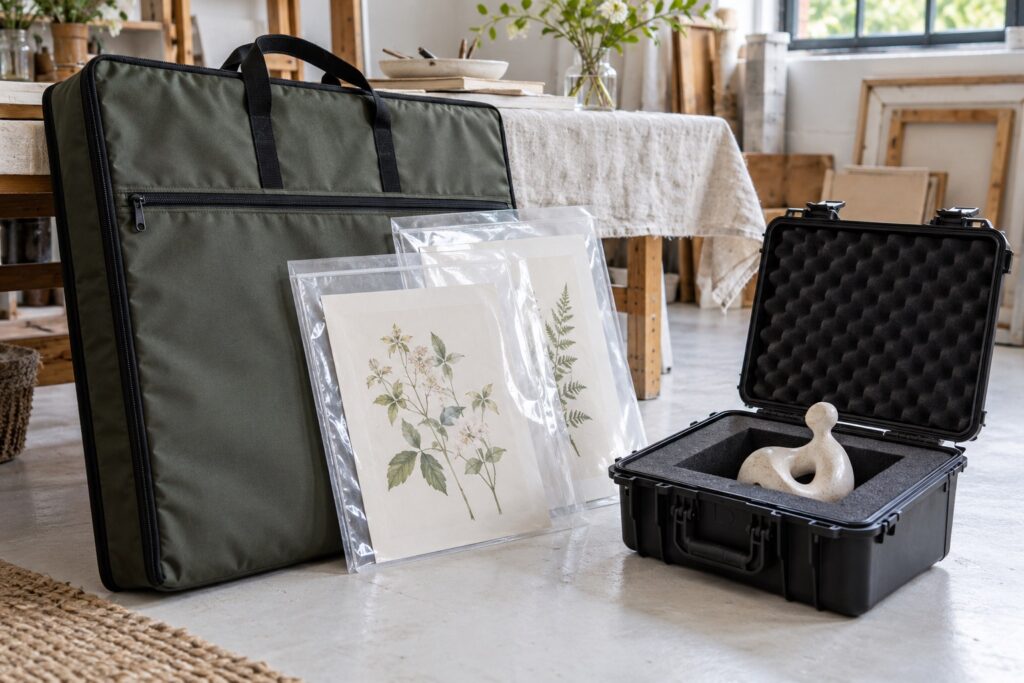
Flat paper, framed work, stretched canvases, and ceramic vessels have different needs. A generic utility shelf does not automatically provide suitable contact surfaces or environmental protection. The Canadian Conservation Institute’s painting-storage guidance explains options specific to paintings. Use guidance relevant to your own materials.
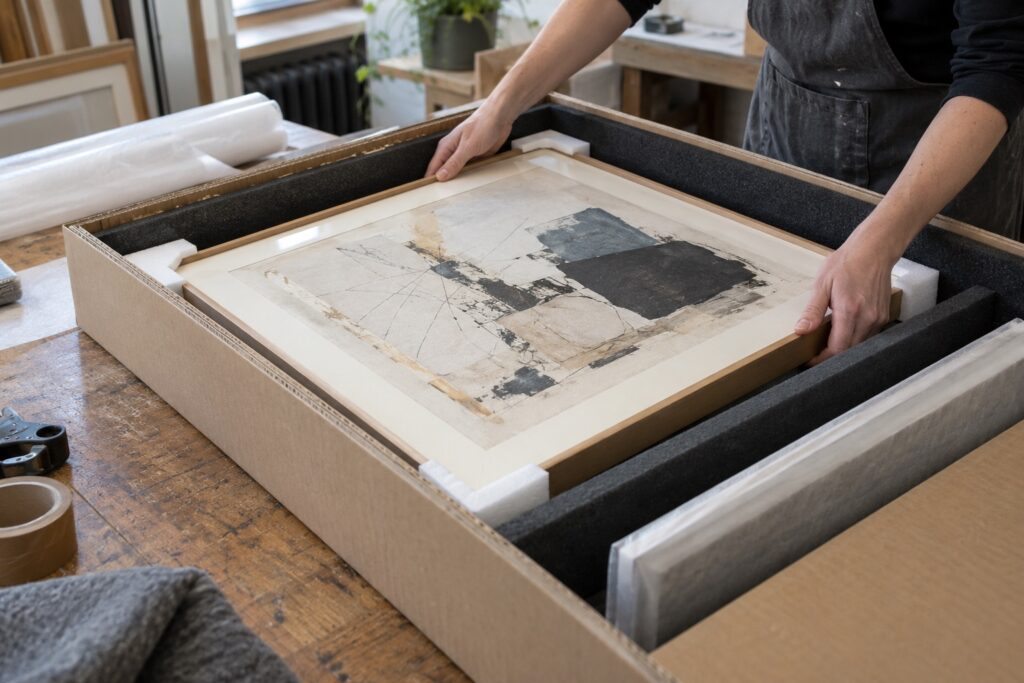
Plan spacing and dividers so one piece can be removed without rubbing its neighbors. Protect vulnerable edges and surfaces, and avoid letting exposed hanging hardware contact another work. For temporary transport protection, read our guide to packing framed artwork; a travel package and a long-term storage arrangement may serve different purposes.
Keep the room usable
Leave a clear retrieval route and a stable place to set work down. Think about the largest piece being turned through the doorway, not just the boxes already on the shelves. Keep artwork away from avoidable water risks and inspect the room periodically rather than assuming a closed container solves every environmental concern.
Use visible location labels: rack A, shelf 2, compartment 4. Record that location in your inventory. The system should make sense when a helper retrieves a piece, or when you return to it several months later.
Make show preparation simpler
- Keep each fixture’s small parts in a clearly identified container.
- Store clean packing materials away from dirty wheels and outdoor equipment.
- Give outgoing orders their own space so they are not packed for a show.
- Mark damaged equipment for repair instead of returning it to ready stock.
- Check shelf condition and fasteners according to the manufacturer’s instructions.
Coordinate your shelves with the loading sequence and your studio work zones. The useful storage purchase is the one that supports the work, permits comfortable retrieval, and keeps the rest of the room available.