Artist Gear & Supplies
Plan Your Art Show Booth: Sightlines, Browsing Space, and a Clear Entrance
Plan an art-show booth that welcomes visitors, gives artwork room to breathe, and keeps browsing, checkout, and storage from competing for space.
Practical Guide · Product information checked October 30, 2026 · Researched from published sources.
An inviting booth begins with the space you leave open. A beautiful painting can disappear behind a checkout table; a print rack can become a bottleneck when two people stop to browse. Before buying another display, draw a layout that lets visitors understand your work from the aisle and explore it comfortably.
Measure the usable space
Start with the organizer’s actual booth dimensions and rules. Mark canopy legs, panel feet, weights, electrical connections, and any required setbacks. A nominal ten-foot square is not ten feet of unobstructed selling space in every direction. Ask about accessibility requirements, aisle boundaries, and neighboring booths before deciding where furniture belongs.
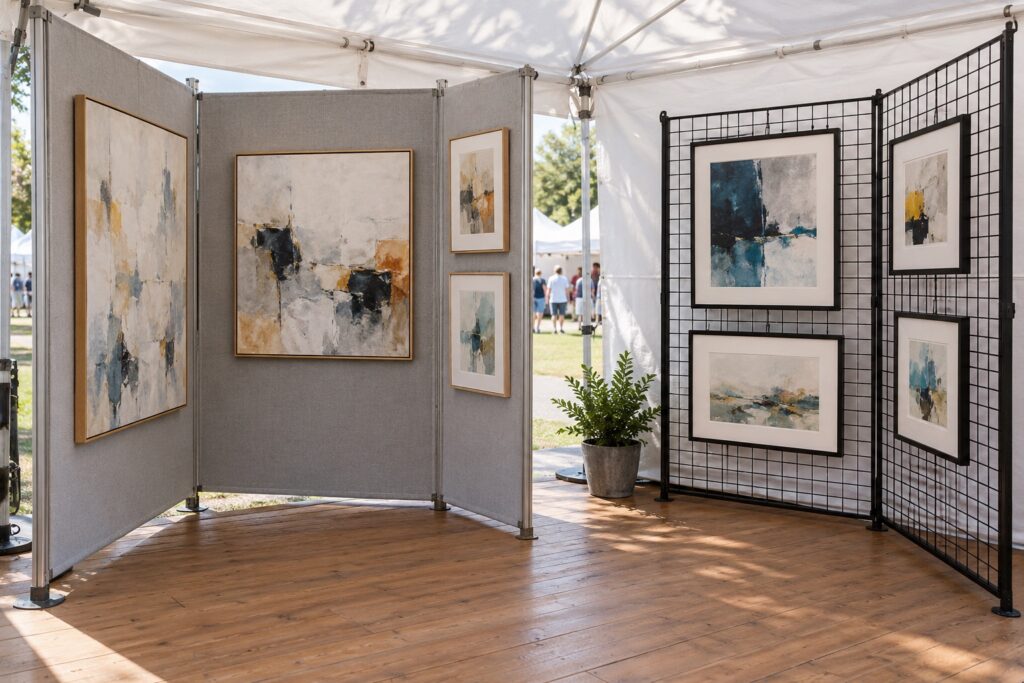
On your drawing, give each fixture its full footprint, including supports. A rack that seems slim when folded may occupy considerably more floor space when open. Our display-panel comparison can help you evaluate the space a wall system needs. Manufacturer layouts, such as those offered by ProPanels, are useful starting points; check the instructions for your particular system.
Choose the view from the aisle
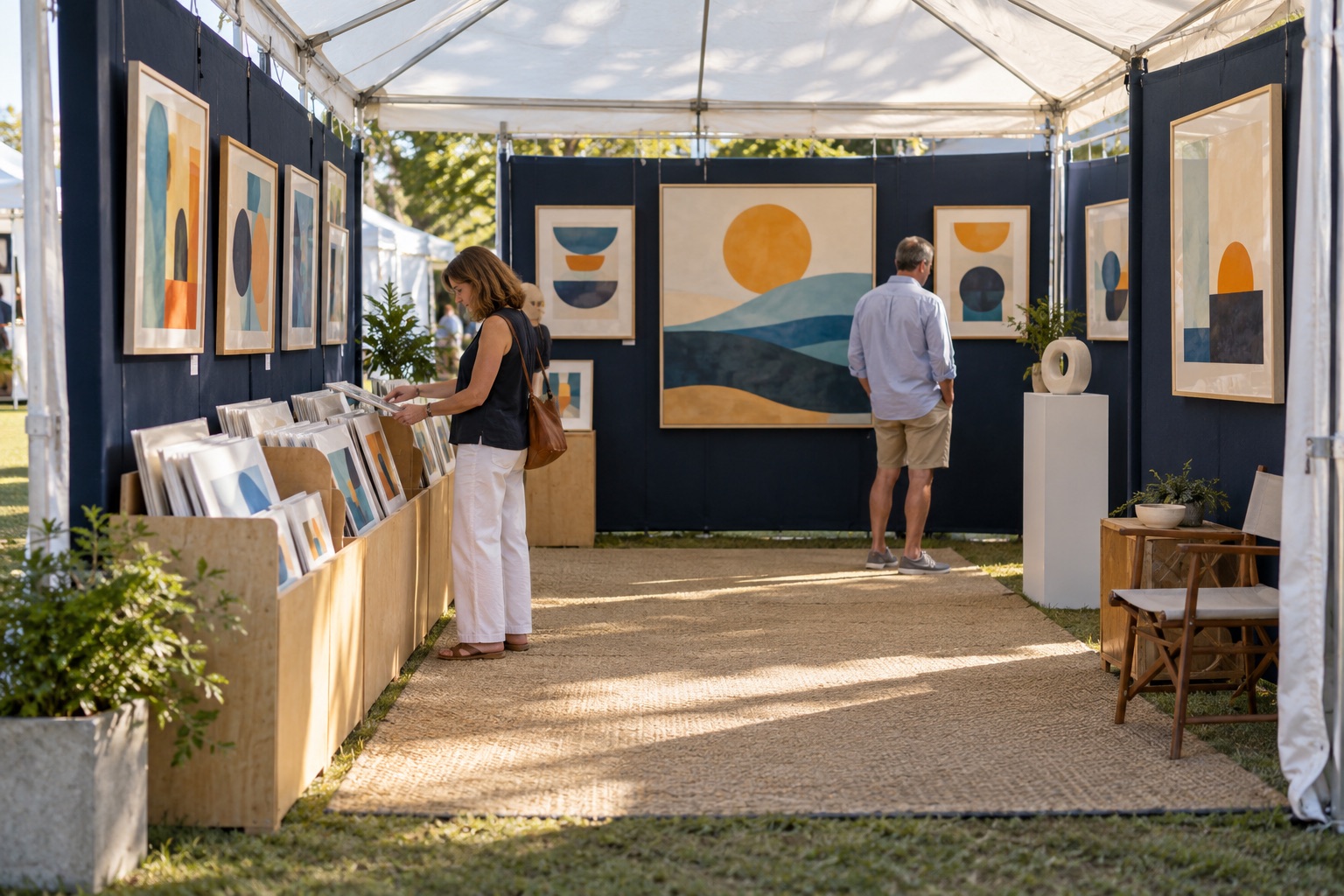
Stand where a visitor will first see the booth. Choose one strong work or a small coherent grouping that can be understood from that position. Then arrange the remaining pieces to reward a closer look. Avoid placing your tallest fixture across the entrance or using every available surface for small signs.
Try a simple test with your rehearsal setup: photograph it straight on, then from each approach along the aisle. If a table hides most of your work from either direction, move it toward a side or shorten the display. Make changes based on what the photographs reveal, not on how tidy the booth looks from behind the counter.
Give each activity a place
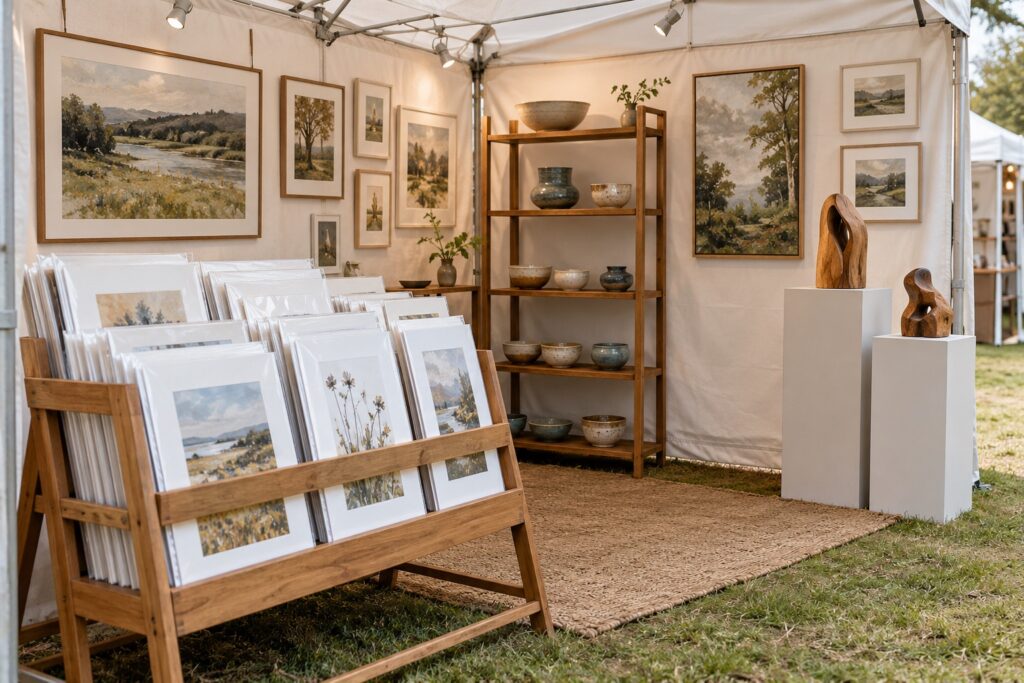
- Browsing: Leave room for someone to stop at a print bin without blocking the entrance.
- Looking: Keep enough open space for visitors to step back from a large piece.
- Checkout: Reserve a surface for payment and wrapping so neither happens on top of displayed artwork.
- Storage: Put replacement inventory where you can reach it without moving a customer’s chair or dismantling a shelf.
Consider how the arrangement works for visitors using mobility aids and for companions shopping together. Keep routes clear and ask the organizer to confirm the applicable access requirements. A layout sketch alone does not establish compliance.
Rehearse with another person
Tape the booth boundary on a floor or driveway. Open every rack, position the artwork, and ask someone to browse while you retrieve a replacement print and package a purchase. Note every place you squeeze past each other. Repeat with a second browser if possible.
Change one obstruction at a time. Moving a print rack a few inches may help more than purchasing a new fixture. If the booth still feels crowded, reduce the quantity on display and keep the remainder as accessible back stock.
Buy for the layout you can use
Take the final sketch shopping. Record the largest acceptable footprint and packed dimensions for each missing fixture. Compare those measurements with your vehicle and loading plan. For a first setup, use our staged booth-buying guide to decide what can wait. The successful purchase is the one that helps people see and buy the work while leaving the booth comfortable to use.