Artist Gear & Supplies
Choosing Table Covers and Display Risers for an Art Show
Choose table covers and display risers that suit your artwork, stay tidy through a show, and pack into the vehicle and booth you actually use.
Practical Guide · Product information checked October 30, 2026 · Researched from published sources.
A table cover and a few risers can give a modest display a finished appearance. They can also add bulk, hide a tripping hazard, or make small artwork harder to reach. Choose these pieces together, with the table’s dimensions and the objects you sell in front of you.
Fit the table before choosing the fabric
Measure the tabletop, its height, and any extension you use. Check whether the advertised cover size describes the fabric or the table it fits. An elastic fitted cover, a tailored cover, and a loose rectangular cloth can look very different on the same table.
Rehearse the arrangement with your chair, payment equipment, and under-table inventory. You should be able to reach supplies without pulling the front of the cloth out of place. Keep fabric clear of walking routes and equipment that needs ventilation. Ask the organizer about textile and fire-documentation requirements before ordering; requirements vary by venue.
Let the artwork choose the background
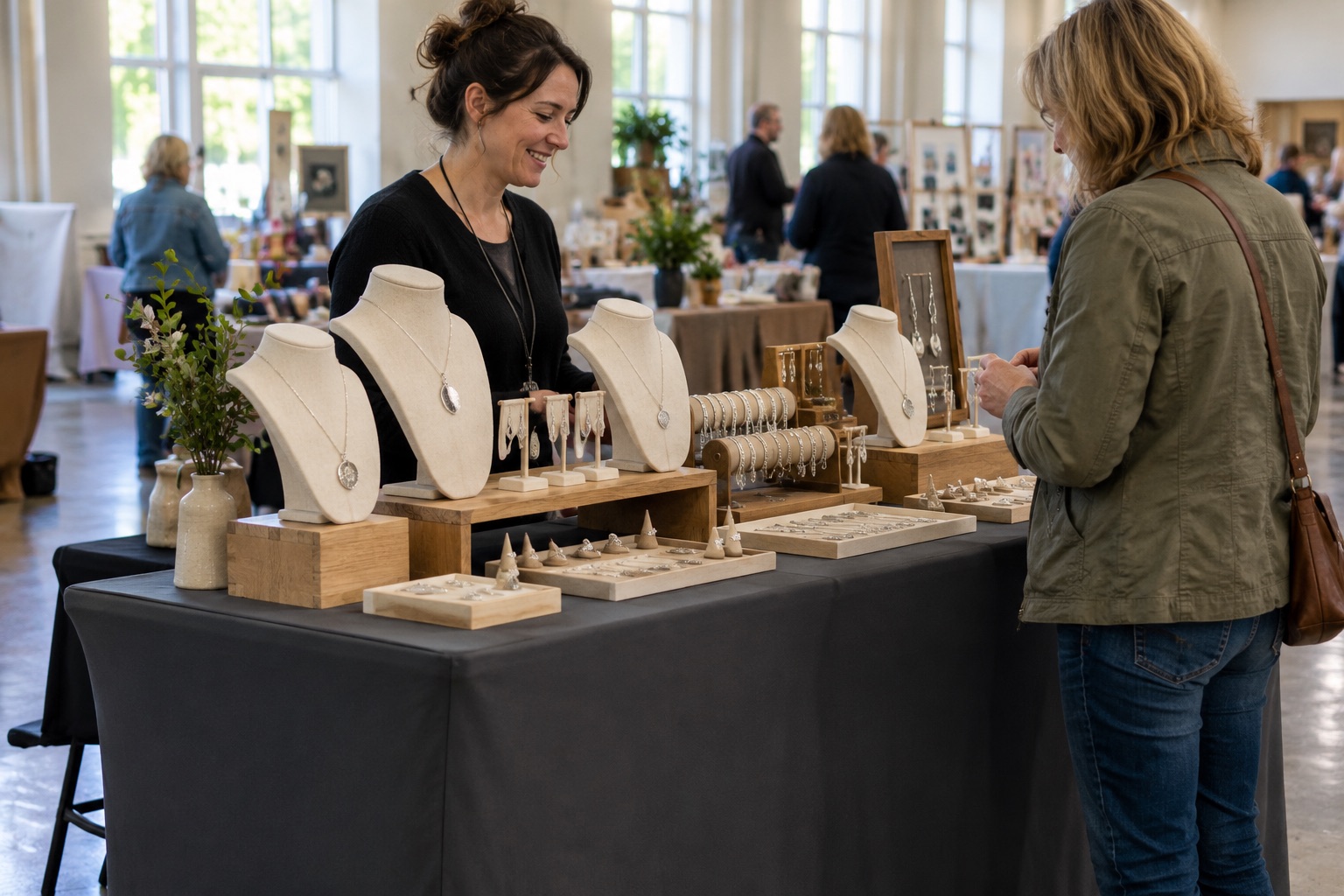
Put several actual pieces on a fabric sample. Pale ceramics may disappear against cream cloth; reflective jewelry can become visually busy against a strong pattern. Look at the combination in daylight and under the lights you plan to use. A neutral background is a useful option, but the best color is the one that makes the work easy to distinguish.
Consider maintenance as well as appearance. Read the laundering, drying, and ironing instructions. Test whether a folded sample shows creases and whether lint or packaging debris is conspicuous. A spare cover may be more useful than a more elaborate fabric that cannot be cleaned between consecutive shows.
Use height to organize the collection
Risers work best when each level has a clear purpose: a featured piece at the back, a small grouping in the middle, and accessible browsing space in front. Start with one or two heights rather than building a staircase across the entire table.
Measure the top surface of each riser and compare it with the base of your largest object. Check the manufacturer’s load rating, the stability of the base, and how the riser behaves on the table surface. A decorative box is not automatically a suitable support for heavy sculpture. Our guide to racks, shelves, and pedestals covers alternatives for larger work.
Test the whole display
- Walk around the table and check for projecting corners and loose fabric.
- Reach for a small object at the back without leaning over fragile work.
- Remove one featured item and see whether the remaining arrangement still makes sense.
- Practice wrapping a purchase without setting bags or tissue on the display.
- Pack every riser into the vehicle; nesting pieces can save space, but compare their packed size.
If you need a separate packing surface, include it in your booth layout instead of expecting the display table to do everything.
Make the first purchase easy to revise
Buy a small coordinated set, photograph the rehearsal, and use it before expanding. Keep a note of what visitors can comfortably see and reach. A good cover provides a calm foundation, and good risers make the collection easier to understand. Neither should demand more attention than the artwork.