Behind the Booth
How to Test an Art Show Booth Layout Before Load-In
Rehearse a booth footprint at home to find blocked sightlines, unsafe corners and checkout problems before show day.
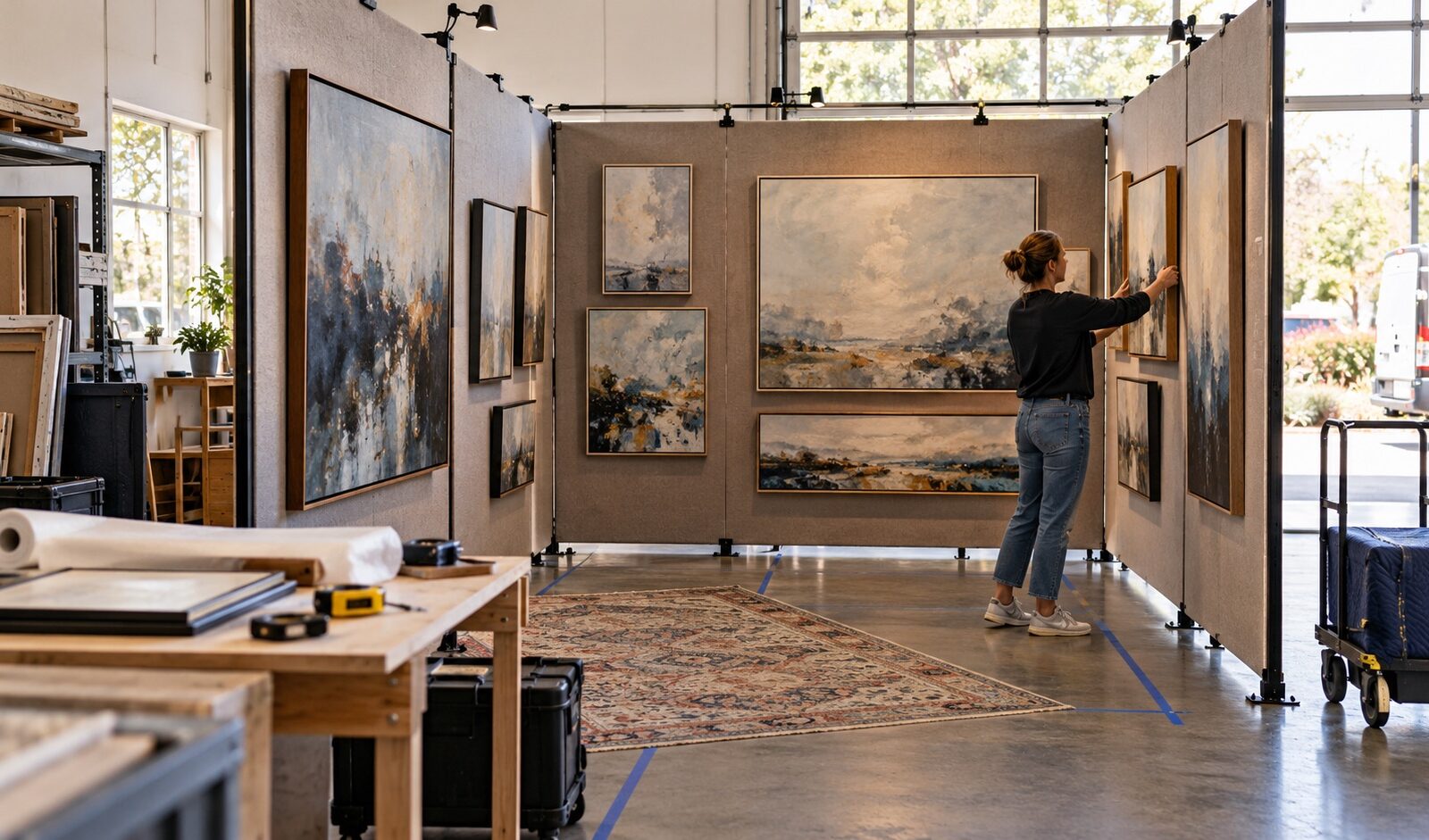
A floor plan can look generous on paper and fail once panels, tables and people occupy it. A short rehearsal before load-in reveals problems you can still fix: an entrance too narrow, a checkout table blocking a work, or a case whose door cannot open. Treat the mockup as an experiment, not a demand to recreate a perfect booth at home.
Mark the real dimensions
Use tape, string or movable objects to outline the space at full size. Include any organizer-required setback and the depth of your tent legs or walls. Place the actual display pieces if possible; otherwise use objects cut to their footprints. Leave the entrance open and mark where a visitor can stand to view a large work. Compare the result with your selected booth size.
Walk through several visitor paths
Enter as a first-time visitor, pause at the most visible work and move toward another piece. Can someone else pass without touching art? Can a person using a mobility device turn or approach a conversation area? Check whether low displays disappear behind other visitors. Invite one person who did not draw the plan to walk it; they may naturally take a route you missed. A booth should make it easy to look before it asks anyone to buy.
Rehearse a sale and a replenishment
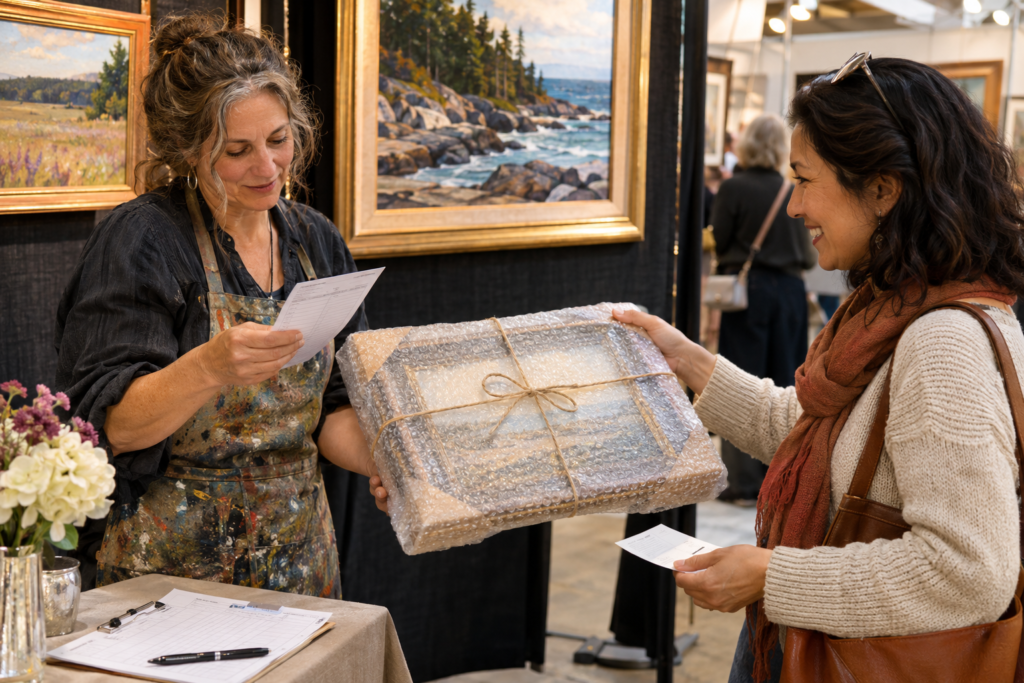
Pretend a piece has sold. Reach for packaging, take payment and move the sold work out safely. Then bring a replacement from storage. If that path crosses fragile displays or requires you to leave valuables unattended, move the supply area. Check access to power and cable routes separately. Our checkout-station guide offers more detail on the payment end of the route.
Photograph and pack the plan
Take a few level photographs of the mockup, record measurements and label the components in setup order. Make one change at a time, then walk the path again. On show day, use the plan as a starting point; venue conditions and neighboring booths may require a small adjustment. The rehearsal saves your attention for those real conditions rather than a preventable layout surprise.