Artist Business
Your Post-Show Review: Turn Sales, Costs, and Customer Questions into a Better Plan
Review an art show using reconciled sales, actual costs, customer questions, and workload, then choose a few specific improvements for the next event.
A busy booth can leave you feeling successful before you know what the weekend cost. A quiet show can still produce useful inquiries or reveal a display problem you can fix. Review the event while the details are fresh, using both business records and observations from the floor.
Reconcile before judging
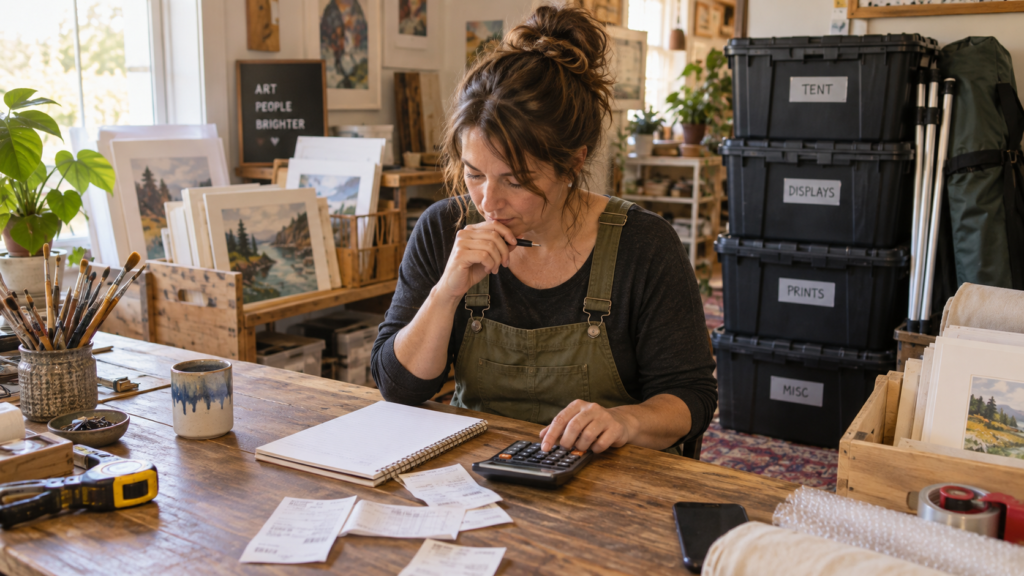
Compare your checkout reports, cash record, refunds, and remaining inventory. Identify orders still awaiting fulfillment and transactions that require attention. Separate sales from money collected for taxes or other obligations so the headline total does not become your only measure of performance.
The Small Business Administration’s financial-management guidance emphasizes accurate bookkeeping and understanding money coming in and going out. Use your normal bookkeeping method and professional support where needed; a show-review worksheet should support those records rather than replace them.
List the costs that followed you home
Record the actual booth and application fees, travel, accommodation, parking, payment fees, packaging, and other event-specific spending. Include the cost of the work sold when assessing the contribution the show made to your business. Note your working time separately: preparation, travel, setup, selling, packing, and follow-up.
Our break-even guide helps with planning. After the event, replace estimates with actual figures. If an expense benefits several shows, use a consistent allocation method rather than charging the entire purchase to whichever weekend happens to be under review.
Read the inventory story
Look beyond the total number of pieces sold. Which sizes, price ranges, and subjects moved? What did people ask for that you did not have? Compare what you sold with what you brought; a category that sold out early deserves a different interpretation from one that was fully stocked all weekend.
Keep observations specific. Write that three visitors asked whether a print came in a smaller size, rather than concluding that everyone wanted cheaper work. A few conversations can suggest an experiment, but they do not establish a broad market trend.
Review the booth and the working day
- Where did visitors stop, hesitate, or leave?
- Could people browse while another customer checked out?
- Did signs answer recurring questions about medium, size, and price?
- Which equipment caused repeated setup or packing delays?
- Was the travel and physical workload sustainable for you?
Use rehearsal and show photographs to check your recollections. Our booth-layout guide offers a practical way to test changes before another event.
Separate evidence from unusual conditions
Record weather, shortened hours, unusual access problems, or a major stock shortage alongside the results. Compare like with like when reviewing another year or another event. Do not erase a disappointing result, but avoid attributing everything to one cause without evidence.
Track later orders and fulfilled inquiries separately, with a defined review date. The customer follow-up guide can help you keep those promises organized. Do not count a possible commission as a completed sale.
Choose three actions
Finish with a short, concrete plan: bring more of a particular size, move the checkout table, or replace a troublesome packing container. Assign a deadline and note how you will tell whether the change helped. Carry the review into your next application decision using our guide to evaluating a show. The purpose is to make the next decision with better information.